
Pathophysiology of Otitis Externa: Otitis externa is an inflammatory or infectious condition of the external auditory canal, commonly known as “swimmer’s ear.” It occurs when the protective mechanisms of the ear canal are disrupted, allowing microorganisms to multiply and cause inflammation.
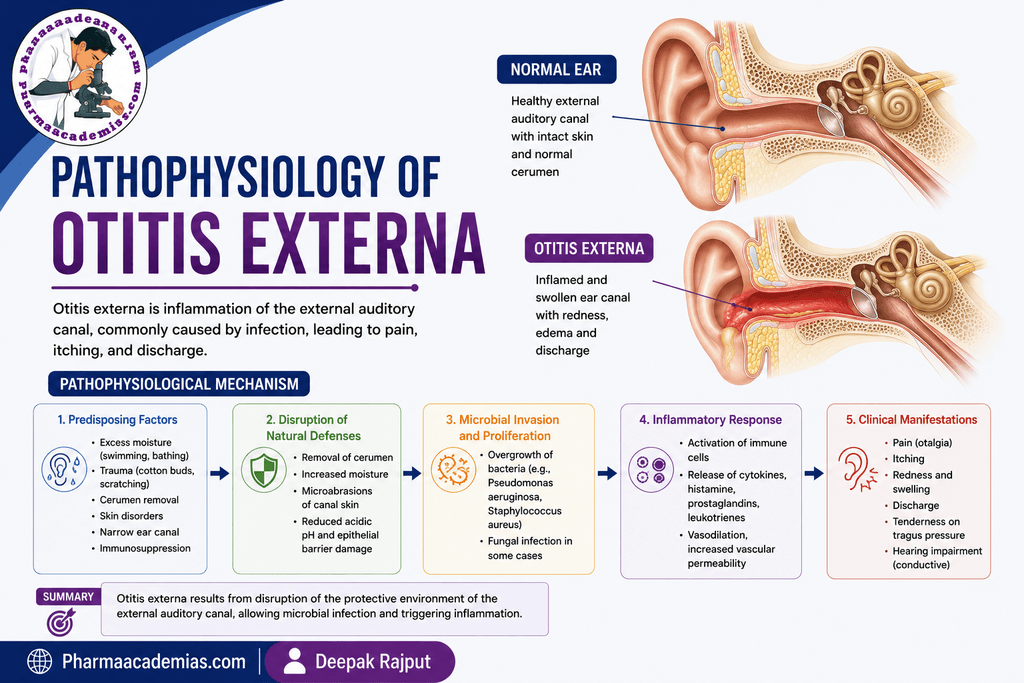
The most common bacterial cause is Pseudomonas aeruginosa, although other bacteria and fungi may also be involved.
Step 1: Normal Protection of the External Ear
The external auditory canal normally has several protective mechanisms:
- Cerumen (earwax) maintains an acidic environment.
- Cerumen has antimicrobial properties.
- The skin lining provides a physical barrier.
- The ear canal’s natural shape helps prevent prolonged moisture retention.
These mechanisms normally prevent excessive growth of microorganisms.
Healthy ear canal → Intact skin + cerumen + acidic environment → Protection from infection
Step 2: Breakdown of the Protective Barrier
The first major event in otitis externa is damage or disruption of the skin lining of the external auditory canal.
This can occur due to:
- Excessive cleaning of the ear
- Use of cotton buds
- Scratching or trauma
- Hearing aids or earphones
- Foreign objects
- Swimming or repeated water exposure
Removal of protective cerumen can also increase susceptibility to infection.
Step 3: Increased Moisture and Change in Canal Environment
Water trapped inside the ear canal increases moisture.
Repeated exposure to water can alter the normal acidic environment of the ear canal and cause maceration of the skin.
Macerated skin becomes softer and more vulnerable to injury.
Water exposure
↓
Increased moisture
↓
Skin maceration
↓
Reduced epithelial barrier function
This is why otitis externa is frequently associated with swimming.
Step 4: Microbial Growth
Once the protective barrier is compromised, microorganisms can multiply more easily.
The most common bacterial pathogen is:
Pseudomonas aeruginosa
Other organisms may include Staphylococcus aureus and various other bacteria.
Fungal organisms such as Aspergillus and Candida can also cause otitis externa, particularly in certain circumstances.
Step 5: Invasion and Local Infection
Microorganisms can penetrate the damaged epithelium and interact with underlying tissues.
The immune system recognizes microbial components and responds by releasing inflammatory mediators.
This results in:
- Vasodilation
- Increased vascular permeability
- Migration of inflammatory cells
- Tissue edema
- Local irritation
Step 6: Edema of the Ear Canal
Inflammation causes accumulation of fluid within the tissues of the external auditory canal. This produces edema (swelling). The ear canal can become progressively narrower
Step 7: Pain and Tenderness
Inflammatory mediators stimulate sensory nerve endings in the ear canal. This produces ear pain (otalgia). A characteristic feature of otitis externa is that pain may become worse when the pinna or tragus is touched or moved. The inflamed canal becomes highly sensitive to mechanical stimulation.
Step 8: Discharge Formation
Inflammation and infection can produce fluid, inflammatory cells, epithelial debris, and sometimes pus.
This may result in ear discharge (otorrhea).
The discharge may be:
- Watery
- Purulent
- Foul-smelling
depending on the causative organism and severity of infection.
Step 9: Narrowing of the Ear Canal
As edema increases, the lumen of the external auditory canal becomes narrower.
This can cause:
Canal swelling
↓
Reduced passage of sound
↓
Conductive hearing reduction
The hearing loss is generally temporary and results from obstruction of sound transmission through the external canal.
Step 10: Development of Clinical Symptoms
The pathological changes produce the characteristic symptoms of otitis externa.
Common symptoms
- Ear pain
- Ear tenderness
- Itching
- Ear discharge
- Feeling of fullness in the ear
- Temporary hearing reduction
- Redness and swelling of the ear canal
Pain with manipulation of the tragus or pinna is particularly suggestive of external ear canal inflammation.
Step 11: Chronic Otitis Externa
If inflammation persists or repeatedly occurs, chronic changes can develop.
Repeated inflammation may cause:
Persistent irritation
↓
Epithelial thickening and dryness
↓
Scaling and itching
↓
Repeated scratching/trauma
↓
Further disruption of the skin barrier
This can create a cycle of inflammation and reinfection.
Step 12: Severe Infection and Malignant Otitis Externa
In susceptible individuals, particularly some older adults with diabetes or impaired immunity, infection can extend beyond the external auditory canal.
This serious condition is called necrotizing (malignant) otitis externa.
The infection may extend into surrounding soft tissue and bone, potentially causing osteomyelitis of the skull base.
One-Line Summary
Otitis externa develops when the protective skin and cerumen barrier of the external auditory canal is disrupted, usually by moisture or trauma, allowing microbial growth and triggering inflammation, edema, pain, discharge, and temporary conductive hearing impairment.
Editorial Note
This article has been carefully researched and written by Deepak Rajput with a focus on accuracy, clarity, and evidence-based healthcare information. Pharmaacademias.com


