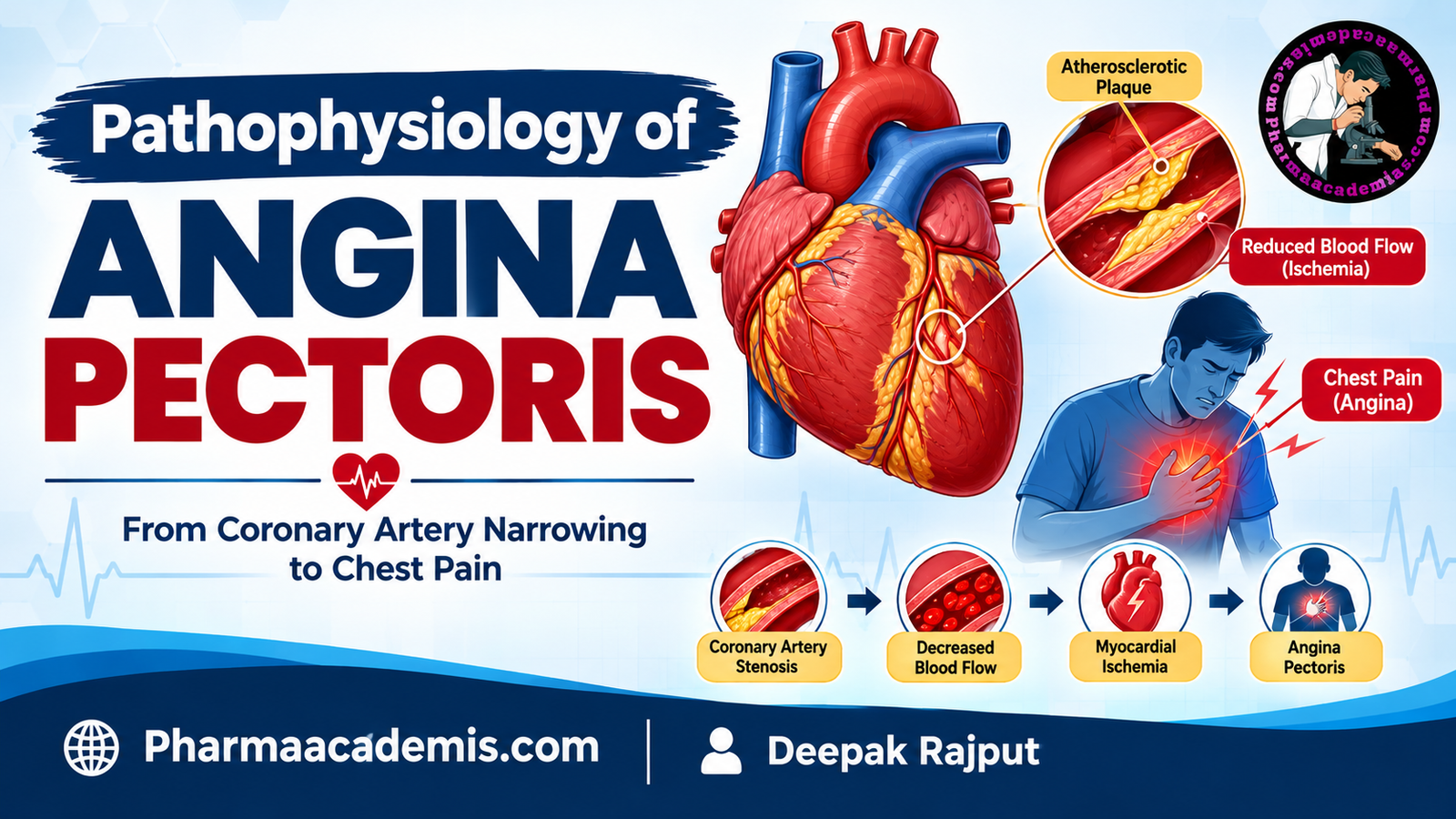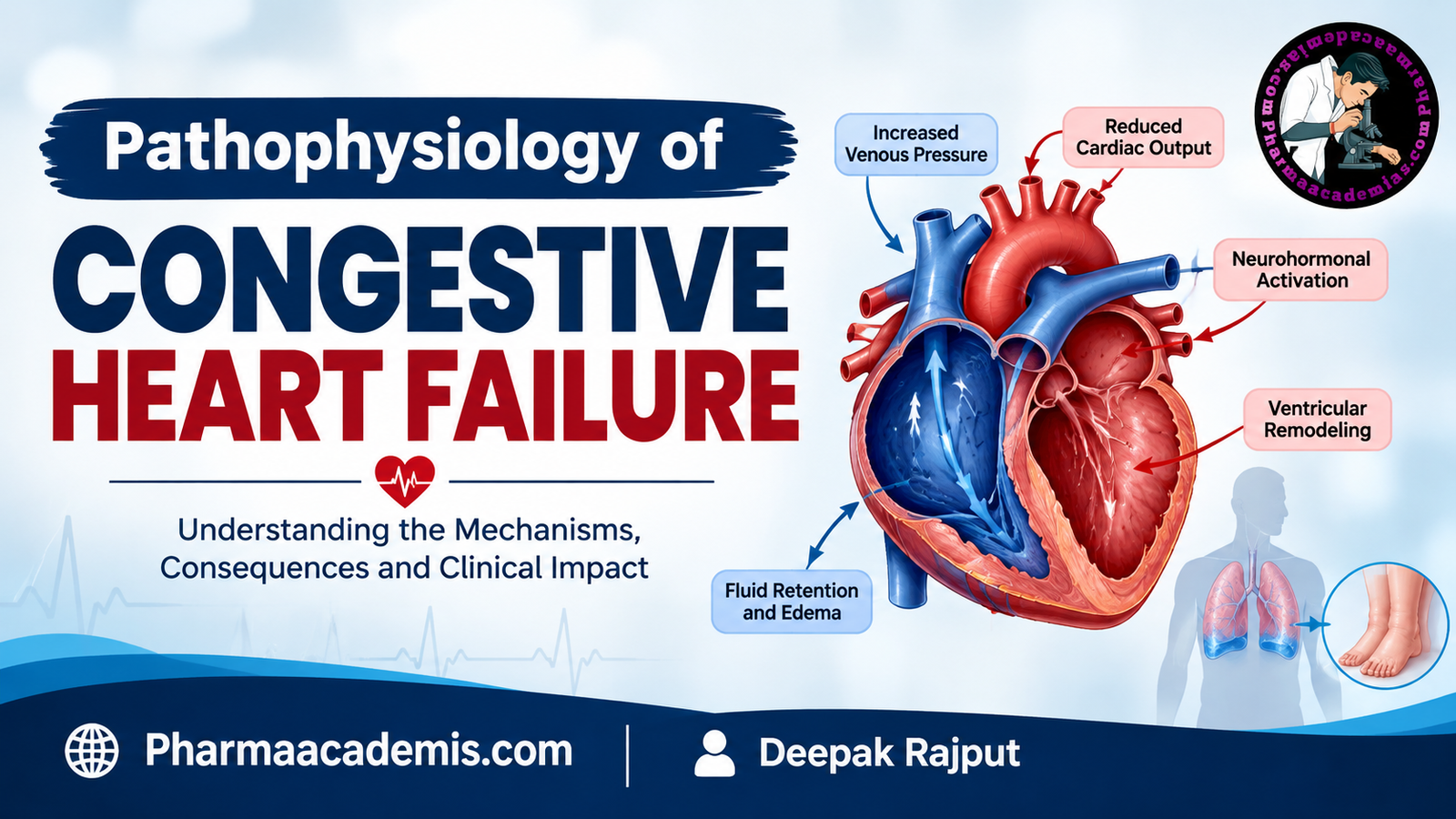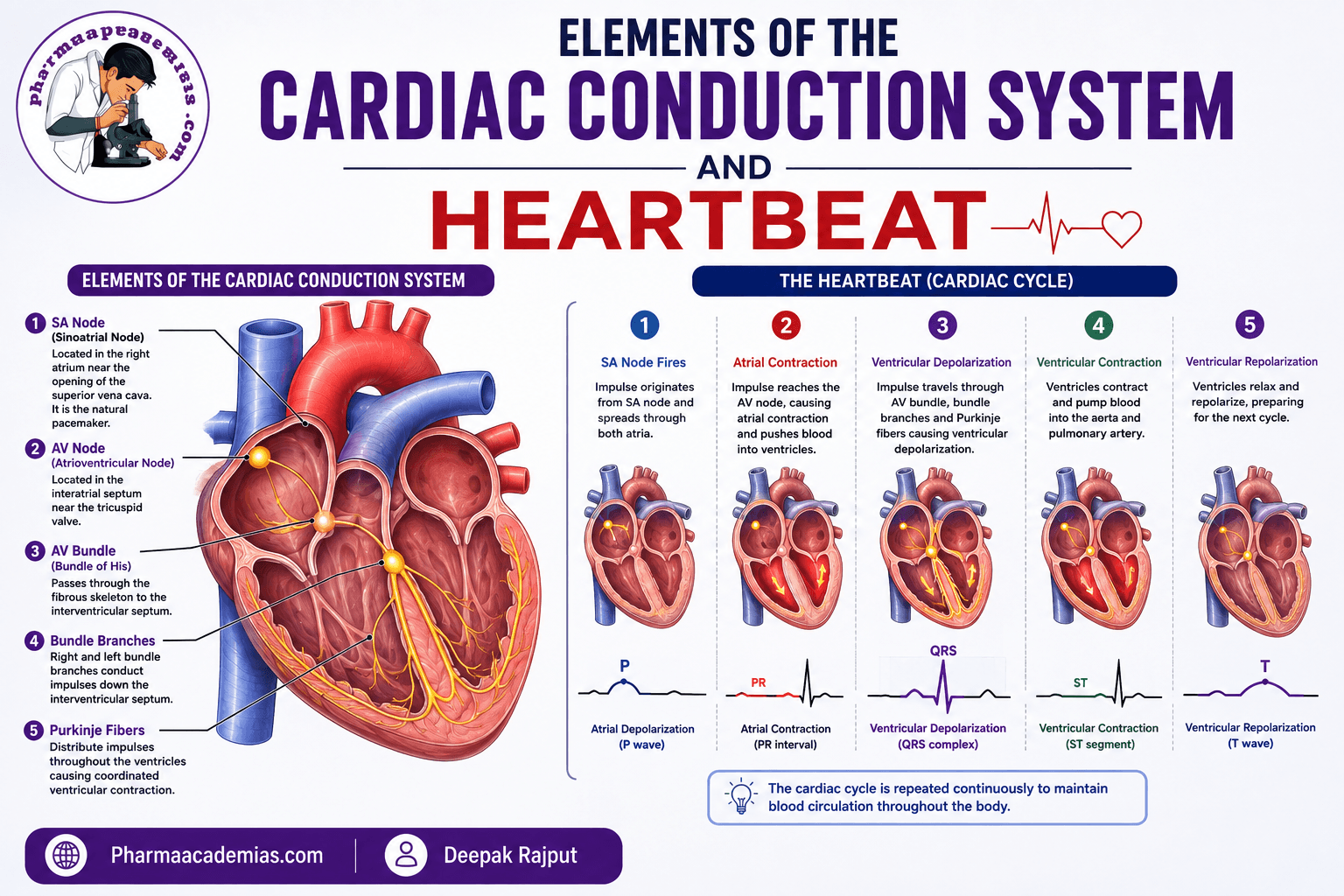
Pathophysiology of Myocardial Infarction: Myocardial infarction (MI), commonly known as a heart attack, is a condition in which a portion of the heart muscle undergoes irreversible damage or death due to prolonged inadequate blood supply. It most commonly occurs when a coronary artery becomes obstructed by a blood clot formed over a ruptured or eroded atherosclerotic plaque.
The blockage reduces the supply of oxygen and nutrients to the myocardium, resulting in myocardial ischaemia. If the blood supply is not restored promptly, the affected cardiac muscle cells die, impairing the pumping function of the heart. Myocardial infarction may lead to serious complications, including cardiac arrhythmias, heart failure, cardiogenic shock, and sudden cardiac death.
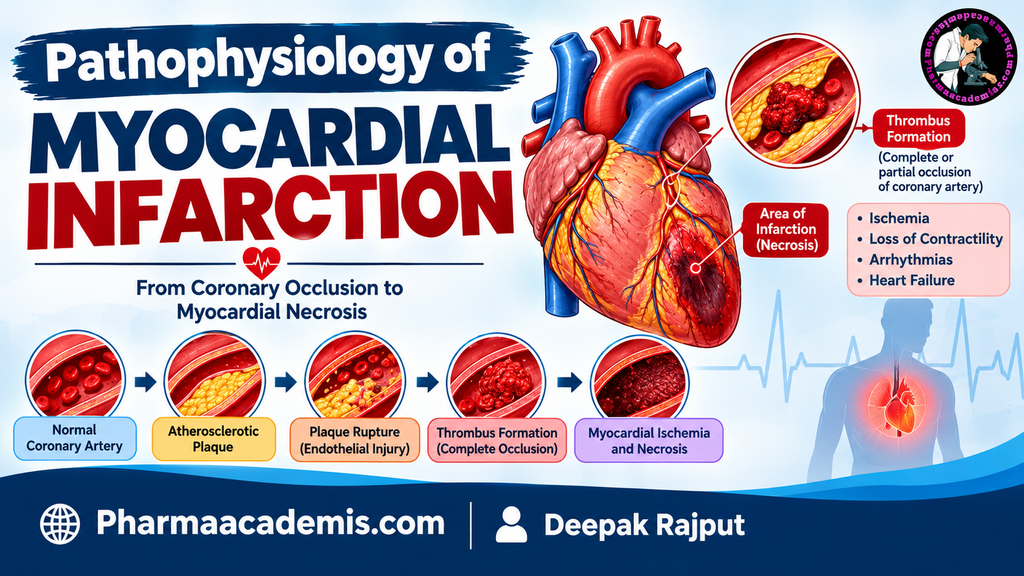
Pathophysiology of Myocardial Infarction
Myocardial infarction develops through a series of pathological changes that begin with reduced coronary blood flow and may progress to irreversible damage to cardiac muscle cells.
1. Development of Atherosclerosis
Atherosclerosis is the most common underlying cause of myocardial infarction. It involves the accumulation of cholesterol, lipids, inflammatory cells, and fibrous tissue within the walls of the coronary arteries.
Over time, these deposits form atherosclerotic plaques that narrow the arterial lumen and reduce blood flow to the myocardium. Some plaques become unstable and may rupture or erode, exposing substances that promote blood clot formation.
2. Formation of a Blood Clot
When an atherosclerotic plaque ruptures or erodes, platelets become activated and aggregate at the site of injury. The coagulation system is also activated, leading to the formation of a thrombus.
The thrombus may partially or completely obstruct the coronary artery, significantly reducing the supply of oxygen-rich blood to the affected region of the heart muscle.
3. Development of Myocardial Ischaemia
The obstruction of coronary blood flow reduces the oxygen supply to cardiac muscle cells. As oxygen becomes insufficient, aerobic metabolism and ATP production decrease, forcing the cells to rely increasingly on anaerobic metabolism.
The resulting energy deficiency impairs the function of cellular ion pumps, causes disturbances in sodium, potassium, and calcium balance, and reduces the ability of the myocardium to contract normally. These changes initially produce reversible injury if blood flow is restored quickly.
4. Irreversible Myocardial Cell Injury
If ischaemia continues, severe energy depletion and calcium overload damage cellular membranes, mitochondria, and other essential structures. The affected cardiac muscle cells eventually undergo irreversible injury and die, a process known as myocardial necrosis.
Necrosis generally begins in the most vulnerable subendocardial region and may extend towards the outer layers of the myocardium if the obstruction persists.
The extent of myocardial damage depends on the duration and severity of ischaemia, the affected coronary artery, and the availability of collateral blood flow.
5. Inflammatory Response and Healing
Dead myocardial cells trigger an inflammatory response. Inflammatory cells remove damaged tissue, after which fibroblasts produce collagen to form a fibrous scar.
Unlike normal cardiac muscle, scar tissue cannot contract effectively. Therefore, a large myocardial infarction may permanently reduce cardiac pumping capacity and contribute to ventricular remodelling and heart failure.
6. Effects on Cardiac Function
The death of cardiac muscle cells reduces the contractile ability of the affected region. This may decrease stroke volume and cardiac output, particularly when a large portion of the myocardium is damaged.
Electrical instability caused by ischaemia and damaged tissue may also produce arrhythmias. In severe cases, myocardial infarction can cause acute heart failure, cardiogenic shock, or cardiac arrest.
Clinical Manifestations
The common manifestations of myocardial infarction include severe or persistent chest pain or pressure, which may radiate to the arm, shoulder, neck, jaw, or back. Other symptoms include breathlessness, sweating, nausea, vomiting, dizziness, and a feeling of weakness.
Some patients, particularly older adults and people with diabetes, may experience less typical symptoms or minimal chest pain.
Conclusion
Myocardial infarction occurs when prolonged reduction or interruption of coronary blood flow causes irreversible injury and death of cardiac muscle cells. It most commonly results from the formation of a thrombus following the rupture or erosion of an atherosclerotic plaque. The resulting myocardial necrosis impairs cardiac function and may lead to arrhythmias, heart failure, cardiogenic shock, or sudden cardiac death. Early restoration of blood flow is essential to limit myocardial damage and improve patient outcomes.
Editorial Note
This article has been carefully researched and written by Deepak Rajput with a focus on accuracy, clarity, and evidence-based healthcare information. Pharmaacademias.com