Pathophysiology of Angina Pectoris: Angina pectoris is a clinical condition characterized by chest pain or discomfort that occurs when the heart muscle receives insufficient oxygen-rich blood to meet its metabolic requirements. It usually develops due to reduced blood flow through the coronary arteries, most commonly because of coronary artery disease.
Angina is not usually associated with permanent damage to the heart muscle. However, it may indicate an underlying cardiovascular disorder and requires appropriate evaluation. The pain may spread to the left arm, shoulder, neck, jaw, or back and may be accompanied by breathlessness, sweating, or nausea.
Pathophysiology of Angina Pectoris
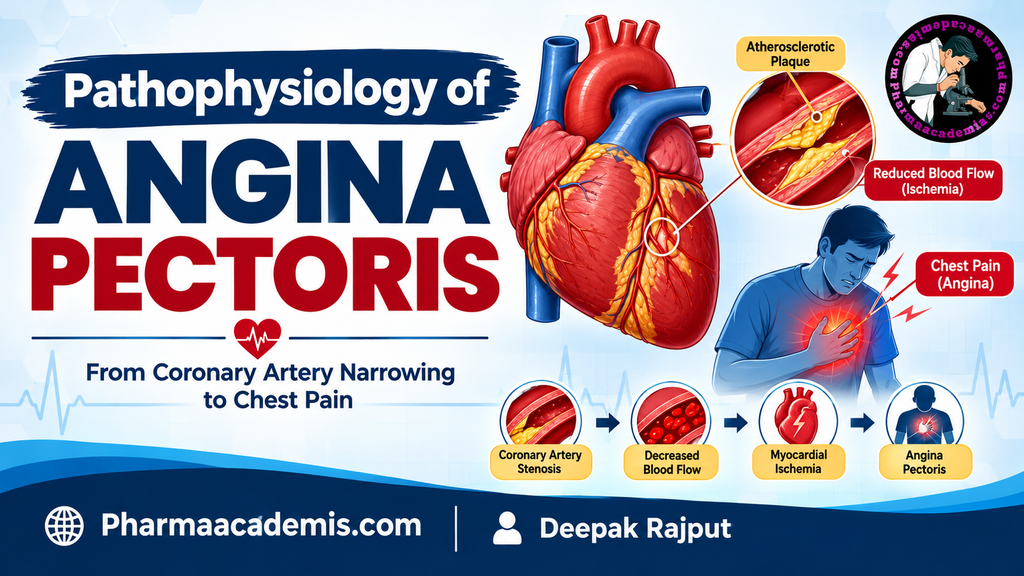
Angina develops when there is an imbalance between the oxygen supply to the myocardium and its oxygen demand. The major steps involved are described below.
1. Reduced Coronary Blood Flow
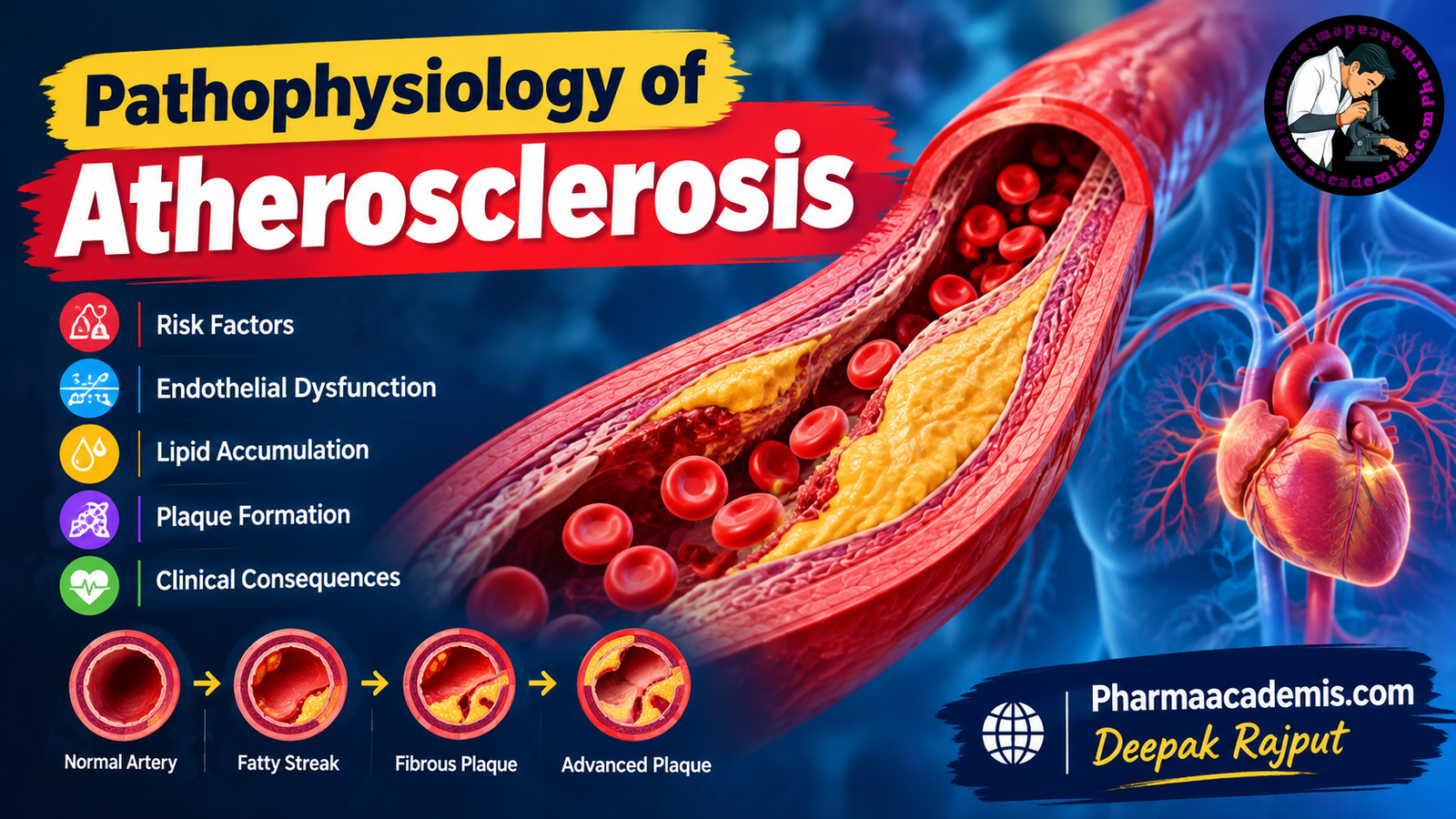
The coronary arteries supply oxygen and nutrients to the heart muscle. In coronary artery disease, fatty deposits called atherosclerotic plaques accumulate in the walls of these arteries, narrowing their lumen and restricting blood flow.
As a result, the oxygen supply to the myocardium becomes insufficient, particularly during physical activity or emotional stress, when the heart requires more oxygen.
2. Increased Oxygen Demand
During exercise, stress, or other conditions that increase cardiac workload, the heart rate and force of contraction increase. This raises myocardial oxygen demand.
A healthy coronary circulation normally increases blood flow to meet this demand. However, narrowed coronary arteries may be unable to provide sufficient additional blood, resulting in myocardial ischaemia.
3. Development of Myocardial Ischaemia
When the oxygen supply becomes inadequate, myocardial cells cannot produce sufficient energy through normal aerobic metabolism. They increasingly rely on anaerobic metabolism, resulting in the accumulation of metabolic products such as lactate and changes in local chemical conditions.
These changes impair normal myocardial relaxation and contraction and stimulate sensory nerve endings in and around the heart. The resulting nerve signals are perceived as chest pain or discomfort.
4. Development of Chest Pain
The metabolic and chemical changes associated with myocardial ischaemia activate cardiac sensory nerves. Pain signals travel through neural pathways to the spinal cord and brain, where they are interpreted as chest discomfort.
Because these pathways overlap with sensory pathways from other body regions, the pain may radiate to the arm, shoulder, neck, jaw, or back. The discomfort may be described as pressure, tightness, heaviness, or squeezing in the chest.
5. Relief or Progression of Ischaemia
In typical stable angina, the pain usually develops during physical exertion or emotional stress and improves with rest or prescribed nitroglycerin. Rest reduces cardiac workload and oxygen demand, helping restore the balance between oxygen supply and demand.
In unstable angina, myocardial ischaemia may occur at rest, become more frequent, or develop with minimal exertion. It often involves disruption of an atherosclerotic plaque and partial coronary thrombosis. Unstable angina is an acute coronary syndrome and requires urgent medical assessment because it may progress to myocardial infarction.
Types of Angina Pectoris
Stable angina: Occurs predictably during exertion or emotional stress because a narrowed coronary artery cannot provide enough blood to meet increased oxygen demand. It usually improves with rest.
Unstable angina: Occurs unexpectedly, may develop at rest, or becomes more severe or frequent. It is commonly associated with reduced coronary blood flow due to plaque disruption and thrombosis and requires emergency evaluation.
Variant (Prinzmetal) angina: Occurs due to temporary spasm of a coronary artery, which reduces blood flow to the myocardium. It often occurs at rest and may be associated with transient ECG changes.
Conclusion
Angina pectoris develops when myocardial oxygen demand exceeds the oxygen supply provided by the coronary circulation. Coronary artery narrowing, coronary artery spasm, or other causes of reduced blood flow can produce myocardial ischaemia. The resulting metabolic changes activate cardiac sensory nerves and cause chest pain or discomfort. Stable angina generally improves with rest, whereas new, worsening, or persistent chest pain may indicate an acute coronary syndrome and requires urgent medical attention.
Editorial Note
This article has been carefully researched and written by Deepak Rajput with a focus on accuracy, clarity, and evidence-based healthcare information. Pharmaacademias.com