Pathophysiology of Atherosclerosis: Atherosclerosis is a chronic inflammatory disease of the arteries characterized by the accumulation of cholesterol, lipids, inflammatory cells, and fibrous tissue within the arterial wall. These deposits form structures called atherosclerotic plaques, which gradually narrow the arterial lumen and reduce blood flow to various organs.
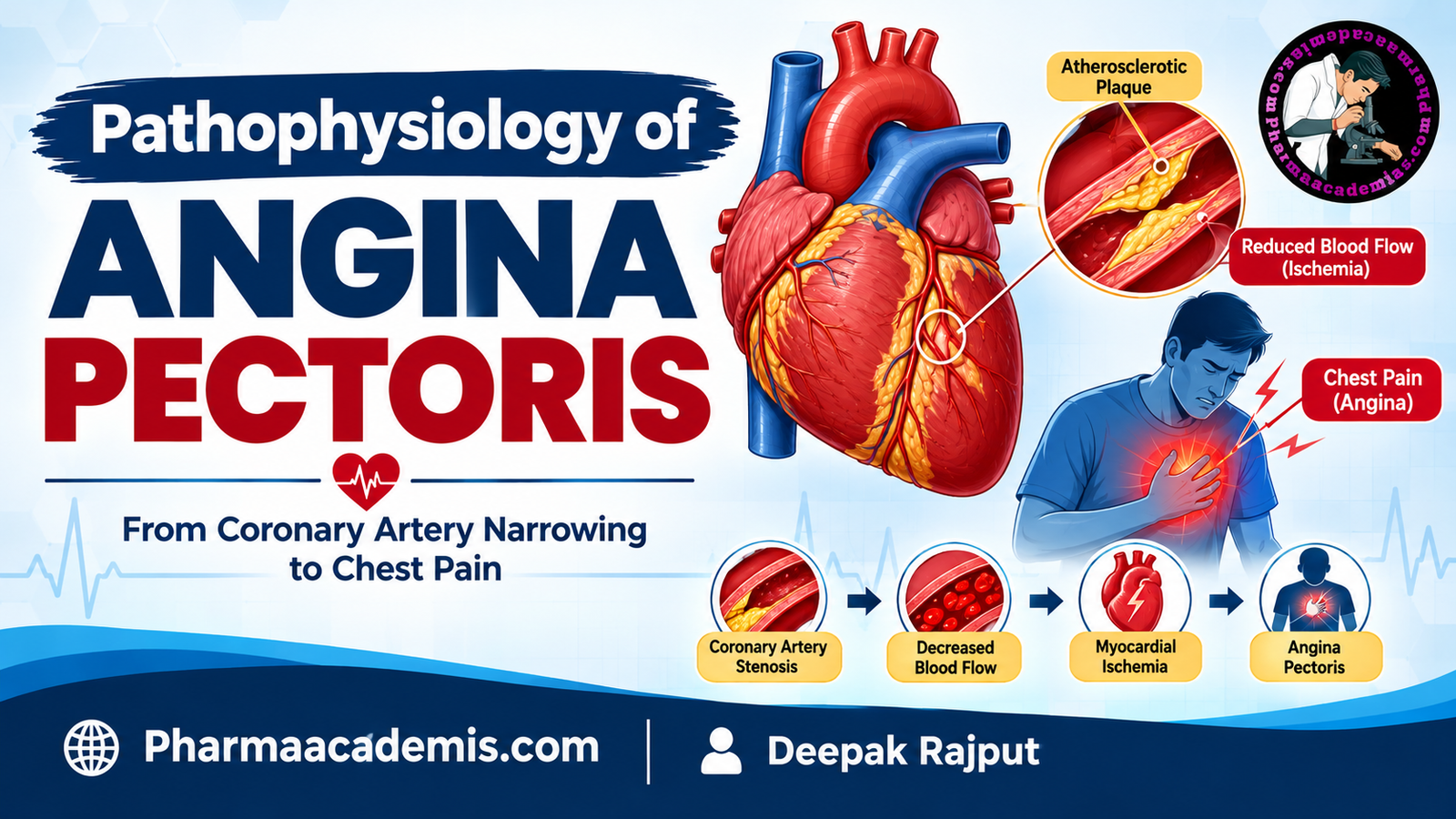
Atherosclerosis commonly affects the coronary arteries, cerebral arteries, and peripheral arteries. When it affects the coronary arteries, it may cause angina pectoris and myocardial infarction. In the cerebral arteries, it may increase the risk of stroke.
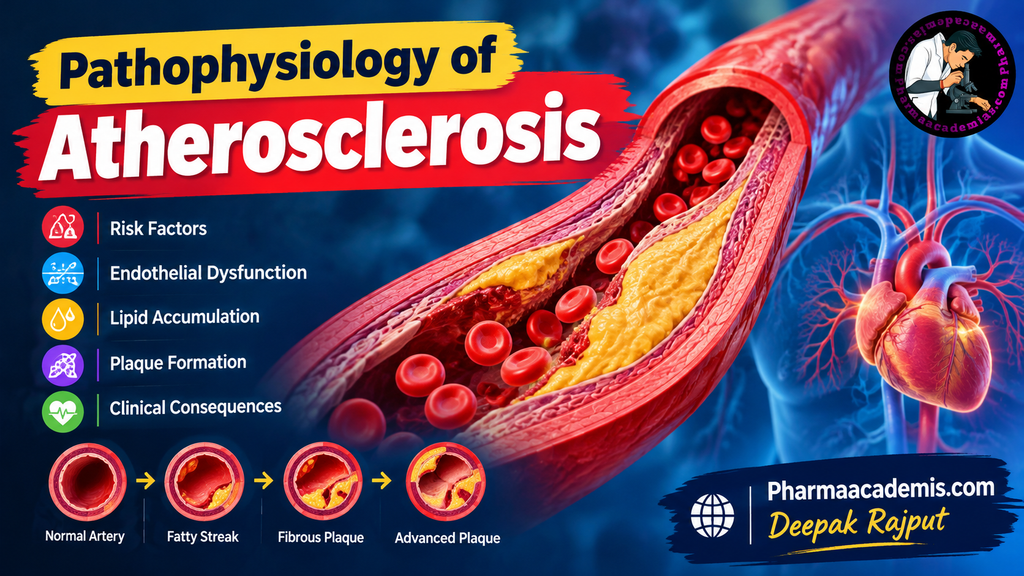
Pathophysiology of Atherosclerosis
Atherosclerosis develops gradually through a series of changes in the arterial wall.
1. Endothelial Injury or Dysfunction
The endothelium is the thin inner lining of blood vessels. Factors such as hypertension, smoking, diabetes mellitus, and abnormal cholesterol levels can damage or impair its normal function.
Endothelial dysfunction increases the permeability of the arterial wall to low-density lipoprotein (LDL) cholesterol and promotes inflammation and the attachment of white blood cells to the vessel lining.
2. Accumulation of LDL Cholesterol
LDL cholesterol enters and becomes trapped within the inner layer of the arterial wall, known as the intima. The trapped LDL undergoes chemical modifications, including oxidation, which promotes an inflammatory response.
This process attracts monocytes from the blood into the arterial wall. These cells develop into macrophages, which take up modified LDL cholesterol.
3. Formation of Foam Cells
Macrophages absorb large amounts of modified LDL cholesterol and become filled with lipid droplets. These lipid-laden macrophages are called foam cells.
The accumulation of foam cells produces fatty streaks, which represent an early visible stage of atherosclerosis. As inflammation continues, additional lipids and inflammatory cells accumulate within the arterial wall.
4. Formation of Atherosclerotic Plaque
Smooth muscle cells migrate from the middle layer of the artery into the intima and multiply. These cells produce collagen and other extracellular materials that form a fibrous cap over the lipid-rich area.
The developing plaque consists of a lipid-rich core, inflammatory cells, cellular debris, and a fibrous cap. As the plaque enlarges, it may narrow the arterial lumen and restrict blood flow to the tissues supplied by that artery.
5. Narrowing of the Artery
Progressive plaque growth reduces the diameter of the artery and limits its ability to increase blood flow when oxygen demand rises.
For example, atherosclerosis of the coronary arteries may reduce oxygen delivery to the heart muscle during exercise, producing angina pectoris. Severe narrowing may also compromise blood supply to other organs.
6. Plaque Rupture and Thrombus Formation
Some atherosclerotic plaques develop a thin or weakened fibrous cap and become vulnerable to rupture or erosion. When this occurs, substances within the plaque become exposed to circulating blood, activating platelets and the coagulation system.
A blood clot, called a thrombus, may form at the site and partially or completely block the artery. In the coronary arteries, this can cause an acute coronary syndrome, including myocardial infarction.
Risk Factors for Atherosclerosis
The major risk factors include high LDL cholesterol, hypertension, smoking, diabetes mellitus, obesity, physical inactivity, and an unhealthy diet. Increasing age and a family history of premature cardiovascular disease also increase the risk.
Some risk factors, such as age and family history, cannot be changed, whereas smoking, physical inactivity, and several metabolic risk factors can be managed to reduce cardiovascular risk.
Complications of Atherosclerosis
Atherosclerosis can cause coronary artery disease, angina pectoris, myocardial infarction, ischaemic stroke, and peripheral arterial disease. In some cases, it may also contribute to the development of an aortic aneurysm.
The complications depend on the location of the affected artery, the severity of narrowing, and whether plaque rupture and thrombosis occur.
Conclusion
Atherosclerosis is a progressive inflammatory disease of the arterial wall. It begins with endothelial dysfunction and the accumulation of LDL cholesterol, followed by foam cell formation, inflammation, and development of a fibrous plaque. The plaque may gradually narrow the artery or rupture and trigger thrombus formation. These changes can reduce blood supply to vital organs and lead to serious cardiovascular complications.
Editorial Note
This article has been carefully researched and written by Deepak Rajput with a focus on accuracy, clarity, and evidence-based healthcare information. Pharmaacademias.com