Factors Influencing Cultivation of Medicinal Plants: Medicinal plants have been used as valuable sources of therapeutic agents since ancient times and continue to play a crucial role in modern healthcare systems. They provide raw materials for herbal medicines, pharmaceuticals, cosmetics, nutraceuticals, and traditional systems of medicine such as Ayurveda, Unani, Siddha, and Traditional Chinese Medicine. The quality, safety, and therapeutic efficacy of medicinal plants largely depend on the concentration of their active constituents, also known as secondary metabolites, such as alkaloids, glycosides, flavonoids, tannins, essential oils, terpenoids, and phenolic compounds.
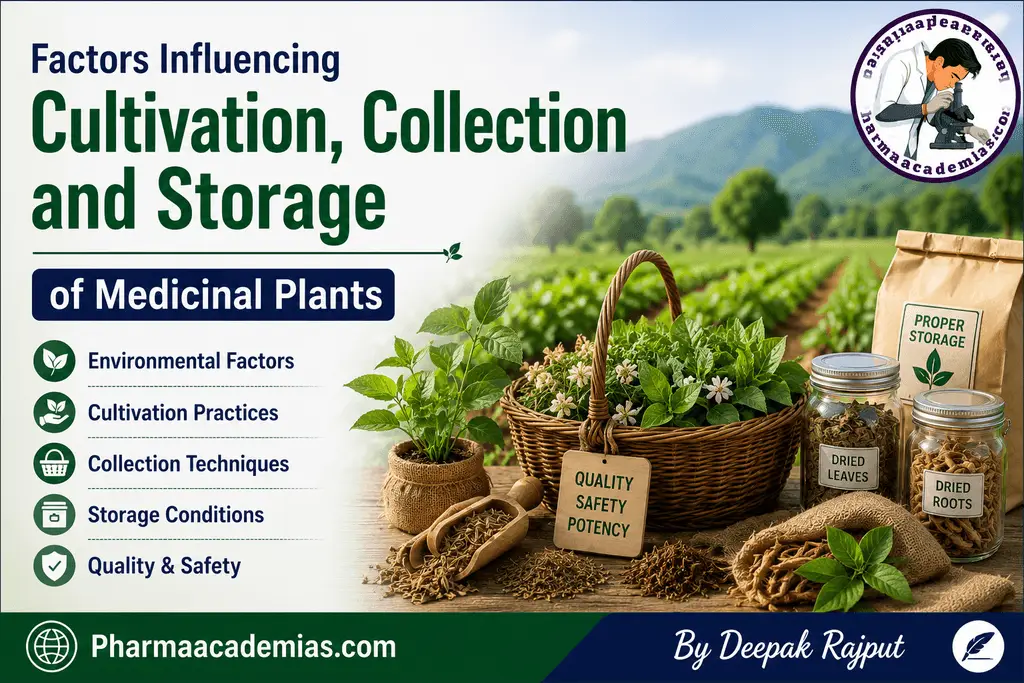
The production of high-quality medicinal plant materials is influenced by numerous environmental, agricultural, biological, and post-harvest factors. Even when the correct medicinal plant species is selected, improper cultivation, untimely collection, or poor storage conditions may significantly reduce the concentration of active constituents or lead to contamination by microorganisms, insects, pesticides, heavy metals, or foreign matter. Such changes may compromise the quality, potency, and safety of herbal products.
Therefore, understanding the various factors that influence the cultivation, collection, and storage of medicinal plants is essential for farmers, researchers, pharmacists, herbal drug manufacturers, and healthcare professionals. Proper management of these factors ensures maximum yield, consistent phytochemical composition, improved therapeutic value, and longer shelf life of medicinal plant materials.
Factors Influencing Cultivation of Medicinal Plants
The successful cultivation of medicinal plants depends on a combination of environmental, biological, and agricultural factors. These factors determine not only the growth and yield of the plant but also the quantity and quality of its active constituents.
1. Climate
Climate is one of the most important factors affecting the cultivation of medicinal plants. It includes temperature, rainfall, humidity, sunlight, wind, and altitude.
Different medicinal plants require specific climatic conditions for optimum growth. Some species thrive in tropical climates, whereas others grow better in temperate or subtropical regions. Temperature directly influences metabolic activities, enzyme function, photosynthesis, and the synthesis of secondary metabolites. Excessively high or low temperatures may reduce plant growth and decrease the concentration of medicinal compounds.
Rainfall provides the water necessary for plant growth. Adequate rainfall promotes healthy development, whereas excessive rainfall may lead to waterlogging, root rot, fungal diseases, and nutrient leaching. Conversely, insufficient rainfall can cause water stress, reduced biomass, and lower yields.
Humidity also affects plant growth and disease incidence. High humidity favors fungal and bacterial infections, while very low humidity may increase water loss through transpiration.
Sunlight is essential for photosynthesis and influences the production of many secondary metabolites. Medicinal plants that produce essential oils often require abundant sunlight, whereas shade-loving plants grow better under reduced light conditions.
Altitude influences temperature, atmospheric pressure, and ultraviolet radiation. Many medicinal plants produce higher concentrations of active constituents when grown at higher altitudes.
2. Soil
Soil provides physical support, water, minerals, and nutrients necessary for plant growth.
An ideal soil for medicinal plants should possess:
- Good drainage
- Adequate fertility
- Proper aeration
- Suitable moisture-holding capacity
- Appropriate soil texture
- Optimal pH
Different medicinal plants require different soil types. Sandy soils provide good drainage but retain less water, while clay soils hold more moisture but may become waterlogged. Loamy soil, which contains a balanced mixture of sand, silt, and clay, is generally considered the most suitable for cultivating many medicinal plants.
Soil pH influences nutrient availability and root growth. Most medicinal plants grow well in slightly acidic to neutral soils with a pH between 6.0 and 7.5.
3. Water and Irrigation
Water is essential for photosynthesis, nutrient transport, and cellular metabolism.
Proper irrigation ensures healthy plant growth and optimum production of active constituents. However, both excess and deficiency of water adversely affect medicinal plants.
Over-irrigation may cause:
- Root rot
- Reduced oxygen supply
- Nutrient loss
- Fungal diseases
Insufficient irrigation may lead to:
- Wilting
- Reduced growth
- Poor flowering
- Lower phytochemical production
Therefore, irrigation schedules should be adjusted according to plant species, climate, soil type, and growth stage.
4. Nutrient Supply and Fertilizers
Medicinal plants require both macronutrients and micronutrients for normal growth.
Essential nutrients include:
- Nitrogen
- Phosphorus
- Potassium
- Calcium
- Magnesium
- Sulfur
- Iron
- Zinc
- Copper
- Manganese
Balanced fertilization improves plant growth and yield. However, excessive application of chemical fertilizers may alter the concentration of active constituents and contaminate medicinal products.
Organic fertilizers such as compost, farmyard manure, vermicompost, and green manure are generally preferred because they improve soil fertility without introducing harmful chemical residues.
5. Plant Genetics
The genetic makeup of a medicinal plant determines its growth characteristics, disease resistance, and ability to produce secondary metabolites.
Different varieties of the same species may contain different concentrations of active constituents.
Therefore, certified, genetically pure, disease-free planting material should always be used for cultivation.
6. Propagation Method
Medicinal plants may be propagated by:
- Seeds
- Stem cuttings
- Root cuttings
- Rhizomes
- Tubers
- Bulbs
- Tissue culture
The propagation method influences plant uniformity, growth rate, and phytochemical composition.
Vegetative propagation generally produces genetically identical plants with consistent medicinal quality.
7. Pest and Disease Management
Insects, fungi, bacteria, viruses, and nematodes can reduce plant growth and damage medicinal plant materials.
Integrated Pest Management (IPM) is recommended because it minimizes pesticide use while effectively controlling pests.
Proper disease management ensures healthy crops and prevents contamination of herbal drugs.
8. Weed Control
Weeds compete with medicinal plants for:
- Water
- Nutrients
- Sunlight
- Space
Heavy weed infestation reduces crop yield and quality.
Manual weeding, mulching, crop rotation, and biological control methods are commonly employed to minimize weed growth.
Factors Influencing Collection of Medicinal Plants
The quality of medicinal plant materials depends greatly on the manner in which they are collected.
Improper collection may reduce therapeutic efficacy and increase contamination.
1. Correct Identification of Plant: The first requirement is accurate botanical identification.Collection of the wrong species or closely related plants may result in adulteration or toxicity.
Collectors should identify plants using their:
- Botanical characteristics
- Scientific names
- Morphological features
- Herbarium specimens
2. Stage of Plant Growth: Medicinal plants should be collected only when active constituents reach their highest concentration.Different plant parts are harvested at different developmental stages.
For example:
- Leaves are usually collected before flowering.
- Flowers are collected during full bloom.
- Fruits are harvested after complete ripening.
- Seeds are collected after full maturity.
- Roots and rhizomes are harvested during the dormant season.
- Bark is collected during active growth when it separates easily.
Proper timing maximizes medicinal value.
3. Season of Collection: The season significantly influences phytochemical content.Many medicinal plants accumulate maximum active constituents during specific seasons.Collection should therefore be scheduled according to established pharmacognostic recommendations.
4. Time of Day: The concentration of active constituents varies throughout the day.Essential oil-containing plants are often harvested during the early morning after dew has evaporated.Late harvesting during hot afternoons may reduce volatile oil content.
5. Weather Conditions: Medicinal plants should preferably be collected during dry weather.Collection during rainy or humid conditions increases moisture content, promotes fungal growth, and delays drying.Wet plant materials deteriorate rapidly after harvesting.
6. Collection Method: Proper collection methods prevent unnecessary damage.
Collectors should use:
- Sharp knives
- Clean pruning tools
- Sterilized equipment
Careless harvesting may damage roots, stems, or surrounding plants and reduce future regeneration.
7. Sustainable Harvesting: Wild medicinal plants should be collected sustainably. Collectors should avoid uprooting entire plant populations unless roots are the medicinal part. Young plants should be left undisturbed so that natural regeneration continues. Sustainable harvesting helps conserve biodiversity.
8. Hygiene During Collection: Collectors should maintain personal hygiene and use clean equipment.
Collected materials should be protected from:
- Soil
- Dust
- Animal waste
- Insects
- Chemicals
Good hygiene reduces microbial contamination.
Factors Influencing Storage of Medicinal Plants
Proper storage preserves the quality, potency, and shelf life of medicinal plant materials.
Poor storage may lead to deterioration, microbial contamination, and loss of active constituents.
1. Moisture Content: Moisture is the most critical factor affecting storage.
High moisture encourages:
- Fungal growth
- Bacterial growth
- Enzyme activity
- Decomposition
Medicinal plants should be dried to appropriate moisture levels before storage.
2. Temperature
High temperatures accelerate:
- Chemical degradation
- Oxidation
- Volatile oil loss
- Enzyme activity
Medicinal plant materials should be stored in cool environments.
3. Humidity: High relative humidity promotes moisture absorption and fungal contamination.Storage rooms should remain dry and well ventilated.
4. Light: Exposure to sunlight causes degradation of many active constituents.Pigments, vitamins, glycosides, and essential oils are particularly sensitive to light.Medicinal plants should therefore be stored in opaque or dark-colored containers away from direct sunlight.
5. Oxygen: Oxygen causes oxidation of many phytochemicals, leading to discoloration and reduced potency.Airtight containers help minimize oxidative degradation.
6. Microbial Contamination: Bacteria, fungi, and molds may contaminate medicinal plants during storage.Proper drying, sanitation, and controlled storage conditions minimize microbial growth.
7. Insect and Rodent Infestation: Stored medicinal plants may be attacked by insects, mites, rodents, and other pests.Regular inspection, fumigation where appropriate, and hygienic storage practices help prevent infestation
8. Packaging Material: Suitable packaging protects medicinal plants from environmental damage.
Packaging materials should be:
- Clean
- Dry
- Moisture resistant
- Non-reactive
- Properly labeled
Common packaging materials include paper bags, jute sacks, cloth bags, and airtight plastic or glass containers depending on the plant material.
9. Storage Duration: Even under ideal conditions, medicinal plants gradually lose potency over time.
Long-term storage may reduce:
- Essential oil content
- Alkaloid concentration
- Glycoside stability
- Overall therapeutic activity
Therefore, medicinal plants should be used within their recommended shelf life.
10. Documentation and Labeling
Proper records should include:
- Botanical name
- Batch number
- Collection date
- Drying date
- Storage conditions
- Expiry date
Accurate documentation ensures traceability and quality assurance.
Importance of Proper Cultivation, Collection, and Storage
Proper management of these factors provides several important advantages:
- Produces medicinal plants with high therapeutic value.
- Ensures uniform concentration of active constituents.
- Prevents contamination by microorganisms and foreign matter.
- Reduces pesticide residues and heavy metal contamination.
- Increases shelf life.
- Improves international quality standards.
- Supports sustainable utilization of medicinal plant resources.
- Enhances patient safety and treatment effectiveness.
Conclusion
The quality, safety, and therapeutic efficacy of medicinal plants are greatly influenced by cultivation, collection, and storage practices. Successful cultivation depends on factors such as climate, soil, water availability, nutrient management, plant genetics, propagation methods, and effective pest control, all of which affect plant growth and the production of bioactive constituents. Similarly, the medicinal value of plant materials is preserved only when they are collected at the appropriate stage of growth, during the correct season and time of day, using hygienic and sustainable harvesting methods. After collection, proper drying, packaging, and storage under controlled conditions of temperature, humidity, light, and moisture are essential to prevent deterioration, contamination, and loss of active compounds. By carefully managing these factors and adhering to Good Agricultural and Collection Practices (GACP), high-quality medicinal plant materials can be consistently produced, ensuring their safety, efficacy, and long-term sustainability for pharmaceutical and herbal medicine applications.
Editorial Note
This article has been carefully researched and written by Deepak Rajput with a focus on accuracy, clarity, and evidence-based healthcare information. Pharmaacademias.com