
Preparation and Standardization of Acidic and Basic Titrants: In volumetric analysis, a titrant is a solution of known concentration that is used to determine the concentration of an unknown solution. Acidic and basic titrants are commonly used in acid-base titrations.
Before use, the concentration of a titrant must be accurately determined by standardization against a primary standard or another standardized solution.
1. Acidic Titrants
Acidic titrants are standard solutions of acids used to determine the concentration of bases.
Common acidic titrants
- Hydrochloric acid (HCl)
- Sulfuric acid (H₂SO₄)
- Perchloric acid (HClO₄), particularly in non-aqueous titrations
A. Preparation of 0.1 M Hydrochloric Acid
Hydrochloric acid is not a primary standard because concentrated HCl is volatile and its exact concentration cannot be obtained accurately simply by dilution.
Principle
A calculated quantity of concentrated HCl is diluted with distilled water and the resulting solution is standardized against a primary standard such as anhydrous sodium carbonate (Na₂CO₃).
Calculation
For preparation by dilution:
M1V1 = M2V2
Where:
- M1 = molarity of concentrated HCl
- V1 = volume of concentrated HCl required
- M2 = required molarity
- V2 = final volume
Procedure
- Calculate the approximate volume of concentrated HCl required.
- Take about half the required volume of distilled water in a volumetric flask.
- Slowly add acid to water, with mixing.
- Allow the solution to cool if necessary.
- Dilute to the mark with distilled water.
- Mix thoroughly.
- Standardize the prepared solution.
Safety: Always add acid to water, never water to concentrated acid.
2. Standardization of Hydrochloric Acid
Primary standard
Anhydrous sodium carbonate (Na₂CO₃) is commonly used.
Reaction
Na2CO3 + 2HCl → 2NaCl + H2O + CO2
Procedure
- Accurately weigh a known quantity of dried anhydrous sodium carbonate.
- Dissolve it in distilled water.
- Add methyl orange indicator.
- Titrate against the prepared HCl solution.
- Continue until the color changes from yellow to orange/red.
- Repeat the titration until concordant readings are obtained.
- Calculate the exact concentration of HCl.
Calculation
Using the reaction:
1 mole Na2CO3 = 2 moles HCl
Therefore:

where:
- W = weight of Na₂CO₃ in g
- 106.0 = molecular weight of Na₂CO₃
- V = volume of HCl used in mL
3. Basic Titrants
Basic titrants are standard solutions of bases used to determine the concentration of acids.
Common basic titrants
- Sodium hydroxide (NaOH)
- Potassium hydroxide (KOH)
- Sodium methoxide in non-aqueous titration
- Tetrabutylammonium hydroxide in non-aqueous titration
4. Preparation of 0.1 M Sodium Hydroxide
NaOH is not a primary standard because it is hygroscopic and can absorb carbon dioxide and water from the atmosphere.
Calculation
Molecular weight of NaOH = 40.00 g/mol
For 0.1 M NaOH:
Weight required = M × MW × V
For 1 L:
= 0.1 × 40.00 × 1
= 4.0g
Thus, approximately 4.0 g of NaOH is required to prepare 1 L of approximately 0.1 M solution.
Procedure
- Accurately weigh approximately 4 g of NaOH pellets as quickly as possible.
- Dissolve them in a suitable quantity of recently prepared carbon-dioxide-free water.
- Allow the solution to cool.
- Transfer to a volumetric flask.
- Make up the volume to 1 L with carbon-dioxide-free water.
- Mix thoroughly.
- Store in a tightly closed polyethylene container.
- Standardize before use.
Note: Because NaOH absorbs moisture and CO₂, the solution should not be considered accurately 0.1 M until standardized.
5. Standardization of Sodium Hydroxide
A commonly used primary standard is potassium hydrogen phthalate (KHP).
Reaction
KHP is a monoprotic acid and reacts with NaOH in a 1:1 ratio:
KHP + NaOH → KNaP + H2O
Procedure
- Accurately weigh a known amount of dried KHP.
- Dissolve it in distilled water.
- Add phenolphthalein indicator.
- Titrate with the prepared NaOH solution.
- The end point is the appearance of a faint permanent pink color.
- Repeat until concordant readings are obtained.
- Calculate the exact molarity of NaOH.
Calculation
Because the reaction is 1:1:

The molecular weight of KHP is approximately 204.22 g/mol.
6. Preparation and Standardization of Perchloric Acid
Perchloric acid is particularly important in non-aqueous titration, especially for the assay of weakly basic pharmaceutical substances.
A commonly used titrant is approximately 0.1 M perchloric acid in glacial acetic acid.
Principle
Perchloric acid reacts with weak organic bases in an acidic non-aqueous medium.
B + HClO4 → BH + ClO4−
Standardization
Perchloric acid is standardized against a suitable primary standard, commonly potassium hydrogen phthalate, according to the applicable analytical method.
The exact preparation and standardization procedure should follow the relevant pharmacopoeial method because perchloric acid and glacial acetic acid require careful handling.
7. Preparation and Standardization of Sodium Methoxide
Sodium methoxide is a strong base used in non-aqueous titration for the determination of weakly acidic substances.
It is commonly prepared or handled in methanol and standardized against a suitable standard acid according to the analytical procedure.
General reaction:
HA + NaOCH3 → NaA + CH3OH
where HA represents the weak acidic substance.
Difference Between Preparation and Standardization
| Preparation | Standardization |
| Preparation produces a solution of approximately known concentration. | Determines the exact concentration. |
| Concentration is calculated theoretically. | Concentration is determined experimentally. |
| Volumetric glassware is commonly used. | A primary standard or standardized reference solution is used. |
| Example: preparing approximately 0.1 M NaOH. | Example: standardizing NaOH against KHP. |
Important Points
- HCl and NaOH are secondary standard solutions and require standardization.
- NaOH absorbs moisture and CO₂, so it should be protected from atmospheric exposure.
- HCl is volatile, so its concentration may change during storage.
- Primary standards should be highly pure, stable, non-hygroscopic, and have a known composition.
- Standardization should preferably be performed in triplicate or until concordant titration values are obtained.
- The normality/molarity correction factor can be calculated after standardization.
Correction Factor
If the intended concentration is 0.1 M:

For example, if the actual molarity is 0.098 M:
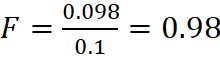
Thus, the titrant has a correction factor of 0.98.
Conclusion
The preparation of acidic and basic titrants involves making an approximate solution of the required concentration, whereas standardization determines its exact concentration. HCl is commonly standardized using sodium carbonate, while NaOH is commonly standardized using potassium hydrogen phthalate. In pharmaceutical analysis, accurate standardization is essential because the reliability of the assay depends directly on the exact concentration of the titrant.
Editorial Note
This article has been carefully researched and written by Deepak Rajput with a focus on accuracy, clarity, and evidence-based healthcare information. Pharmaacademias.com