Pharmacy Degree to Job: In today’s highly competitive pharmaceutical industry, earning a pharmacy degree is no longer enough to secure a job. Every year, thousands of students graduate with strong academic backgrounds, yet many struggle to get shortlisted for interviews or land their first role.
The problem is not a lack of knowledge. Most pharmacy students understand core subjects like pharmacology, pharmaceutics, and pharmaceutical chemistry. The real issue lies in how effectively they present their knowledge and align themselves with industry expectations.
This blog is designed to bridge that gap. It will help you understand how to build a job-ready profile by focusing on three critical areas:
- ATS-friendly resume building
- LinkedIn profile optimization
- Career clarity in the pharmaceutical industry
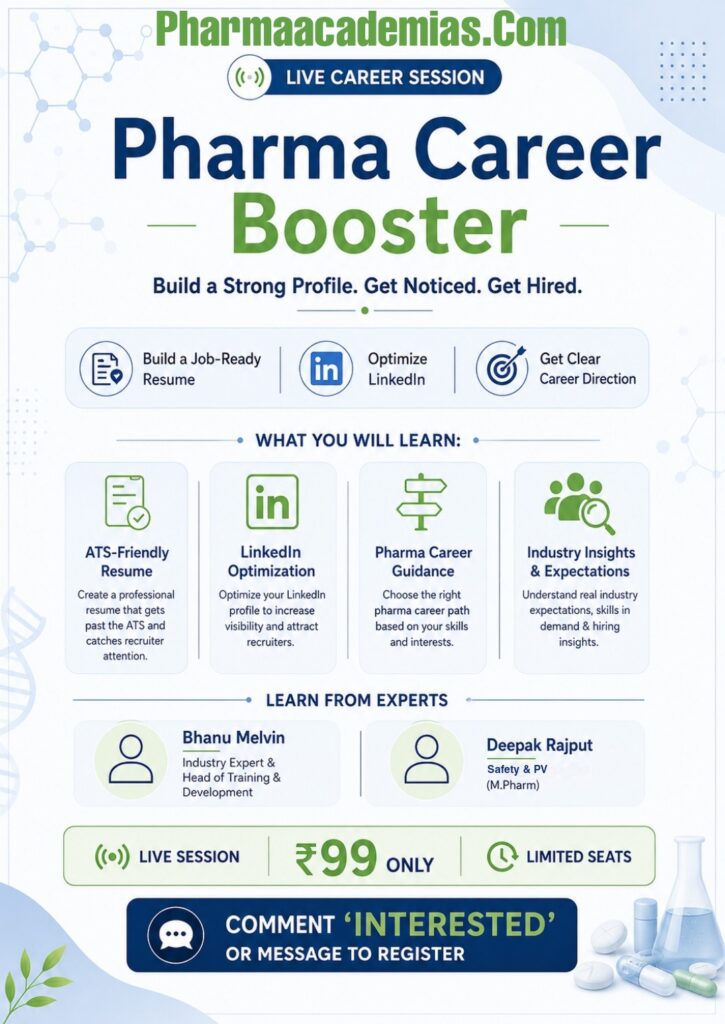
Want to Build a Job-Ready Profile?
If you are a pharmacy student who wants to:
- Create an ATS-friendly resume
- Optimize your LinkedIn profile
- Get clear guidance about your career
We are conducting a live practical session to help you achieve this.
👉 Fill the form below to reserve your seat and get complete details:
Limited seats available to keep the session interactive.
Understanding the Gap Between Education and Industry
Why Pharmacy Students Struggle to Get Jobs
Many pharmacy graduates face rejection despite having good academic records. This happens because:
- Resumes are not aligned with ATS (Applicant Tracking Systems)
- LinkedIn profiles are incomplete or poorly optimized
- Students lack clarity about career paths
- There is minimal exposure to real industry expectations
What Recruiters Actually Look For
Recruiters in the pharmaceutical sector typically evaluate candidates based on:
- Clear and structured resumes
- Relevant keywords and skills
- Professional online presence
- Basic understanding of industry roles
- Communication and clarity
This means that even a talented student can miss opportunities if these elements are not properly presented.
Section 1: Building an ATS-Friendly Resume
What is an ATS-Friendly Resume?
An ATS-friendly resume is designed to pass through Applicant Tracking Systems used by companies to filter candidates. These systems scan resumes for specific keywords, formatting, and relevance before shortlisting them.
Key Features of an ATS-Friendly Resume
To ensure your resume gets shortlisted, include the following:
1. Clear Structure
- Contact Information
- Objective or Summary
- Education
- Skills
- Projects or Internships
- Certifications
2. Use of Keywords
Include industry-relevant keywords such as:
- Pharmacovigilance
- Regulatory Affairs
- Quality Assurance
- Clinical Research
- GMP (Good Manufacturing Practices)
3. Simple Formatting
- Avoid tables, graphics, and complex designs
- Use standard fonts (Arial, Calibri)
- Keep it clean and readable
4. Achievement-Oriented Content
Instead of writing:
- “Worked on a project”
Write:
- “Conducted a research project on anti-psoriatic activity using in vivo models”
Common Resume Mistakes to Avoid
- Using generic objectives
- Adding irrelevant information
- Poor formatting
- Lack of keywords
- Spelling and grammatical errors
Section 2: LinkedIn Profile Optimization for Pharmacy Students
Why LinkedIn is Important in 2026
LinkedIn has become one of the most powerful platforms for job searching and networking. Many recruiters actively search for candidates directly on LinkedIn.
Key Elements of an Optimized LinkedIn Profile
1. Professional Headline
Instead of:
“Student”
Use:
“Pharmacy Graduate | Interested in Regulatory Affairs | Skilled in GMP & Documentation”
2. About Section
Write a concise summary that includes:
- Your background
- Your interests
- Your career goals
- Key skills
3. Skills and Keywords
Add relevant skills such as:
- Drug Safety
- Clinical Data Analysis
- Quality Control
- Regulatory Documentation
4. Profile Photo and Banner
- Use a professional photo
- Keep the background simple
5. Activity and Engagement
- Share industry-related posts
- Connect with professionals
- Engage with content regularly
Benefits of LinkedIn Optimization
- Increased visibility to recruiters
- Better networking opportunities
- Direct job leads
- Personal branding
Section 3: Career Options in the Pharmaceutical Industry
Top Career Paths for Pharmacy Students
1. Regulatory Affairs
- Focus: Drug approvals, documentation, compliance
- Skills: Attention to detail, documentation
2. Quality Assurance (QA)
- Focus: Ensuring product quality and standards
- Skills: GMP, auditing
3. Pharmacovigilance (PV)
- Focus: Drug safety and adverse event reporting
- Skills: Data analysis, reporting
4. Clinical Research
- Focus: Clinical trials and data management
- Skills: Research methodology
5. Hospital Pharmacy
- Focus: Patient care and medication management
How to Choose the Right Career Path
Ask yourself:
- What are your strengths?
- Do you prefer research, documentation, or patient interaction?
- Are you detail-oriented or analytical?
The Importance of Guidance and Mentorship
One of the biggest challenges students face is the lack of proper guidance.
Learning from professionals who have:
- Academic experience
- Industry exposure
- Training and hiring knowledge
can significantly improve your career direction.
When students receive the right mentorship, they:
- Avoid common mistakes
- Gain clarity faster
- Improve confidence
- Make informed decisions
Practical Steps to Become Job-Ready
Here is a simple action plan:
Step 1: Build Your Resume
- Use ATS-friendly format
- Add relevant keywords
- Highlight achievements
Step 2: Optimize LinkedIn
- Complete your profile
- Use proper keywords
- Stay active
Step 3: Gain Clarity
- Explore career options
- Talk to professionals
- Attend workshops or sessions
Step 4: Apply Strategically
- Use job portals
- Network on LinkedIn
- Customize applications
Final Thoughts
A pharmacy degree gives you knowledge, but your presentation and clarity determine your career success.
In today’s competitive environment:
- A strong resume gets you shortlisted
- A good LinkedIn profile gets you noticed
- Clear career direction helps you grow
If you focus on these three areas, you can significantly increase your chances of getting hired.
Frequently Asked Questions (Q&A)
Q1. What is an ATS-friendly resume?
An ATS-friendly resume is designed to pass through Applicant Tracking Systems by using proper keywords, simple formatting, and relevant information.
Q2. How long should a pharmacy resume be?
Ideally, a fresher’s resume should be 1 page, focusing on relevant skills, education, and projects.
Q3. Is LinkedIn really important for pharmacy students?
Yes, LinkedIn is extremely important. Many recruiters use it to find candidates, and it helps in networking and job searching.
Q4. Which career is best after B.Pharm?
There is no single “best” career. Popular options include:
- Regulatory Affairs
- Quality Assurance
- Pharmacovigilance
- Clinical Research
Your choice should depend on your interests and skills.
Q5. How can I get my first job in pharma?
- Build a strong resume
- Optimize LinkedIn
- Apply consistently
- Network with professionals
- Attend career guidance sessions
Q6. Do certifications help in getting a job?
Yes, certifications in areas like pharmacovigilance, clinical research, or regulatory affairs can improve your profile and increase your chances.
Q7. What are common mistakes students make?
- Poor resume formatting
- Lack of keywords
- Incomplete LinkedIn profile
- No career clarity
- Applying randomly without strategy
Conclusion
Success in the pharmaceutical industry is not just about what you know—it’s about how effectively you present yourself and align with industry expectations.
Start working on your resume, LinkedIn profile, and career clarity today. Small improvements in these areas can create a big impact on your future.