Psychology in Healthcare: Psychology is an important subject in healthcare and health sciences because it helps in understanding human behavior, emotions, thoughts, and mental processes. In the healthcare field, patients not only suffer physically but also experience emotional and psychological problems such as fear, anxiety, stress, depression, and frustration. Therefore, healthcare professionals must understand the psychological aspects of patients in order to provide proper treatment and care.
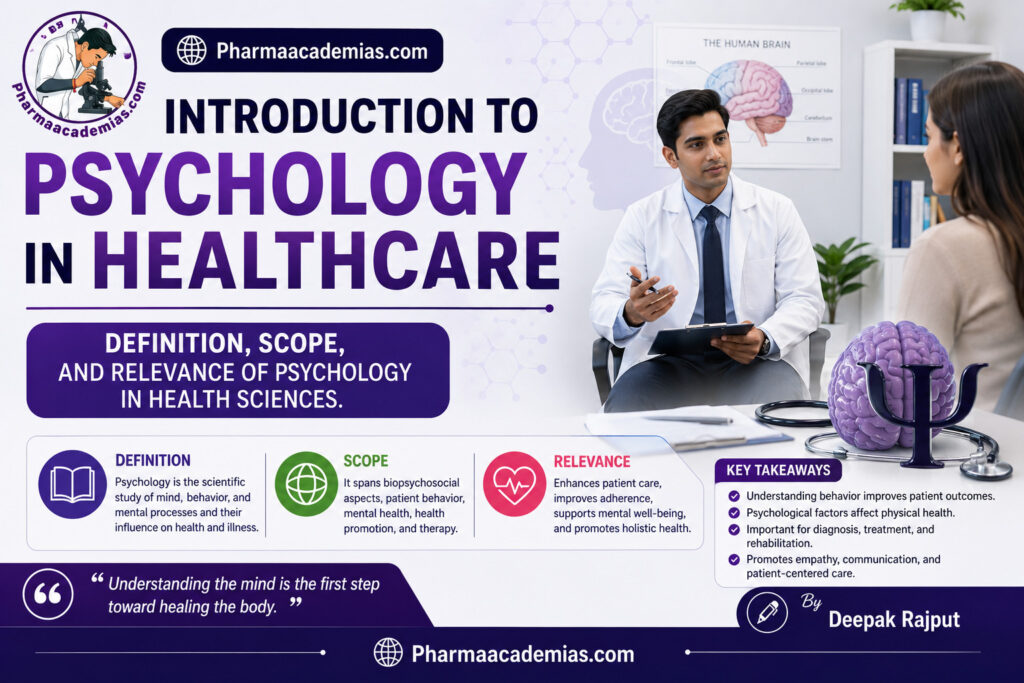
In B.Pharm and other health science courses, psychology helps students understand patient behavior, improve communication skills, promote medication adherence, and provide patient-centered care. Modern healthcare systems recognize that good health depends not only on physical condition but also on mental and social well-being.
Definition of Psychology
The word psychology is derived from two Greek words:
- Psyche = soul or mind
- Logos = study
Psychology can be defined as:
“The scientific study of behavior and mental processes.”
It studies how people think, feel, behave, learn, remember, and respond to different situations.
Psychology in Healthcare
Psychology in healthcare refers to the application of psychological principles and knowledge in medical and health-related fields. It helps healthcare professionals understand:
- Patient emotions
- Behavioral responses
- Mental health conditions
- Communication patterns
- Coping mechanisms during illness
Psychology plays a major role in improving treatment outcomes and maintaining overall well-being.
Scope of Psychology in Health Sciences
The scope of psychology in healthcare is very broad. It is useful in almost every branch of health sciences including medicine, nursing, pharmacy, physiotherapy, and public health.
1. Understanding Patient Behavior
Patients react differently to illness and treatment. Some patients cooperate well, while others may become anxious, fearful, or non-compliant. Psychology helps healthcare professionals understand these behaviors and manage patients effectively.
2. Improving Communication
Effective communication between healthcare professionals and patients is essential. Psychology helps in:
- Developing empathy
- Improving listening skills
- Counseling patients
- Building trust
Good communication improves patient satisfaction and treatment adherence.
3. Mental Health Care
Psychology is important in identifying and managing mental disorders such as:
- Anxiety
- Depression
- Stress disorders
- Addiction
- Schizophrenia
Psychological therapies and counseling help patients recover emotionally and mentally.
4. Stress Management
Stress affects both mental and physical health. Long-term stress may contribute to:
- Hypertension
- Diabetes
- Heart disease
- Sleep disorders
Psychology provides stress management techniques such as:
- Relaxation therapy
- Meditation
- Counseling
- Cognitive behavioral therapy
5. Behavioral Modification
Psychology helps in changing unhealthy habits and promoting healthy behaviors. It is useful in:
- Smoking cessation
- Alcohol de-addiction
- Weight management
- Healthy diet practices
- Exercise motivation
Behavioral therapy is widely used in preventive healthcare.
6. Pain Management
Pain perception is influenced by emotional and psychological factors. Anxiety and depression can increase pain intensity. Psychological methods such as relaxation and counseling help in pain control, especially in chronic diseases.
7. Rehabilitation and Recovery
Patients recovering from surgery, accidents, stroke, or chronic illness often need psychological support. Psychology helps improve:
- Motivation
- Emotional adjustment
- Confidence
- Social adaptation
Branches of Psychology Related to Healthcare
1. Clinical Psychology: Deals with diagnosis and treatment of mental disorders through counseling and psychotherapy.
2. Health Psychology: Focuses on the relationship between behavior, stress, and physical health.
3. Counseling Psychology: Provides emotional support and guidance for personal and social problems.
4. Developmental Psychology: Studies psychological growth and development from childhood to old age.
5. Social Psychology: Studies how social environment and relationships influence human behavior.
Relevance of Psychology in Healthcare
Psychology has great importance in modern healthcare systems because it improves the quality of patient care.
1. Holistic Healthcare
Healthcare today follows a holistic approach, which considers:
- Physical health
- Mental health
- Emotional well-being
- Social factors
Psychology helps in treating the patient as a whole person rather than focusing only on disease.
2. Better Doctor–Patient Relationship
Psychological understanding helps healthcare professionals communicate effectively with patients. A good relationship increases:
- Patient trust
- Treatment adherence
- Cooperation during therapy
3. Improvement in Treatment Outcomes
Positive mental health improves recovery rates. Patients who are motivated and emotionally stable usually respond better to treatment.
4. Prevention of Diseases
Psychology encourages healthy lifestyle practices such as:
- Proper diet
- Exercise
- Stress reduction
- Avoidance of smoking and alcohol
This helps in disease prevention and health promotion.
5. Importance in Pharmacy Practice
For B.Pharm students and pharmacists, psychology is highly relevant because pharmacists interact directly with patients.
Psychology helps pharmacists in:
- Patient counseling
- Improving medication adherence
- Understanding patient attitudes
- Managing drug abuse and addiction cases
- Providing emotional support to chronic patients
A pharmacist with good psychological understanding can improve therapeutic outcomes and patient satisfaction.
Psychological Factors Affecting Health
Several psychological factors influence health and illness.
1. Stress: Excessive stress weakens the immune system and increases the risk of diseases.
2. Emotions: Negative emotions such as anger, fear, and anxiety can affect physical health.
3. Attitude: A positive attitude helps patients cope better with illness and treatment.
4. Motivation: Motivated patients are more likely to follow treatment plans and maintain healthy behaviors.
Biopsychosocial Model
Modern healthcare follows the biopsychosocial model, which explains that health is influenced by three major factors:
Biological Factors
- Genetics
- Infection
- Injury
Psychological Factors
- Stress
- Emotions
- Personality
Social Factors
- Family support
- Culture
- Economic condition
All these factors work together to affect overall health.
Importance of Psychology for Healthcare Students
Psychology helps healthcare students:
- Understand patient behavior
- Improve communication skills
- Develop empathy and compassion
- Manage stressful situations
- Build professional confidence
- Provide patient-centered care
For B.Pharm students, psychology is particularly useful in clinical pharmacy, pharmacovigilance, patient counseling, and community pharmacy practice.
Conclusion
Psychology is an essential part of healthcare and health sciences. It helps in understanding human behavior, emotions, mental processes, and their influence on health and disease. In healthcare settings, psychology improves communication, patient care, stress management, rehabilitation, and treatment adherence.
For B.Pharm students and healthcare professionals, knowledge of psychology is important for providing effective, compassionate, and holistic healthcare services. By combining medical knowledge with psychological understanding, healthcare professionals can improve both patient satisfaction and treatment outcomes.