Branches of Psychology: Psychology has several branches that contribute significantly to healthcare and medical sciences. These branches help healthcare professionals understand human behavior, emotions, mental health, learning patterns, and responses to illness and treatment. In healthcare settings, psychological knowledge improves patient care, communication, rehabilitation, and treatment outcomes.
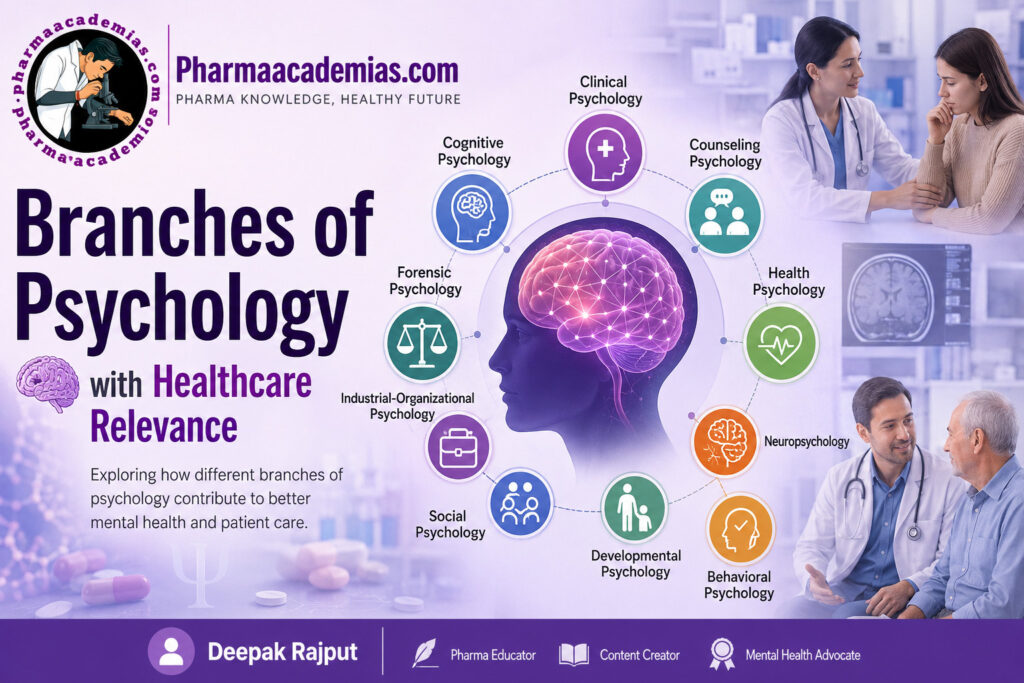
Among the various branches of psychology, clinical psychology, health psychology, behavioral psychology, and developmental psychology are especially important in healthcare practice.
Branches of Psychology
1. Clinical Psychology
Clinical psychology is the branch of psychology that deals with the assessment, diagnosis, treatment, and prevention of mental, emotional, and behavioral disorders. It combines psychological theories and scientific methods to understand abnormal behavior and provide therapeutic support to patients.
Clinical psychologists work in:
- Hospitals
- Mental health clinics
- Rehabilitation centers
- Community healthcare settings
- Counseling centers
Objectives of Clinical Psychology
The main objectives of clinical psychology are:
- To identify mental and emotional problems
- To diagnose psychological disorders
- To provide counseling and psychotherapy
- To improve mental well-being
- To help patients cope with illness and stress
Common Disorders Managed
Clinical psychology is involved in the management of:
- Anxiety disorders
- Depression
- Schizophrenia
- Bipolar disorder
- Obsessive-compulsive disorder (OCD)
- Addiction and substance abuse
- Personality disorders
- Stress-related disorders
Techniques Used in Clinical Psychology
Clinical psychologists use several methods such as:
- Psychological assessment
- Counseling
- Psychotherapy
- Cognitive Behavioral Therapy (CBT)
- Behavioral therapy
- Relaxation techniques
- Personality testing
Relevance in Healthcare
Clinical psychology has great importance in healthcare because mental health directly affects physical health and recovery.
Healthcare Relevance
- Helps patients cope with chronic diseases
- Reduces anxiety before surgery
- Supports cancer patients emotionally
- Assists in rehabilitation after trauma or stroke
- Helps manage stress and depression in hospitalized patients
- Improves quality of life in mentally ill patients
For example, a patient with cancer may experience fear, depression, and emotional distress. Clinical psychologists help such patients develop coping strategies and emotional resilience.
2. Health Psychology
Health psychology is a branch of psychology that studies how biological, psychological, and social factors influence health and illness. It focuses on understanding health-related behaviors and promoting healthy lifestyles.
Health psychology is based on the biopsychosocial model, which states that health is affected not only by physical conditions but also by mental and social factors.
Objectives of Health Psychology
The major objectives are:
- Promotion of healthy behaviors
- Prevention of diseases
- Understanding psychological causes of illness
- Improving patient adherence to treatment
- Managing stress and lifestyle-related disorders
Areas of Study
Health psychology studies:
- Stress and health
- Lifestyle habits
- Smoking and alcohol addiction
- Exercise behavior
- Eating habits
- Coping with chronic illness
- Pain management
Role in Disease Prevention
Health psychology helps prevent diseases by encouraging:
- Healthy diet
- Physical activity
- Stress management
- Vaccination awareness
- Smoking cessation
- Avoidance of substance abuse
Relevance in Healthcare
Health psychology is highly relevant in modern healthcare systems because many diseases are linked to behavior and lifestyle.
Healthcare Relevance
- Helps in prevention of lifestyle diseases
- Encourages medication adherence
- Improves patient motivation
- Assists in chronic disease management
- Reduces healthcare costs through prevention
For example:
- Stress management helps reduce hypertension.
- Behavioral counseling helps diabetic patients maintain proper diet and exercise.
3. Behavioral Psychology
Behavioral psychology, also called behaviorism, is the branch of psychology that studies observable behavior and how behavior is learned through interaction with the environment.
This branch focuses on the idea that behavior can be modified through:
- Learning
- Conditioning
- Reinforcement
- Punishment
Important psychologists associated with behavioral psychology include:
- B. F. Skinner
- Ivan Pavlov
- John B. Watson
Principles of Behavioral Psychology
1. Classical Conditioning: Learning occurs through association between stimuli.
Example: A patient may develop fear of injections after a painful previous experience.
2. Operant Conditioning: Behavior is influenced by rewards and punishments.
Example: Patients are encouraged to maintain healthy habits through positive reinforcement.
3. Reinforcement
Desired behavior is strengthened through rewards.
4. Punishment: Undesirable behavior is reduced through negative consequences.
Applications in Healthcare
Behavioral psychology is widely used in:
- Addiction treatment
- Weight reduction programs
- Smoking cessation
- Child behavior therapy
- Rehabilitation therapy
- Habit modification
Relevance in Healthcare
Behavioral psychology helps healthcare professionals change unhealthy patient behaviors and promote positive habits.
Healthcare Relevance
- Helps patients quit smoking and alcohol
- Encourages adherence to medications
- Assists in obesity management
- Improves rehabilitation outcomes
- Helps manage phobias and anxiety disorders
Behavior modification programs are commonly used in hospitals and community healthcare settings.
4. Developmental Psychology
Developmental psychology is the branch of psychology that studies physical, emotional, cognitive, and social changes throughout the human lifespan.
It examines development during:
- Infancy
- Childhood
- Adolescence
- Adulthood
- Old age
Each stage of development has unique psychological characteristics and healthcare needs.
Objectives of Developmental Psychology
The objectives include:
- Understanding growth and development
- Studying age-related behavior
- Identifying developmental problems
- Supporting emotional and social adjustment
Stages of Human Development
1. Infancy: Rapid physical and emotional development occurs.
2. Childhood: Learning, language development, and social behavior develop.
3. Adolescence: Emotional instability and identity formation are common.
4. Adulthood: Focus shifts to responsibility, career, and family.
5. Old Age: Aging-related cognitive and emotional changes occur.
Relevance in Healthcare
Developmental psychology helps healthcare professionals provide age-appropriate care and communication.
Healthcare Relevance
- Helps understand child behavior during illness
- Assists in pediatric counseling
- Supports adolescent mental health
- Helps manage aging-related psychological problems
- Assists in dementia and memory disorder care
For example:
- Children require emotional reassurance during hospitalization.
- Elderly patients may need psychological support for loneliness and cognitive decline.
Importance of These Branches in Healthcare
These branches of psychology collectively improve healthcare quality by:
- Enhancing patient communication
- Supporting mental health
- Promoting healthy behaviors
- Improving treatment adherence
- Assisting rehabilitation
- Providing age-specific patient care
Healthcare professionals who understand psychology can deliver more compassionate, patient-centered, and effective healthcare services.
Conclusion
Clinical, health, behavioral, and developmental psychology are highly important branches of psychology in healthcare and health sciences. Clinical psychology focuses on diagnosis and treatment of mental disorders, while health psychology emphasizes the relationship between behavior and physical health. Behavioral psychology helps modify unhealthy behaviors, and developmental psychology studies psychological changes across different stages of life.
Together, these branches contribute significantly to disease prevention, mental health care, rehabilitation, patient counseling, and holistic healthcare. For B.Pharm students and healthcare professionals, understanding these branches is essential for improving patient care, communication, and overall treatment outcomes.