
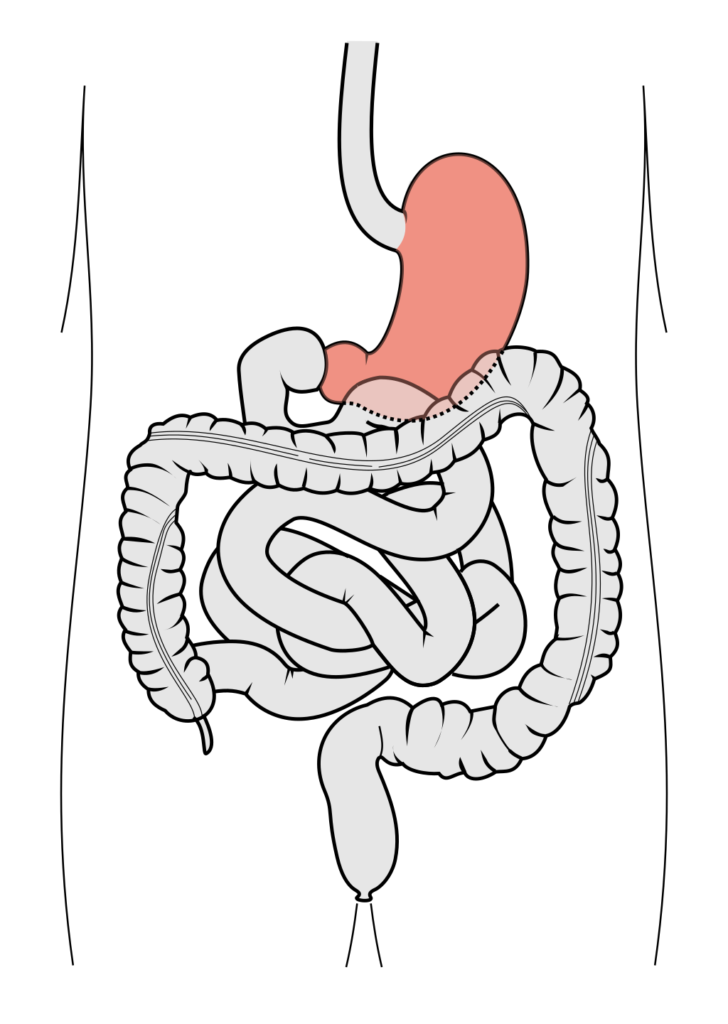
According to biology, the stomach is the J-shaped, thick-walled organ that lies in the digestive cavity of the body. Even though a minimal percentage of digestion occurs in the mouth, the digestive process begins in the buccal cavity itself.
The stomach connects the esophagus to the first part of the small intestine, known as the duodenum. It is an enlargement of the alimentary canal that lies directly inferior to the esophagus. We will discuss the human stomach and its functions. It’s important to note that the stomach primarily stores the bolus, which consists of chewed food mixed with saliva from the buccal cavity, and it serves as the secondary function for digestion.
The article deals with a comprehensive study of the stomach that includes discussion around stomach definition, stomach anatomy, and stomach structure. The anatomical study also mentions the stomach location. The article also briefly discusses common stomach diseases.
THE STOMACH STRUCTURE
The stomach divides into four sections: the fundus, body, antrum, and pylorus. The opening at the beginning of the stomach, known as the cardia region, defines the cardia as the opening from the esophagus to the stomach. Each section of the stomach has a unique function.The fundus follows the cardia; it is the dome-shaped section; it is located inferior to the diaphragm, above and to the left of the cardia.
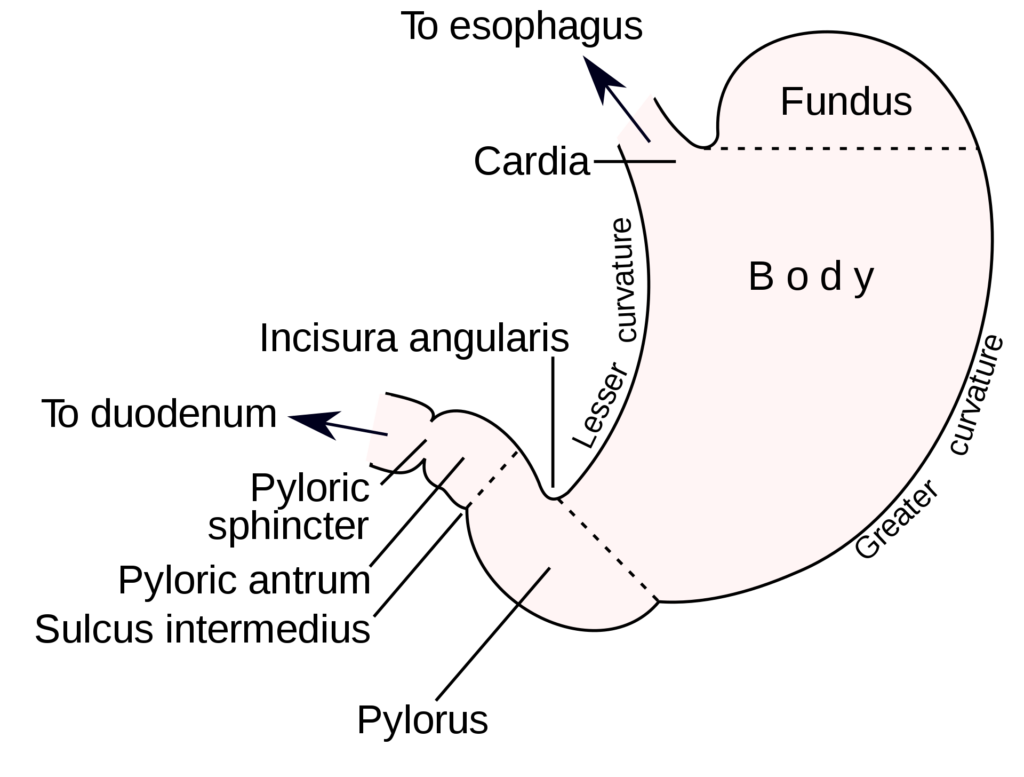
The stomach has three regions: the fundus, body, and antrum. The pyloric sphincter is relaxed and open when the stomach is inactive, and it closes when the stomach contains food.
• The stomach has two curvatures The lesser curvature is short and lies on the posterior surface of the stomach. The greater curvature is long and towards the pyloric sphincter.
• The stomach consists of three layers of smooth muscle fibers: the outer layer of longitudinal fibers, the middle layer of circular fibers, and the inner layer of oblique fibers.
• The innermost part of the stomach is relatively thick and consists of numerous folds called rugae. Rugae contain a very large number of tubular glands that secrete gastric juice.
±