Learning and memory are important psychological processes that influence human behavior, habits, and decision-making. In healthcare, these processes play a major role in developing healthy behaviors, improving treatment adherence, preventing diseases, and promoting overall well-being.
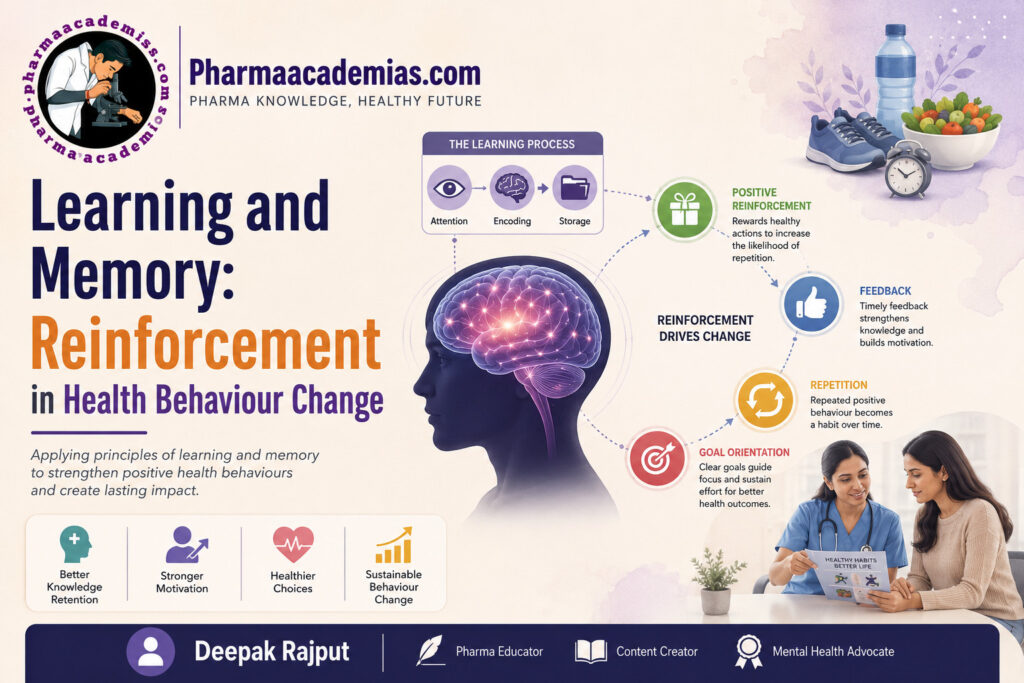
Many health-related behaviors such as taking medicines regularly, following a healthy diet, exercising, avoiding smoking, and maintaining hygiene are learned behaviors. Healthcare professionals use principles of learning, memory, and reinforcement to encourage positive behavioral changes in patients.
Learning and Memory
Learning
Learning is a relatively permanent change in behavior, knowledge, or attitude that occurs through experience, practice, or training.
In simple words:
Learning is the process of acquiring new knowledge, skills, habits, or behaviors.
Learning helps individuals adapt to their environment and improve their responses to situations.
Characteristics of Learning
- Learning causes behavioral change.
- It occurs through experience and practice.
- It may be positive or negative.
- It helps in adaptation.
- Learned behavior can be retained through memory.
Types of Learning
1. Classical Conditioning: Classical conditioning is learning through association between two stimuli.
It was explained by Ivan Pavlov.
Example in Healthcare
A patient who experienced pain during an injection may later develop fear when entering a hospital.
2. Operant Conditioning: Operant conditioning is learning through rewards and punishments.
It was developed by B. F. Skinner.
Behavior that is rewarded tends to be repeated, while behavior that is punished tends to decrease.
Example in Healthcare
A diabetic patient who receives appreciation for maintaining blood sugar levels may continue following a healthy diet and exercise routine.
3. Observational Learning: Learning occurs by observing others.
It was proposed by Albert Bandura.
Example
Children may learn healthy hygiene habits by observing parents.
4. Trial and Error Learning: Learning occurs through repeated attempts until success is achieved.
Example: Patients may learn proper inhaler technique after repeated practice.
Memory
Memory is the ability to store, retain, and recall learned information when needed.
Memory is the process by which information is encoded, stored, and retrieved.
Memory helps individuals remember health instructions, medication schedules, and lifestyle recommendations.
Process of Memory
Memory involves three major processes:
1. Encoding: Receiving and processing information.
2. Storage: Retaining information in the brain.
3. Retrieval: Recalling stored information when required.
Types of Memory
1. Sensory Memory: Retains information for a very short duration.
2. Short-Term Memory: Stores information temporarily for seconds or minutes.
Example: Remembering a prescription briefly.
3. Long-Term Memory: Stores information for a long time.
Example: Remembering how to use an insulin injection device.
Factors Affecting Memory
Memory can be influenced by:
- Age
- Attention
- Stress
- Motivation
- Sleep
- Emotional state
- Illness
- Drugs and alcohol
Importance of Learning and Memory in Healthcare
Learning and memory are essential in healthcare because patients must understand and remember medical advice for successful treatment.
1. Patient Education
Healthcare professionals educate patients regarding:
- Disease conditions
- Medication use
- Diet plans
- Exercise
- Lifestyle modification
Patients learn and remember these instructions for proper disease management.
2. Medication Adherence
Patients must remember:
- Drug dosage
- Timing
- Duration
- Precautions
Poor memory may lead to non-adherence and treatment failure.
3. Rehabilitation
Patients recovering from injury or surgery learn:
- Physical exercises
- Mobility techniques
- Behavioral adjustments
Repeated practice improves recovery.
4. Health Promotion
Healthy behaviors are learned gradually through:
- Awareness programs
- Counseling
- Reinforcement
- Repeated practice
Reinforcement
Reinforcement is a process in which a behavior is strengthened by providing a reward or removing an unpleasant condition after the behavior occurs.
Reinforcement increases the likelihood that a behavior will be repeated.
It is a major concept in operant conditioning.
Types of Reinforcement
1. Positive Reinforcement: Positive reinforcement involves providing a pleasant reward after a desired behavior.
Example
A doctor praises a patient for quitting smoking.
This encouragement motivates the patient to continue healthy behavior.
2. Negative Reinforcement: Negative reinforcement involves removing an unpleasant condition when desired behavior occurs.
Example
A patient exercises regularly to reduce back pain.
Removal of pain encourages continuation of exercise.
Punishment
Punishment decreases undesirable behavior.
Example
A patient experiences health complications due to smoking and becomes motivated to stop smoking.
Reinforcement in Health Behaviour Change
Health behavior change refers to modification of unhealthy habits and adoption of healthy practices.
Reinforcement plays an important role in encouraging patients to maintain positive health behaviors.
Areas Where Reinforcement is Used
1. Smoking Cessation
Patients are rewarded or appreciated for reducing smoking habits.
Positive reinforcement improves motivation.
2. Weight Management
Patients receive encouragement for:
- Following diet plans
- Regular exercise
- Weight reduction achievements
3. Diabetes Management
Healthcare professionals reinforce:
- Blood glucose monitoring
- Medication adherence
- Healthy eating habits
4. Drug and Alcohol De-addiction
Behavioral therapy uses reinforcement to:
- Encourage abstinence
- Reduce relapse
- Improve coping skills
5. Medication Adherence
Pharmacists and healthcare workers use reinforcement by:
- Appreciating compliance
- Providing reminders
- Educating patients regularly
Techniques Used in Reinforcement for Health Behaviour Change
1. Counseling: Counseling motivates patients to continue healthy habits.
2. Reward Systems: Small rewards increase motivation.
Example:Children receiving rewards for vaccination compliance.
3. Self-Monitoring
Patients monitor:
- Weight
- Blood sugar
- Exercise progress
This creates motivation and reinforcement.
4. Family and Social Support: Support from family and friends reinforces positive behavior.
5. Health Education Programs: Repeated awareness programs strengthen healthy learning and memory.
Importance of Reinforcement in Healthcare
Reinforcement helps:
- Improve treatment adherence
- Promote healthy lifestyles
- Reduce unhealthy behaviors
- Increase patient motivation
- Improve long-term disease management
- Enhance rehabilitation outcome
Clinical Applications
In Psychiatry
Behavior therapy uses reinforcement in treating:
- Addiction
- Anxiety disorders
- Phobias
In Pediatrics
Children learn healthy habits through praise and rewards.
In Chronic Disease Management
Patients with diabetes, hypertension, and asthma are encouraged through continuous reinforcement.
In Public Health
Awareness campaigns reinforce:
- Hand hygiene
- Vaccination
- Safe sexual practices
- Nutritional habits
Role of Pharmacists in Health Behaviour Change
Pharmacists play a major role in reinforcing positive health behaviors.
Role of Pharmacists
- Patient counseling
- Medication reminders
- Motivating adherence
- Educating about side effects
- Supporting smoking cessation programs
- Promoting rational drug use
A pharmacist who understands learning and reinforcement principles can improve therapeutic outcomes
Barriers to Health Behaviour Change
Sometimes reinforcement may fail due to:
- Lack of motivation
- Poor memory
- Stress
- Financial problems
- Addiction
- Lack of family support
- Mental illness
Healthcare professionals must identify and address these barriers.
Conclusion
Learning and memory are essential psychological processes that influence human behavior and health practices. Learning helps individuals acquire new habits and knowledge, while memory helps retain and recall important health-related information.
Reinforcement is a powerful method for strengthening positive health behaviors and reducing unhealthy habits. It plays a major role in smoking cessation, medication adherence, chronic disease management, rehabilitation, and health promotion.
In healthcare, the application of learning, memory, and reinforcement principles improves patient compliance, treatment outcomes, and overall quality of life. For healthcare professionals and B.Pharm students, understanding these concepts is essential for effective patient counseling and behavior modification.