Emotion and motivation are important psychological processes that strongly influence human behavior, decision-making, health practices, and overall well-being. In healthcare, emotions affect how patients respond to illness, treatment, pain, and recovery, while motivation determines whether individuals adopt healthy behaviors and follow medical advice.
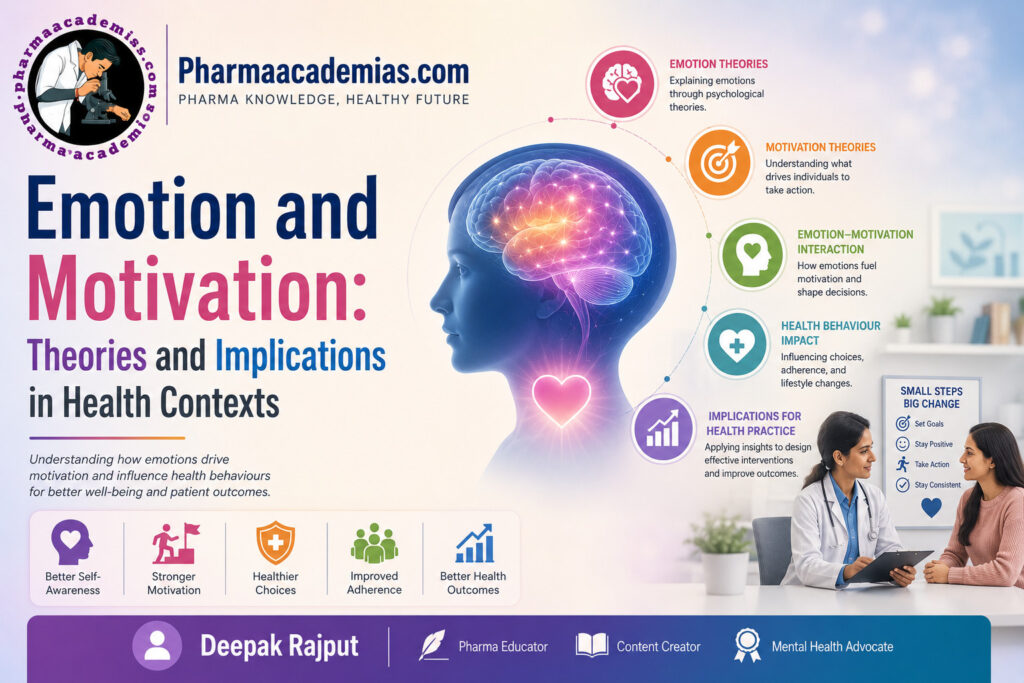
Patients suffering from illness often experience emotions such as fear, anxiety, sadness, anger, or hope. Similarly, motivation plays an important role in maintaining healthy habits such as taking medicines regularly, exercising, avoiding smoking, and following dietary restrictions.
For healthcare professionals and B.Pharm students, understanding emotion and motivation is essential for effective patient counseling, improving treatment adherence, promoting mental health, and enhancing healthcare outcomes.
Emotion and Motivation Theories
Emotion
Emotion is a complex psychological and physiological state that involves feelings, thoughts, bodily changes, and behavioral responses.
Emotion can be defined as a feeling state accompanied by physiological changes and behavioral reactions.
Emotions influence how individuals perceive situations and respond to them.
Components of Emotion
Emotion has three major components:
1. Cognitive Component: Involves thoughts and interpretation of situations.
Example: A patient thinking that illness is dangerous may feel fear.
2. Physiological Component
Includes bodily changes such as:
- Increased heart rate
- Sweating
- Rapid breathing
- Increased blood pressure
These changes are controlled mainly by the autonomic nervous system.
3. Behavioral Component
Includes outward expression of emotions such as:
- Crying
- Smiling
- Anger
- Trembling
Types of Emotions
Positive Emotions
- Happiness
- Love
- Hope
- Satisfaction
Positive emotions improve mental and physical health.
Negative Emotions
- Fear
- Anxiety
- Anger
- Depression
- Sadness
Excessive negative emotions may contribute to illness.
Theories of Emotion
Several psychologists have explained how emotions occur.
1. James–Lange Theory
This theory was proposed by:
- William James
- Carl Lange
Main Idea
According to this theory:
Physiological changes occur first, and emotion is experienced afterward.
Example
A person sees a snake:
- Heart rate increases
- Sweating occurs
- Then the person feels fear
Thus, bodily reactions produce emotional experience.
2. Cannon–Bard Theory
Proposed by:
- Walter Cannon
- Philip Bard
Main Idea
According to this theory:
Physiological reactions and emotional experiences occur simultaneously.
Example
On seeing danger:
- Fear is felt
- Heart rate increases at the same time
3. Schachter–Singer Two-Factor Theory
Developed by:
- Stanley Schachter
- Jerome Singer
Main Idea
Emotion depends on:
- Physiological arousal
- Cognitive interpretation of the situation
Example
An increased heartbeat may be interpreted as fear or excitement depending on the situation
4. Cognitive Appraisal Theory
Proposed by Richard Lazarus.
Main Idea
According to this theory:
Emotions result from how individuals evaluate or interpret events.
Example
A patient diagnosed with diabetes may react differently depending on personal beliefs and coping ability.
Motivation
Motivation is the internal process that initiates, directs, and maintains behavior toward achieving a goal.
Motivation is the driving force behind human actions and behavior.
It explains why individuals behave in certain ways.
Characteristics of Motivation
- It energizes behavior.
- It directs actions toward goals.
- It may be internal or external.
- It influences persistence and effort.
Types of Motivation
1. Intrinsic Motivation: Behavior driven by internal satisfaction or personal interest.
Example: A person exercises because it improves health and happiness.
2. Extrinsic Motivation: Behavior driven by external rewards or punishments.
Example: A patient follows treatment advice to avoid complications.
Theories of Motivation
1. Drive Reduction Theory
Proposed by Clark Hull.
Main Idea: Physiological needs create internal tension called drives, and behavior occurs to reduce this tension.
Example
Hunger motivates eating behavior.
2. Maslow’s Hierarchy of Needs
Proposed by Abraham Maslow.
Maslow explained motivation through a hierarchy of human needs.
Hierarchy of Needs
1. Physiological Needs
- Food
- Water
- Sleep
2. Safety Needs
- Security
- Protection
- Health
3. Love and Belongingness
- Family
- Friendship
- Social support
4. Esteem Needs
- Respect
- Achievement
- Recognition
5. Self-Actualization
- Personal growth
- Fulfillment of potential
According to Maslow, lower needs must be satisfied before higher needs become important.
3. Incentive Theory
Behavior is motivated by rewards and incentives.
Example
Patients may adopt healthy habits when rewarded or appreciated.
4. Self-Determination Theory
This theory emphasizes:
- Autonomy
- Competence
- Relatedness
People are more motivated when they feel independent and capable.
Implications of Emotion in Health Contexts
Emotions significantly influence physical and mental health.
1. Effect on Physical Health
Negative emotions may contribute to:
- Hypertension
- Heart disease
- Diabetes
- Weak immunity
- Sleep disorders
Chronic stress and anxiety can worsen disease conditions.
2. Effect on Mental Health
Uncontrolled emotions may lead to:
- Depression
- Anxiety disorders
- Substance abuse
- Emotional instability
3. Pain Perception
Emotions affect pain intensity.
Example: Anxiety and fear may increase pain perception in hospitalized patients.
4. Recovery and Healing
Positive emotions such as hope and optimism improve:
- Recovery speed
- Treatment adherence
- Immune function
5. Doctor–Patient Relationship
Healthcare professionals who understand patient emotions can:
- Build trust
- Reduce anxiety
- Improve communication
- Provide emotional support
Implications of Motivation in Health Contexts
Motivation strongly affects health-related behaviors.
1. Treatment Adherence
Motivated patients are more likely to:
- Take medicines properly
- Attend follow-up visits
- Follow dietary advice
2. Lifestyle Modification
Motivation is necessary for:
- Weight reduction
- Exercise
- Smoking cessation
- Alcohol de-addiction
3. Rehabilitation
Patients recovering from stroke, injury, or surgery need strong motivation for rehabilitation exercises and recovery programs.
4. Chronic Disease Management
Long-term diseases such as:
- Diabetes
- Hypertension
- Asthma
- Cancer
require continuous motivation to maintain treatment and healthy behaviors.
5. Mental Health Improvement
Motivation encourages:
- Social interaction
- Positive thinking
- Counseling participation
- Stress management
Role of Healthcare Professionals
Healthcare professionals play a major role in managing patient emotions and improving motivation.
Important Roles
- Providing counseling
- Giving reassurance
- Encouraging positive attitudes
- Educating patients
- Using motivational interviewing techniques
- Building supportive relationships
Role of Pharmacists
Pharmacists can help patients by:
- Explaining medication benefits
- Reducing fear of side effects
- Motivating medication adherence
- Counseling chronic disease patients
- Supporting smoking cessation programs
Good communication improves patient confidence and motivation.
Emotional and Motivational Problems in Patients
Patients may experience:
- Fear of diagnosis
- Anxiety about surgery
- Depression during chronic illness
- Loss of motivation during long treatments
Healthcare professionals should identify these problems early and provide psychological support.
Conclusion
Emotion and motivation are essential psychological processes that strongly influence health behavior, disease management, and patient well-being. Emotions affect physical and mental health, pain perception, recovery, and communication, while motivation drives individuals to adopt healthy behaviors and follow treatment plans.
Various theories of emotion and motivation explain how feelings arise and why people behave in certain ways. In healthcare settings, understanding these concepts helps professionals provide compassionate care, improve treatment adherence, promote healthy lifestyles, and support patients emotionally.