Culturally Appropriate and Inclusive Communication in Healthcare: Culturally appropriate and inclusive communication means communicating with patients by respecting their cultural background, beliefs, language, values, gender, and individual needs. It involves avoiding discrimination and using clear, respectful, and understandable language so that every patient feels valued, understood, included, and comfortable in receiving healthcare.
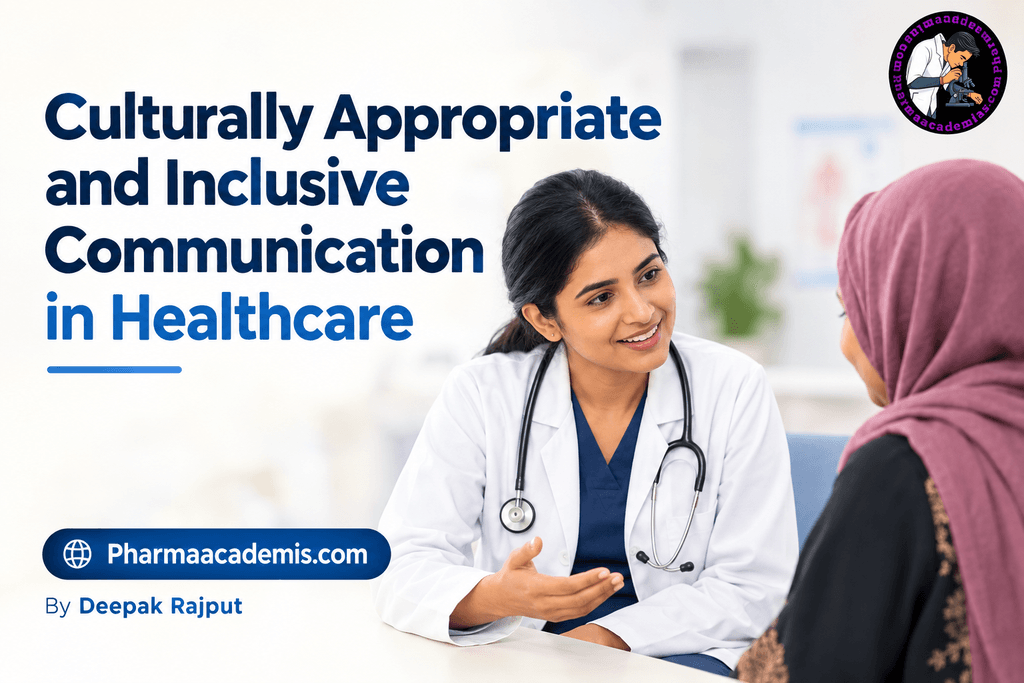
Culturally Appropriate and Inclusive Communication in Healthcare
1. Meaning
Culturally appropriate and inclusive communication means communicating with patients in a way that respects their culture, language, beliefs, values, abilities, and individual needs.
In healthcare, every patient is different. Their beliefs, language, education, family background, and way of understanding health may affect how they communicate and respond to treatment.
Therefore, healthcare professionals should provide communication that is respectful, understandable, non-judgmental, and inclusive.
Simple Definition
Culturally appropriate communication = Respect the patient’s cultural background and communicate according to their needs.
Inclusive communication = Make sure every patient can understand, participate in, and access healthcare communication.
2. Why Is It Important in Healthcare?
Culturally appropriate and inclusive communication helps to:
- Build trust between patient and healthcare professional.
- Improve patient satisfaction.
- Reduce misunderstanding.
- Improve medication adherence.
- Encourage patients to share their concerns.
- Reduce communication barriers.
- Improve patient safety.
- Provide patient-centered care.
- Respect patients’ beliefs and preferences.
- Improve healthcare outcomes.
3. Important Aspects of Culturally Appropriate Communication
A. Respect Cultural Differences
Healthcare professionals should respect differences in:
- Beliefs
- Values
- Customs
- Food practices
- Family structure
- Health practices
- Attitudes toward illness and treatment
Example
A patient’s cultural or religious practices may influence their diet or medication schedule.
The healthcare professional should discuss the issue respectfully rather than immediately rejecting the patient’s beliefs.
B. Use Appropriate Language
Language differences can create major communication problems.
Healthcare professionals should:
- Use language the patient understands.
- Avoid unnecessary technical terms.
- Speak clearly and slowly.
- Use an interpreter when required.
Example
Instead of saying:
“Take the medication BID.”
Say:
“Take this medicine two times a day.”
This is easier for the patient to understand.
4. Avoid Medical Jargon
Patients may not understand complicated medical terminology.
Example
Instead of:
“You have hypertension.”
You can say:
“Your blood pressure is higher than normal.”
Simple language improves understanding.
5. Use a Qualified Interpreter When Needed
When there is a significant language barrier, a qualified interpreter should be used when available.
Avoid relying on children or untrained family members for important medical information because important details may be misunderstood or left out.
6. Respect Religious and Cultural Beliefs
Patients may have beliefs that influence:
- Diet
- Fasting
- Medication use
- Medical procedures
- End-of-life decisions
- Healthcare choices
Healthcare professionals should ask and understand the patient’s preferences and consider them while providing appropriate care.
Example: If a patient is fasting for religious reasons, the healthcare professional can discuss whether the medication schedule needs to be adjusted safely.
7. Avoid Stereotyping
Stereotyping means assuming that every person belonging to a particular cultural group has the same beliefs or behavior.
This should be avoided.
Wrong approach: “People from your culture don’t usually take this medicine.”
Better approach: “Do you have any cultural or personal preferences that we should consider while planning your treatment?”
The second approach respects the individual patient.
8. Inclusive Communication
Inclusive communication means ensuring that communication is accessible and respectful to all patients, regardless of their individual characteristics or circumstances.
A healthcare professional should not discriminate against a patient based on:
- Age
- Gender
- Disability
- Language
- Education level
- Cultural background
- Socioeconomic circumstances
- Other personal differences
The goal is to make the patient feel respected, heard, and included.
9. Communication With Patients With Disabilities
Healthcare professionals should adapt communication according to the patient’s needs.
Hearing impairment
- Face the patient while speaking.
- Speak clearly.
- Use written communication when appropriate.
- Use sign-language interpretation when required.
Visual impairment
- Provide information verbally.
- Explain the location and use of medicines clearly.
- Provide accessible written information where possible.
Speech difficulties
- Give the patient sufficient time to respond.
- Do not interrupt.
- Use alternative communication methods when needed.
Cognitive or learning difficulties
- Use simple language.
- Give information in small steps.
- Repeat important instructions.
- Confirm understanding.
10. Use Patient-Centered Communication
The healthcare professional should involve the patient in communication and decision-making.
Instead of simply giving instructions:
“Take this medicine twice daily.”
Ask:
“What time of day would be easiest for you to take this medicine?”
This encourages patient participation while keeping the discussion focused on safe treatment.
11. Show Respect and Empathy
Culturally appropriate communication should be:
- Respectful
- Patient
- Empathetic
- Non-judgmental
- Polite
- Professional
Example
Instead of:
“You are not following the treatment properly.”
Say:
“Can you tell me what difficulties you are having with your treatment?”
This helps the patient discuss the actual problem without feeling blamed.
12. Check Patient Understanding
Never assume that a patient has understood the information simply because they nodded or said “yes.”
Use the teach-back method.
Example:
“Just to make sure I explained it clearly, can you tell me how you will take this medicine at home?”
This checks the healthcare professional’s communication, rather than testing or blaming the patient.
13. Common Barriers to Culturally Appropriate Communication
Important barriers include:
- Language differences
- Cultural differences
- Different health beliefs
- Low health literacy
- Medical jargon
- Stereotyping
- Prejudice
- Lack of empathy
- Disability-related communication difficulties
- Religious differences
- Lack of privacy
- Lack of appropriate interpretation services
14. How to Improve Culturally Appropriate and Inclusive Communication
Healthcare professionals should:
- Respect cultural differences.
- Use simple and clear language.
- Avoid unnecessary medical jargon.
- Listen actively.
- Avoid assumptions and stereotypes.
- Ask patients about their preferences.
- Use interpreters when necessary.
- Provide accessible communication for people with disabilities.
- Show empathy and respect.
- Encourage questions.
- Confirm understanding using teach-back.
- Maintain patient privacy and dignity.
- Involve patients in healthcare decisions.
15. Example in Pharmacy Practice
A pharmacist is counselling a patient who has difficulty understanding the instructions.
Poor communication:
“Take one tablet BID after meals.”
The patient may not understand BID.
Culturally appropriate and inclusive communication:
“Take one tablet two times a day, after breakfast and after dinner. Can you tell me when you will take the tablets?”
Here, the pharmacist:
- Uses simple language.
- Avoids jargon.
- Gives a practical example.
- Checks understanding.
- Encourages patient participation.
Quick Revision
| Concept | Meaning |
| Culturally appropriate communication | Communication that respects cultural beliefs, values, customs, and language |
| Inclusive communication | Communication that includes and supports patients with different needs and abilities |
| Interpreter | Helps overcome language barriers |
| Simple language | Makes health information easier to understand |
| Avoid stereotyping | Treat each patient as an individual |
| Empathy | Understand and respect the patient’s feelings |
| Teach-back | Ask the patient to explain instructions in their own words |
| Patient-centered communication | Involves the patient in communication and decisions |
Exam Memory Trick
Remember R-E-S-P-E-C-T:
R – Respect cultural differences
E – Easy/simple language
S – Stop stereotyping
P – Patient-centered communication
E – Empathy
C – Check understanding
T – Treat everyone inclusively
One-Line Exam Answer
Culturally appropriate and inclusive communication is a patient-centered approach that respects cultural differences and ensures that healthcare information is understandable, accessible, respectful, and free from discrimination.
Editorial Note
This article has been carefully researched and written by Deepak Rajput with a focus on accuracy, clarity, and evidence-based healthcare information. Pharmaacademias.com