Introduction to Excipients and Methods of Preparation: Pharmaceutical preparations are medicinal products formulated with active pharmaceutical ingredients (APIs) and other suitable substances to ensure safety, stability, effectiveness, and patient acceptability.
Official preparations are pharmaceutical preparations that are described in an official pharmacopoeia, such as the Indian Pharmacopoeia (IP), British Pharmacopoeia (BP), or United States Pharmacopeia (USP–NF). These preparations must comply with the applicable official standards for identity, strength, purity, quality, and other specified requirements.
Examples include purified water, simple syrup, aromatic water, iodine tincture, and certain official topical preparations.
2. Objectives of Studying Official Preparations
The study of official preparations helps students to:
- Understand the composition and uses of pharmaceutical preparations.
- Identify active ingredients, excipients, and vehicles.
- Learn suitable methods of preparation.
- Understand the importance of calculations and accurate measurements.
- Evaluate the quality, stability, and storage requirements of preparations.
- Understand pharmacopoeial standards and pharmaceutical labelling.
3. Excipients
Excipients are substances other than the active pharmaceutical ingredient that are intentionally included in a pharmaceutical formulation to support its manufacture, stability, administration, appearance, or performance.
Excipients are not necessarily pharmacologically inactive in every circumstance; their suitability depends on the ingredient, amount, route of administration, and patient population.
Functions of Excipients
- Improve the stability of the formulation.
- Increase the solubility or dissolution of a drug.
- Improve taste, odour, colour, and appearance.
- Maintain the required viscosity and consistency.
- Prevent microbial growth where appropriate.
- Facilitate manufacturing and administration.
- Maintain the pH and physical properties of the preparation.
4. Types of Excipients with Examples
| Type of excipient | Function | Examples |
| Vehicles and solvents | Dissolve or carry the drug | Purified water, ethanol, glycerol |
| Sweetening agents | Improve taste | Sucrose, sorbitol, saccharin sodium |
| Flavouring agents | Improve palatability | Peppermint oil, orange flavour |
| Colouring agents | Improve appearance or identification | Approved pharmaceutical colours |
| Preservatives | Inhibit microbial growth | Methylparaben, propylparaben, sodium benzoate |
| Antioxidants | Reduce oxidative degradation | Ascorbic acid, sodium metabisulfite |
| Buffers | Maintain pH | Citrate buffer, phosphate buffer |
| Suspending agents | Reduce sedimentation and improve dispersion | Sodium carboxymethylcellulose, xanthan gum |
| Emulsifying agents | Stabilize emulsions | Polysorbates, acacia |
| Thickening agents | Increase viscosity | Methylcellulose, carbomer |
| Wetting agents | Help liquids spread over solid particles | Polysorbates, suitable surfactants |
| Solubilizing agents | Improve drug solubility | Polysorbates, cyclodextrins |
| Tonicity-adjusting agents | Adjust osmotic properties | Sodium chloride, dextrose |
Note: The selection and concentration of excipients depend on the dosage form, route of administration, drug compatibility, and applicable pharmacopoeial requirements.
5. Methods of Preparation of Pharmaceutical Preparations
The method of preparation depends on the physical and chemical properties of the ingredients and the intended dosage form.
5.1 Solution Method
Definition: A method in which a soluble substance is dissolved in a suitable solvent to form a homogeneous liquid preparation.
Procedure:
- Weigh or measure the ingredients accurately.
- Take the required quantity of solvent.
- Add the soluble ingredients gradually with stirring.
- Continue stirring until dissolution is complete.
- Add other ingredients, such as flavouring agents or preservatives, as required.
- Make up to the final volume.
- Mix thoroughly and transfer into a suitable container.
Examples: Oral solutions, simple syrup, and certain mouthwashes.
5.2 Simple Mixing
Definition: The process of combining two or more ingredients to obtain a uniform preparation without necessarily dissolving all ingredients.
Procedure:
- Measure or weigh each ingredient.
- Add the ingredients in a suitable order.
- Mix using an appropriate stirring or blending technique.
- Check the uniformity of the preparation.
- Transfer to a suitable container.
Examples: Certain topical solutions and liquid mixtures.
5.3 Trituration
Definition: Trituration is the process of reducing particle size or mixing solid substances using a mortar and pestle.
Procedure:
- Place the required solid ingredients in a clean mortar.
- Grind them with the pestle using a suitable technique.
- Continue until the desired fineness or uniformity is achieved.
- Incorporate the material into the vehicle or other ingredients.
Examples: Preparing fine powders for suspensions and incorporating insoluble substances into formulations.
5.4 Levigation
Definition: Levigation is the process of reducing particle size by triturating a powder with a small quantity of a suitable liquid in which the powder is insoluble or only minimally soluble.
Procedure:
- Place the powder in a mortar.
- Add a small quantity of a suitable levigating agent.
- Triturate until a smooth paste is formed.
- Incorporate the paste gradually into the vehicle.
- Mix until the preparation is uniform.
Examples: Incorporation of zinc oxide into suitable topical preparations.
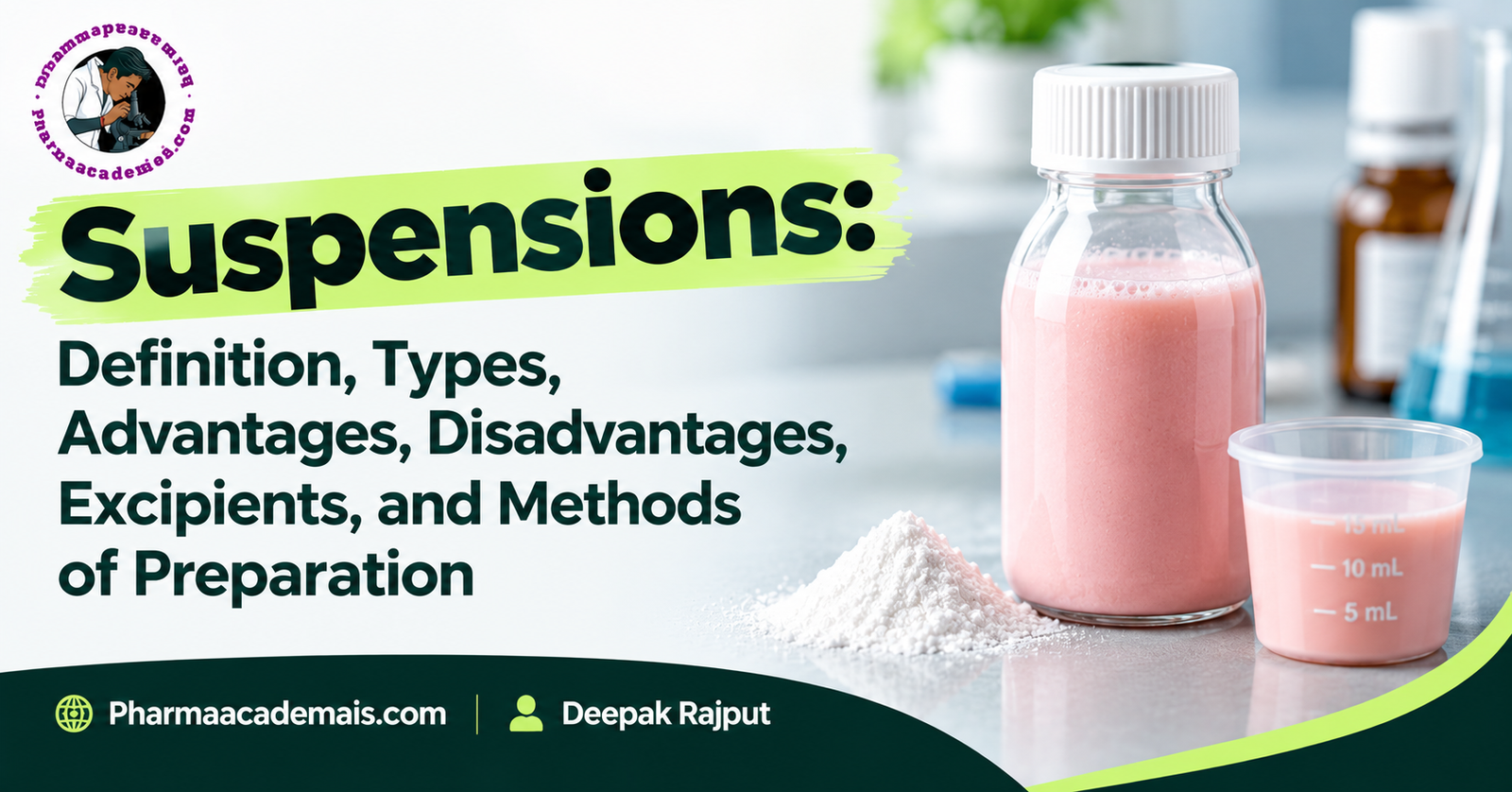
5.5 Suspension Method
Definition: A suspension is a biphasic liquid dosage form in which insoluble solid particles are dispersed in a liquid vehicle.
Procedure:
- Reduce the particle size of the drug if required.
- Wet the powder with a suitable wetting agent or vehicle.
- Prepare the vehicle containing any necessary suspending agents.
- Add the drug gradually with continuous mixing.
- Mix thoroughly to obtain a uniform dispersion.
- Adjust to the required final volume.
- Package appropriately and provide shaking instructions where necessary.
Examples: Calamine lotion and certain oral antibiotic suspensions.
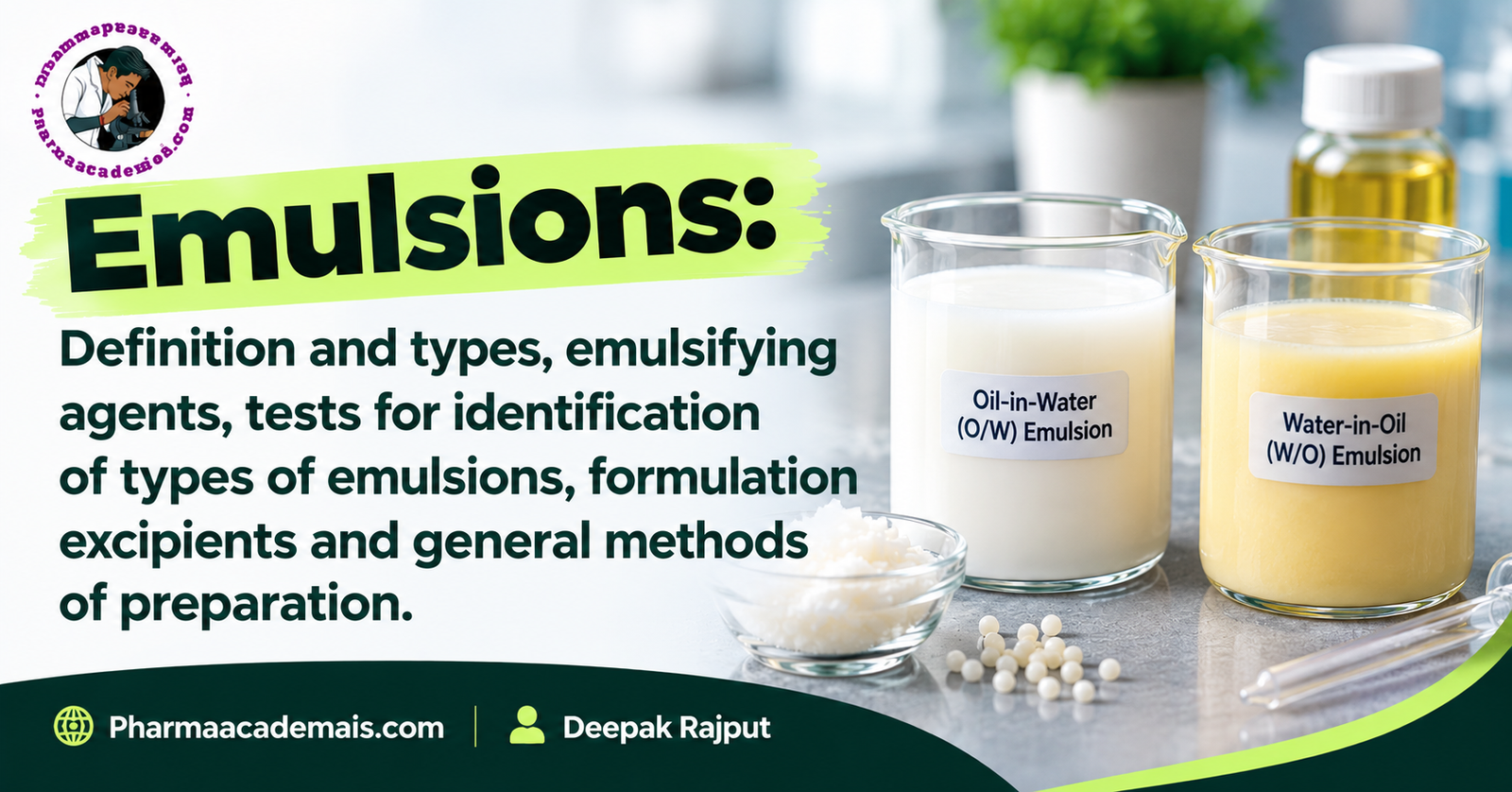
5.6 Emulsification
Definition: Emulsification is the process of dispersing one immiscible liquid in another with the help of an emulsifying agent.
Procedure:
- Select the oil phase, aqueous phase, and suitable emulsifier.
- Prepare each phase separately as required.
- Combine the phases using an appropriate emulsification method.
- Mix or homogenize until the desired dispersion is obtained.
- Add other ingredients as required.
- Adjust the final quantity and assess physical stability.
Examples: Oral emulsions and topical emulsion creams.
5.7 Filtration
Definition: Filtration is the process of separating suspended solid particles from a liquid by passing the liquid through a suitable filter medium.
Procedure:
- Select a filter medium appropriate to the preparation.
- Assemble the filtration equipment.
- Pass the liquid through the filter.
- Collect the filtrate in a clean container.
- Check the filtrate for clarity when required.
Examples: Clarification of certain aromatic waters and solutions.
Important: Ordinary filtration does not necessarily sterilize a preparation. Sterilizing filtration requires a validated process and appropriate controls.
5.8 Maceration
Definition: Maceration is an extraction method in which a crude drug or other suitable material is soaked in a specified solvent for a defined period to extract its soluble constituents.
Procedure:
- Reduce the crude drug to the specified particle size.
- Place it in a suitable closed vessel.
- Add the prescribed solvent.
- Allow the material to stand for the specified time, with occasional mixing if required.
- Separate the liquid extract by filtration or pressing.
- Adjust the extract to the required strength or volume.
Examples: Preparation of certain tinctures and herbal extracts.
5.9 Percolation
Definition: Percolation is an extraction method in which a solvent passes slowly through a packed bed of suitable powdered material to extract soluble constituents.
Procedure:
- Prepare and moisten the powdered material.
- Allow it to stand for the specified period.
- Transfer the material to a suitable percolator.
- Pass the solvent through the material at a controlled rate.
- Collect the percolate.
- Adjust to the required volume or strength.
Examples: Preparation of certain tinctures and fluid extracts.
5.10 Heating and Dissolution
Definition: This method uses controlled heating to increase the rate of dissolution of suitable ingredients.
Procedure:
- Measure the required solvent.
- Heat it gently if the ingredients are stable under the selected conditions.
- Add the solute gradually with stirring.
- Continue until it dissolves completely.
- Allow the preparation to cool.
- Add heat-sensitive ingredients when appropriate.
- Adjust the final quantity.
Examples: Preparation of simple syrup and other heat-compatible solutions.
6. Study of Selected Official Preparations
The following are representative preparations commonly discussed in pharmaceutical laboratory teaching. The exact official formula, strength, and procedure must be checked in the relevant pharmacopoeia or practical manual.
1. Simple Syrup
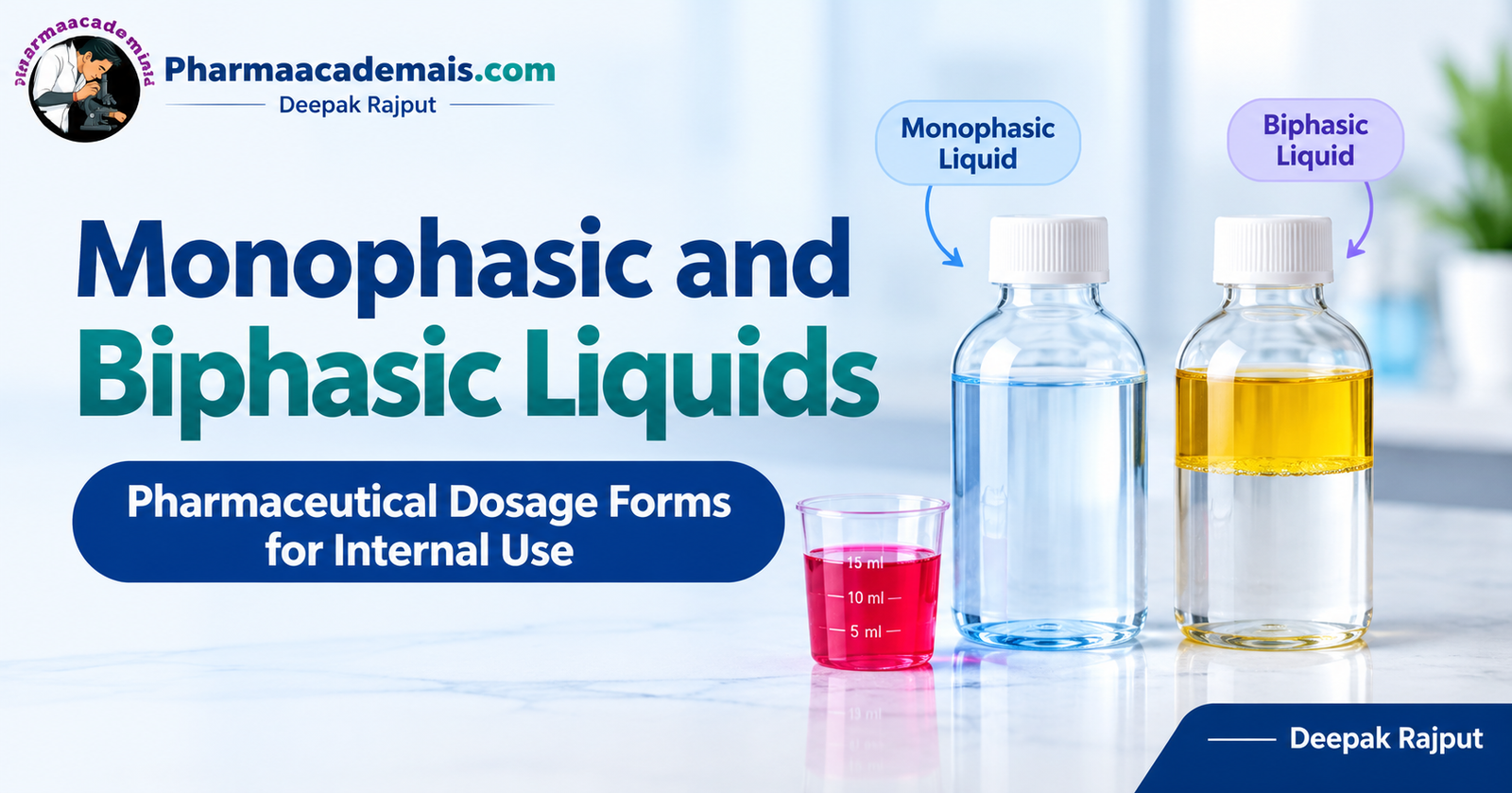
- Type: Monophasic liquid.
- Main ingredients: Sucrose and purified water.
- Method: Dissolution with or without controlled heating.
- Use: Sweetening agent and vehicle for oral preparations.
2. Peppermint Water
- Type: Monophasic liquid.
- Main ingredients: Peppermint volatile oil and purified water.
- Method: An appropriate dispersion-and-filtration procedure or the specified official method.
- Use: Flavouring agent and vehicle.
3. Calamine Lotion
- Type: Biphasic liquid.
- Main ingredients: Calamine and other ingredients specified by the formula.
- Method: Dispersion, trituration, and mixing.
- Use: Soothing topical preparation.
4. Iodine Tincture
- Type: Alcoholic or hydroalcoholic solution.
- Main ingredients: Iodine and other ingredients specified by the official formula.
- Method: Dissolution in the prescribed vehicle.
- Use: Antiseptic for appropriate external applications.
7. Quality Control of Official Preparations
Quality control ensures that a pharmaceutical preparation meets the required standards before it is used or supplied.
Important tests include:
- Appearance: Colour, odour, clarity, and physical uniformity.
- Identification: Confirmation of the identity of the active ingredient.
- Assay: Measurement of the quantity or concentration of the active ingredient.
- pH: Measurement of acidity or alkalinity when applicable.
- Weight or volume: Verification of the required quantity.
- Viscosity: Assessment of flow properties where relevant.
- Uniformity: Evaluation of dose or content uniformity when applicable.
- Microbial quality: Testing against the requirements for the intended route.
- Stability: Assessment of physical, chemical, and microbiological stability.
- Packaging and labelling: Verification that the container and instructions are suitable.
Not every test applies to every preparation. The relevant pharmacopoeial monograph determines the required tests and acceptance limits.
8. General Precautions During Preparation
- Use calibrated balances and measuring equipment.
- Calculate quantities carefully before preparation.
- Use suitable pharmaceutical-grade ingredients.
- Maintain cleanliness and prevent contamination.
- Check the compatibility of active ingredients and excipients.
- Avoid excessive heating of heat-sensitive ingredients.
- Use appropriate containers and closures.
- Label the preparation with its name, strength, route, storage conditions, and relevant warnings.
- Follow special sterility requirements for preparations such as eye drops and other products requiring sterile manufacture.
Conclusion
The study of official pharmaceutical preparations develops practical knowledge of formulation ingredients, excipient functions, preparation techniques, and quality control. Methods such as dissolution, mixing, trituration, levigation, filtration, emulsification, maceration, and percolation are selected according to the nature of the ingredients and the required dosage form.
References
- Indian Pharmacopoeia Commission. Indian Pharmacopoeia.
- Aulton, M. E., and Taylor, K. M. G. Aulton’s Pharmaceutics: The Design and Manufacture of Medicines. Elsevier.
- Allen, L. V. Ansel’s Pharmaceutical Dosage Forms and Drug Delivery Systems. Wolters Kluwer.
- Remington: The Science and Practice of Pharmacy. Pharmaceutical Press.
Editorial Note
This article has been carefully researched and written by Deepak Rajput with a focus on accuracy, clarity, and evidence-based healthcare information. Pharmaacademias.com