
Common Psychological Disorders in Healthcare: Psychological disorders are health conditions that affect a person’s thoughts, emotions, behaviour, and ability to manage daily life. They are common among people seeking healthcare and may occur alone or together with physical illnesses. A person with a psychological disorder may experience emotional problems, changes in behaviour, difficulty in social relationships, sleep disturbances, reduced work performance, or physical symptoms.
In healthcare settings, psychological disorders are particularly important because mental and physical health are closely connected. Psychological distress can influence how a patient experiences pain, fatigue, sleep problems, and other symptoms. At the same time, a serious or long-lasting physical illness can increase the risk of psychological problems. Pharmaacademais.com
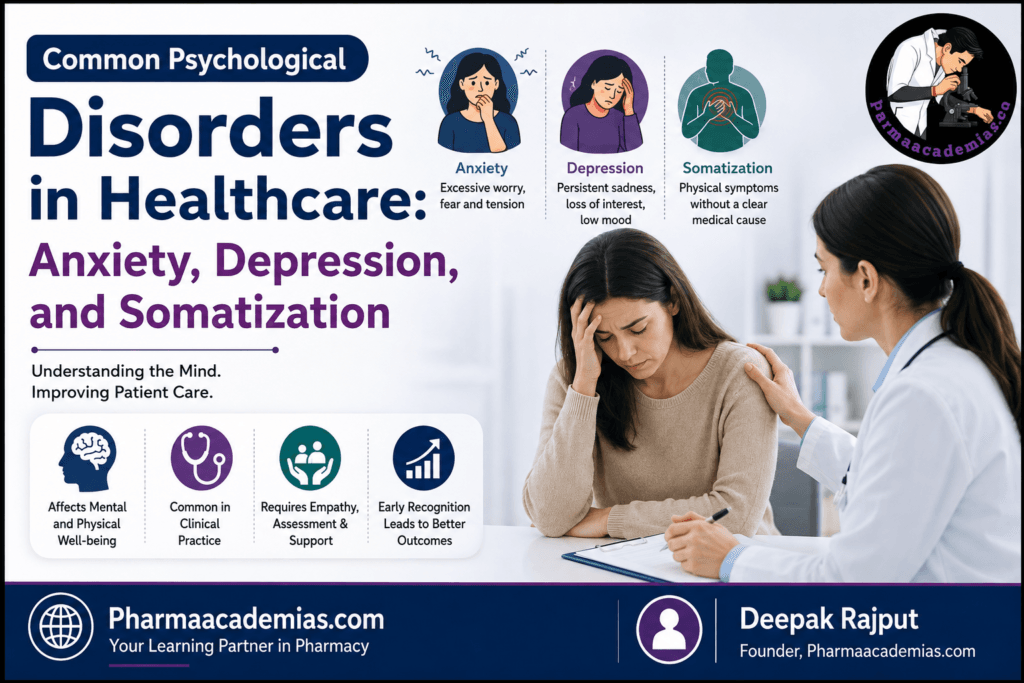
Three important psychological conditions commonly discussed in healthcare are anxiety, depression, and somatization. These conditions are different from one another, but they can overlap. For example, a patient with a chronic physical illness may develop anxiety about the future, depression because of prolonged limitations, and multiple physical complaints that are strongly influenced by psychological distress.
1. Anxiety
Meaning of Anxiety
Anxiety is a state of excessive fear, worry, nervousness, or apprehension about a possible threat or uncertain situation. A certain amount of anxiety is normal. For example, a person may feel anxious before an examination, surgery, medical test, or important interview.
Normal anxiety usually decreases when the stressful situation is over. However, when anxiety becomes excessive, persistent, difficult to control, or interferes with normal life, it may become a psychological disorder.
An anxious person may continuously think about possible problems and may expect something bad to happen even when there is no immediate danger.
Common Examples
A patient waiting for a medical test may think:
“What if the report shows something serious?”
Some concern is normal. But if the patient spends most of the day worrying, cannot sleep, repeatedly seeks reassurance, and is unable to perform normal activities, the anxiety may be clinically significant.
Symptoms of Anxiety
Anxiety can produce both psychological and physical symptoms.
Psychological Symptoms
A person may experience:
- Excessive worry
- Fear or apprehension
- Restlessness
- Difficulty concentrating
- Feeling that something bad may happen
- Irritability
- Difficulty controlling thoughts of worry
- Feeling constantly alert or nervous
Physical Symptoms
Anxiety may also produce:
- Rapid heartbeat
- Sweating
- Trembling
- Muscle tension
- Headache
- Dizziness
- Shortness of breath
- Stomach discomfort
- Nausea
- Difficulty sleeping
- Fatigue
These physical symptoms can sometimes make the person more frightened. For example, a patient may notice a rapid heartbeat caused by anxiety and interpret it as evidence of a serious heart problem. This can increase fear and make the symptoms stronger.
Types of Anxiety Disorders
Anxiety disorders include several different conditions.
Generalized Anxiety Disorder: In generalized anxiety disorder, a person experiences excessive and persistent worry about several areas of life, such as health, family, finances, work, studies, or future events.
The person may find it difficult to stop worrying even when there is no clear reason for the level of concern.
Panic Disorder: Panic disorder involves repeated unexpected panic attacks. A panic attack is a sudden episode of intense fear or discomfort that may be accompanied by symptoms such as rapid heartbeat, sweating, trembling, dizziness, chest discomfort, or a feeling of losing control.
Because the symptoms can be frightening, patients may become afraid of having another attack.
Phobias: A phobia is an intense and persistent fear of a particular object or situation that is out of proportion to the actual danger.
Examples include fear of certain animals, heights, injections, blood, or specific medical procedures.
In healthcare, fear of injections or medical procedures can sometimes cause patients to delay or avoid necessary care.
2. Depression
Meaning of Depression
Depression is a common psychological disorder characterized by persistent sadness or low mood, loss of interest or pleasure, reduced energy, and changes in thinking and behaviour.
Everyone experiences sadness from time to time. Sadness after losing a job, experiencing a relationship problem, or facing illness is a normal human response. Depression is different because the symptoms are persistent and significant enough to affect daily functioning.
A person with depression may lose interest in activities that were previously enjoyable. The person may also feel hopeless, tired, worthless, or unable to manage normal responsibilities.
Major Symptoms of Depression
Depression can affect emotional, physical, cognitive, and social functioning.
Emotional Symptoms
The person may experience:
- Persistent sadness
- Hopelessness
- Loss of interest
- Loss of pleasure
- Feelings of worthlessness
- Excessive guilt
- Irritability
- Emotional emptiness
Physical Symptoms
Physical changes may include:
- Fatigue
- Low energy
- Changes in appetite
- Changes in body weight
- Sleep disturbances
- Reduced activity
- Unexplained aches and pains
Cognitive Symptoms
The person may have:
- Difficulty concentrating
- Poor decision-making
- Negative thoughts
- Reduced confidence
- Feelings of helplessness
- Repeated thoughts about failure or worthlessness
In severe depression, thoughts of death or self-harm may occur. Such symptoms require immediate professional attention.
Causes and Risk Factors of Depression
Depression usually does not have one single cause. It may result from a combination of biological, psychological, and social factors.
Important factors may include:
Biological factors: changes in brain functioning, genetic vulnerability, hormonal changes, or certain medical conditions.
Psychological factors: low self-esteem, negative thinking, prolonged stress, trauma, poor coping skills, or feelings of helplessness.
Social factors: loneliness, relationship problems, financial difficulties, work-related stress, loss of a loved one, or lack of social support.
Long-term physical illnesses can also increase the risk of depression because they may cause pain, disability, lifestyle limitations, or uncertainty about the future.
3. Somatization
Meaning of Somatization
Somatization refers to the experience and expression of psychological distress through physical symptoms. The person may experience genuine physical symptoms such as pain, fatigue, stomach problems, dizziness, weakness, or other bodily complaints, while psychological and emotional factors may contribute significantly to the symptoms.
It is important to understand that somatization does not mean that the person is pretending to be sick. The symptoms are real to the patient and can cause significant distress.
For example, a person under prolonged psychological stress may repeatedly experience headaches, stomach discomfort, tiredness, or chest discomfort. Medical evaluation may not identify a sufficient physical explanation for the severity or persistence of the symptoms.
Common Symptoms Associated with Somatization
Symptoms can vary considerably from one person to another. They may include:
- Headache
- Back pain
- Abdominal pain
- Chest discomfort
- Fatigue
- Dizziness
- Nausea
- Digestive problems
- Muscle pain
- Weakness
- Sleep problems
- Shortness of breath
The symptoms may change over time and may involve different parts of the body.
Somatic Symptom Disorder
A related clinical condition is somatic symptom disorder. In this condition, a person experiences one or more physical symptoms and has excessive thoughts, feelings, or behaviours related to those symptoms.
The person may become highly concerned about health, repeatedly check the body, frequently seek medical care, or spend a great deal of time thinking about symptoms.
The important point is that the distress is genuine. The healthcare professional should not simply tell the patient that “nothing is wrong.” Instead, the patient should receive appropriate medical assessment along with attention to psychological factors.
Relationship Between Mind and Body in Somatization
The relationship between psychological distress and physical symptoms can be understood through the mind-body connection.
Psychological stress can influence:
Thoughts and emotions → nervous system activity → bodily sensations → interpretation of symptoms → further worry
For example, prolonged stress may cause muscle tension. Muscle tension can produce headache or neck pain. The person may become worried about the pain, increasing stress and muscle tension. This can create a cycle in which psychological distress and physical symptoms reinforce each other.
This does not mean that every unexplained symptom is psychological. Physical causes must be properly evaluated before psychological explanations are considered.
Difference Between Anxiety, Depression, and Somatization
| Feature | Anxiety | Depression | Somatization |
| Main feature | Excessive fear and worry | Persistent low mood and loss of interest | Physical symptoms associated with psychological distress |
| Common thoughts | “Something bad may happen.” | “Nothing will improve.” | “Something is wrong with my body.” |
| Emotional state | Fear, nervousness, apprehension | Sadness, hopelessness, emptiness | Distress and concern about physical symptoms |
| Physical symptoms | Palpitations, sweating, tension, dizziness | Fatigue, sleep and appetite changes | Pain, fatigue, stomach problems, dizziness |
| Behaviour | Avoidance, reassurance seeking | Withdrawal, reduced activity | Repeated checking or healthcare visits |
| Effect on healthcare | May increase fear of disease or procedures | May reduce motivation and treatment adherence | May increase concern about unexplained physical symptoms |
These conditions can also occur together. A person with chronic physical symptoms may become anxious about the symptoms and later develop depression because the problem continues for a long time.
Impact on Healthcare and Recovery
Anxiety, depression, and somatization can influence the healthcare experience in several ways.
1. Increased Healthcare Visits: Patients with significant health anxiety or persistent physical symptoms may repeatedly visit doctors, request investigations, or seek reassurance.
2. Reduced Treatment Adherence: Depression and anxiety may make it difficult for patients to follow treatment plans consistently.
3. Poor Quality of Life: Persistent psychological symptoms can affect sleep, work, education, relationships, and social activities.
4. Increased Perception of Symptoms: Psychological distress may increase a person’s attention to physical sensations and make symptoms feel more severe.
5. Difficulty in Recovery: When anxiety or depression remains untreated, the patient may have reduced motivation and confidence, which can interfere with rehabilitation and long-term disease management.
Role of Healthcare Professionals
Healthcare professionals should approach psychological disorders with empathy, patience, and respect. Patients should never be made to feel that their symptoms are imaginary or that they are simply “thinking too much.”
A good healthcare approach includes careful assessment of both physical and psychological symptoms.
The healthcare professional should:
- Listen carefully to the patient’s concerns.
- Take physical symptoms seriously.
- Explain the condition in simple language.
- Provide accurate information.
- Avoid unnecessary reassurance or criticism.
- Encourage healthy coping strategies.
- Support treatment adherence.
- Identify significant changes in mood or behaviour.
- Involve family or caregivers when appropriate.
- Refer the patient to an appropriate mental health professional when needed.
For pharmacists and other healthcare professionals, patient counselling is especially important. Simple explanations about medicines, expected effects, possible adverse effects, and the importance of adherence can reduce unnecessary fear and improve confidence in treatment.
Importance of Early Recognition
Early recognition of psychological disorders is important because untreated anxiety, depression, or somatization can become persistent and may interfere with physical healthcare.
Healthcare professionals should observe changes such as:
- Persistent worry
- Continuous sadness
- Loss of interest
- Social withdrawal
- Major sleep changes
- Changes in appetite
- Repeated unexplained physical complaints
- Excessive concern about health
- Frequent requests for reassurance
- Poor treatment adherence
- Reduced ability to perform daily activities
Early identification allows appropriate support and treatment to begin sooner.
Conclusion
Anxiety, depression, and somatization are important psychological conditions encountered in healthcare. Anxiety is mainly associated with excessive fear and worry, depression is characterized by persistent low mood and loss of interest, while somatization involves the experience and expression of psychological distress through physical symptoms.
These conditions can affect both mental and physical well-being. They may influence how patients understand symptoms, communicate their concerns, use healthcare services, follow treatment, and recover from illness.
A patient should therefore be treated as a whole person rather than only as a disease or a group of physical symptoms. Proper medical evaluation, patient education, empathetic communication, social support, healthy coping strategies, and appropriate psychological care can help improve outcomes.
Understanding these disorders is especially important for healthcare professionals because good healthcare involves caring for both the body and the mind.
Editorial Note
This article has been carefully researched and written by Deepak Rajput with a focus on accuracy, clarity, and evidence-based healthcare information.