
Structure and Functions of Skin: The skin is the largest organ of the human body and serves as the first line of defense against the external environment. It forms a protective covering over the entire body and performs a wide variety of essential functions that are necessary for survival. In an average adult, the skin covers an area of approximately 1.5–2 square meters and weighs around 4–5 kilograms, accounting for nearly 15–16% of the total body weight. Although it appears to be a simple outer covering, the skin is a highly specialized organ made up of different layers, cells, glands, blood vessels, and nerve endings that work together to maintain the body’s health and internal balance. Pharmaacademias.com
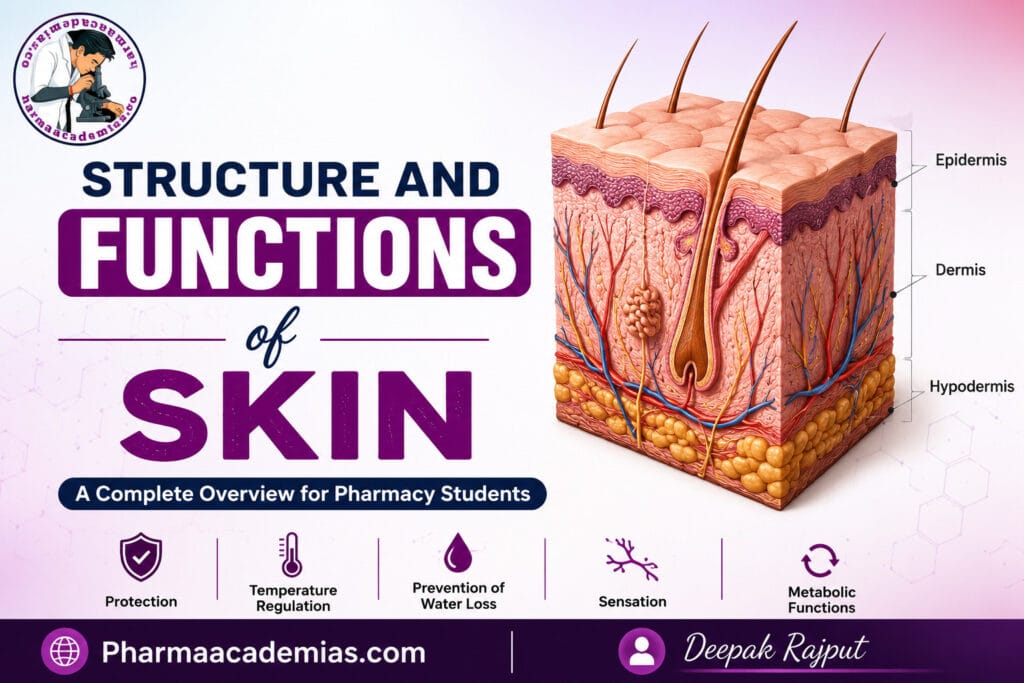
The skin constantly protects the body from harmful microorganisms, chemicals, ultraviolet (UV) radiation, and physical injuries while also helping regulate body temperature, preventing excessive water loss, and allowing us to experience sensations such as touch, pressure, pain, heat, and cold. Because of these diverse functions, the skin is considered one of the most important organs of the integumentary system.
Structure and Functions of Skin
The skin is composed of three main layers, each having a unique structure and specific functions. These layers work together to provide protection, support, and physiological regulation.
1. Epidermis
The epidermis is the outermost layer of the skin and is directly exposed to the external environment. It acts as the body’s primary protective barrier. This layer is made of keratinized stratified squamous epithelium and contains no blood vessels. Since it is avascular, nutrients and oxygen reach the epidermis by diffusion from the blood vessels present in the dermis below.
The epidermis is continuously renewed throughout life. New cells are produced in the deepest layer and gradually move upward, becoming flattened and filled with keratin before eventually being shed from the skin surface. This constant renewal helps repair minor injuries and maintain healthy skin.
The epidermis contains several important types of cells:
- Keratinocytes, which produce keratin and form the majority of epidermal cells.
- Melanocytes, which synthesize melanin, the pigment responsible for skin color and protection against ultraviolet radiation.
- Langerhans cells, which participate in immune defense by detecting foreign substances.
- Merkel cells, which function as sensory receptors for touch.
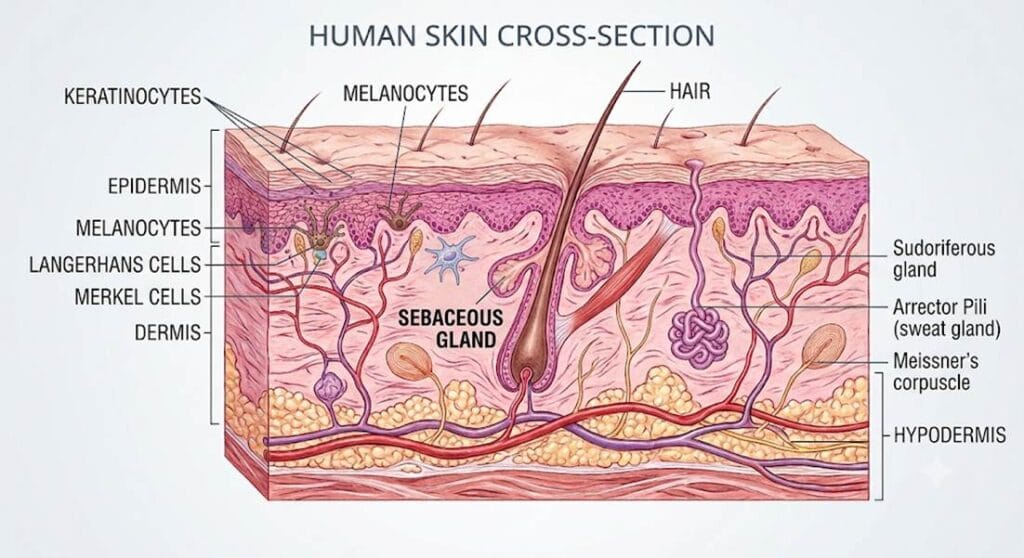
Layers of the Epidermis
The epidermis consists of five distinct layers arranged from deep to superficial.
a) Stratum Basale (Basal Layer): This is the deepest layer of the epidermis. It contains actively dividing cells that continuously produce new skin cells. Melanocytes are also found here and produce melanin, which protects deeper tissues from harmful ultraviolet rays.
b) Stratum Spinosum (Prickle Cell Layer): Cells in this layer become larger and begin producing keratin. Langerhans cells are abundant here, providing immune protection against invading microorganisms.
c) Stratum Granulosum (Granular Layer): In this layer, cells accumulate keratin granules and begin to lose their nuclei and organelles. A waterproof barrier starts forming, reducing water loss from the body.
d) Stratum Lucidum (Clear Layer): This thin, transparent layer is present only in thick skin, such as the palms of the hands and soles of the feet. It provides additional protection against friction.
e) Stratum Corneum (Horny Layer): This is the outermost layer of the epidermis. It consists of dead, flattened, keratin-filled cells that continuously shed and are replaced by new cells from below. This layer provides the major protective barrier against physical injury, dehydration, and microbial invasion.
2. Dermis
The dermis is the thick middle layer of the skin situated beneath the epidermis. Unlike the epidermis, the dermis contains an abundant supply of blood vessels, lymphatic vessels, nerves, glands, hair follicles, and connective tissue. It provides strength, elasticity, nourishment, and support to the epidermis.
The dermis is composed mainly of collagen fibers, which provide tensile strength, and elastin fibers, which allow the skin to stretch and return to its original shape.
Layers of the Dermis
The dermis consists of two regions.
Papillary Layer: The papillary layer is the upper, thinner portion of the dermis. It contains loose connective tissue, small blood vessels, capillaries, nerve endings, and sensory receptors. It nourishes the epidermis and contributes to fingerprints through dermal papillae.
Reticular Layer: The reticular layer is thicker and contains dense connective tissue rich in collagen and elastin fibers. It houses:
- Hair follicles
- Sebaceous glands
- Sweat glands
- Blood vessels
- Lymphatic vessels
- Sensory nerve endings
This layer provides strength, flexibility, and resilience to the skin.
3. Hypodermis (Subcutaneous Tissue)
The hypodermis, also known as the subcutaneous layer, lies beneath the dermis. Although it is technically not part of the skin itself, it supports and connects the skin to underlying muscles and bones.
This layer is primarily composed of adipose (fat) tissue and loose connective tissue.
The amount of fat stored in the hypodermis varies according to age, sex, genetics, and nutritional status. Besides storing energy, this layer cushions internal organs, protects against mechanical injury, and acts as an insulating layer that helps conserve body heat.
Skin Appendages
Several specialized structures arise from the skin and contribute to its various functions.
Hair: Hair develops from hair follicles located within the dermis. Hair protects the scalp from sunlight, helps maintain body temperature, and serves as a sensory structure capable of detecting light touch.
Nails: Nails are hard plates composed mainly of keratin. They protect the tips of fingers and toes while improving grip and facilitating fine motor activities.
Sebaceous Glands: Sebaceous glands produce sebum, an oily secretion that lubricates the skin and hair. Sebum helps prevent dryness, maintains skin softness, and possesses mild antibacterial properties that reduce microbial growth.
Sweat Glands: Sweat glands are responsible for producing sweat, which plays an important role in thermoregulation.
There are two major types of sweat glands.
- Eccrine Sweat Glands: These glands are widely distributed throughout the body and secrete watery sweat directly onto the skin surface. Evaporation of sweat helps cool the body during exercise or exposure to high temperatures.
- Apocrine Sweat Glands: These glands are mainly found in the armpits and genital regions. They become active after puberty and produce a thicker secretion that may develop body odor when broken down by skin bacteria.
Functions of Skin
The skin performs numerous essential physiological functions that contribute to maintaining overall health and homeostasis.
1. Protection: The primary function of the skin is to protect the body from harmful external factors. It forms a strong physical barrier against bacteria, viruses, fungi, parasites, chemicals, ultraviolet radiation, and mechanical injuries. The keratinized epidermis, skin lipids, acidic pH, and immune cells work together to prevent infections and minimize tissue damage.
2. Prevention of Water Loss: One of the most important roles of the skin is preventing excessive loss of water from the body. The keratinized cells of the epidermis and the waterproof lipid barrier reduce evaporation, helping maintain proper hydration and electrolyte balance.
3. Regulation of Body Temperature: The skin plays a vital role in maintaining normal body temperature.
When body temperature rises, sweat glands produce sweat, and evaporation removes excess heat. Blood vessels within the dermis also dilate, increasing heat loss.
When body temperature falls, blood vessels constrict to reduce heat loss, while the subcutaneous fat provides insulation to conserve body warmth.
4. Sensory Function: The skin contains numerous sensory receptors that detect different types of stimuli.
These receptors allow humans to perceive:
- Touch
- Pressure
- Pain
- Heat
- Cold
- Vibration
- Texture
This sensory information helps individuals respond quickly to potentially harmful environmental conditions.
5. Vitamin D Synthesis: The skin plays a major role in the production of Vitamin D. When exposed to ultraviolet-B (UVB) rays from sunlight, a cholesterol derivative present in the skin is converted into Vitamin D3.
Vitamin D is essential for calcium absorption, healthy bones, proper muscle function, and immune system regulation.
6. Excretion: The skin assists in the elimination of certain metabolic waste products through sweat. Small amounts of water, sodium chloride, potassium, urea, uric acid, ammonia, and other waste substances are removed from the body through perspiration.
Although the kidneys remain the primary excretory organs, sweating provides an additional route for waste elimination.
7. Immune Defense: The skin forms an important component of the body’s immune system. Langerhans cells recognize foreign microorganisms and activate immune responses. Additionally, skin secretions contain antimicrobial substances that inhibit bacterial growth and reduce infection.
8. Storage of Fat and Energy: The hypodermis stores triglycerides in adipose tissue, serving as an important energy reserve. During periods of fasting or increased energy demand, these fat stores can be mobilized to provide fuel for the body.
9. Blood Reservoir: The blood vessels present within the dermis contain a significant amount of circulating blood. During increased physical activity or temperature regulation, blood flow to the skin can be adjusted according to the body’s physiological needs.
10. Absorption of Certain Substances: Although the skin acts as an effective barrier, certain fat-soluble substances and medications can penetrate it. This property forms the basis for transdermal drug delivery systems, such as nicotine patches, nitroglycerin patches, fentanyl patches, and hormone replacement patches.
11. Communication and Appearance: The skin contributes significantly to an individual’s physical appearance, facial expressions, and social communication. Skin color, texture, elasticity, and moisture often reflect a person’s age, nutritional status, hydration level, and general health.
Importance of Healthy Skin
Maintaining healthy skin is essential for overall well-being. Proper nutrition, adequate hydration, good hygiene, regular use of sunscreen, sufficient sleep, and protection from excessive sunlight help preserve normal skin structure and function. Damage to the skin through burns, infections, chronic diseases, or prolonged ultraviolet exposure can impair its protective functions and increase susceptibility to dehydration, infection, and other health complications.
Conclusion
The skin is much more than a simple protective covering. It is a complex and highly organized organ composed of the epidermis, dermis, and hypodermis, along with specialized structures such as hair follicles, nails, sweat glands, and sebaceous glands. Together, these components perform numerous vital functions, including protection, temperature regulation, sensation, immune defense, vitamin D synthesis, waste excretion, energy storage, and maintenance of fluid balance. Understanding the structure and functions of the skin is fundamental in anatomy, physiology, dermatology, pharmacy, nursing, and other health sciences, as healthy skin is essential for maintaining the body’s internal stability and protecting it from the external environment.