
Body fluids are the liquid components present within the human body that provide an essential medium for the transport of nutrients, gases, hormones, metabolic waste products, electrolytes, and other substances. Water is the major component of body fluids and accounts for approximately 50–60% of the total body weight in a healthy adult, although the exact proportion varies according to age, sex, body composition, and the amount of adipose tissue. Body fluids are not simply water; they contain a complex mixture of electrolytes, proteins, glucose, lipids, dissolved gases, hormones, enzymes, nutrients, and metabolic products. The composition of these fluids is carefully regulated because even relatively small changes in their volume, osmolarity, electrolyte concentration, or acid–base status can significantly affect cellular function.
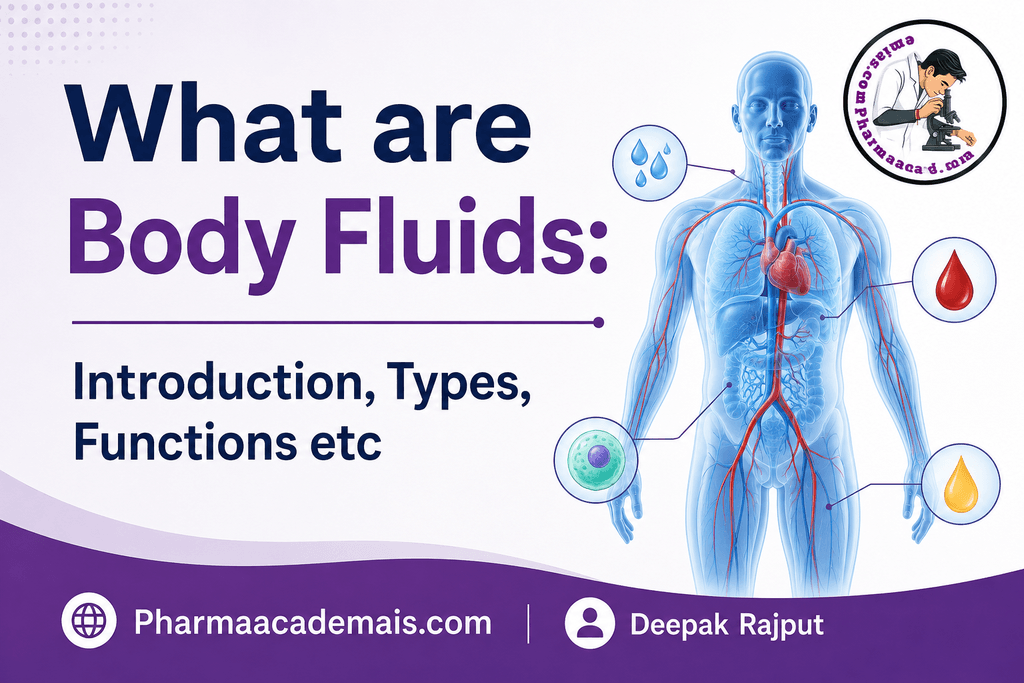
Body fluids provide the environment in which cells survive and perform their physiological activities. Every cell of the body requires an appropriate aqueous environment for biochemical reactions, energy production, membrane transport, communication, and waste removal. The maintenance of a relatively stable internal environment is known as homeostasis. Regulation of body-fluid volume, electrolyte concentration, osmotic pressure, pH, and temperature is therefore one of the fundamental requirements for normal physiological functioning.
Body fluids can broadly be divided into intracellular fluid (ICF) and extracellular fluid (ECF). Intracellular fluid is the fluid present inside cells, whereas extracellular fluid is present outside cells. The extracellular compartment itself includes interstitial fluid, plasma, lymph, and specialized fluids known as transcellular fluids. Although these compartments are physically separated, they continuously interact with one another through biological membranes and vascular systems.
What are Body Fluids
1. Total Body Water
The total amount of water present in the body is called total body water (TBW). In an average healthy adult, total body water constitutes approximately 50–60% of body weight. For example, in a 70-kg adult, total body water may be approximately 42 L, although this value varies considerably among individuals.
The percentage of body water is generally higher in individuals with greater lean body mass because muscle tissue contains a large amount of water. In contrast, adipose tissue contains relatively little water. Therefore, people with a higher proportion of body fat generally have a lower percentage of total body water. Infants have a relatively high proportion of body water, while elderly individuals often have a lower proportion because of changes in body composition with aging.
Total body water is divided primarily into two major compartments:
- Intracellular fluid (ICF)
- Extracellular fluid (ECF)
Approximately two-thirds of total body water is located inside cells, while approximately one-third is located outside cells.
For a 70-kg adult with approximately 42 L of total body water:
- Intracellular fluid ≈ 28 L
- Extracellular fluid ≈ 14 L
These values are approximate and vary depending on individual physiological characteristics.
2. Fluid Compartments of the Body
Body water is distributed among different anatomical and physiological compartments. These compartments are separated by selectively permeable membranes that control the movement of water and dissolved substances.
The major fluid compartments are:
A. Intracellular fluid: Fluid inside the cells.
B. Extracellular fluid: Fluid outside the cells, including:
- Plasma
- Interstitial fluid
- Lymph
- Transcellular fluids
The plasma and interstitial fluid together constitute the major portion of extracellular fluid.
3. Intracellular Fluid
Intracellular fluid (ICF) is the fluid present inside the cells of the body. It accounts for approximately two-thirds of total body water and is therefore the largest fluid compartment in the human body.
The intracellular environment is essential for cellular metabolism. Numerous biochemical reactions occur within the intracellular fluid, including glycolysis, protein synthesis, enzymatic reactions, energy production, and various metabolic pathways.
The composition of intracellular fluid is different from that of extracellular fluid. The major intracellular cation is potassium (K⁺), while magnesium (Mg²⁺) is another important intracellular cation. The major intracellular anions include phosphate compounds and negatively charged proteins.
The high concentration of potassium inside cells is maintained primarily by the sodium–potassium ATPase pump, which actively transports sodium ions out of the cell and potassium ions into the cell. This ionic distribution is critically important for maintaining the resting membrane potential, nerve conduction, muscle contraction, and many cellular transport processes.
Intracellular fluid also contains proteins, enzymes, nucleic acids, glucose metabolites, amino acids, phosphates, and other substances required for cellular function.
4. Extracellular Fluid
Extracellular fluid (ECF) is the fluid located outside the cells. It accounts for approximately one-third of total body water.
Extracellular fluid serves as the immediate environment surrounding cells. It provides nutrients and oxygen to cells and receives carbon dioxide and metabolic waste products from them.
The extracellular fluid contains a relatively high concentration of sodium (Na⁺) and chloride (Cl⁻) compared with intracellular fluid. Sodium is the principal extracellular cation, while chloride and bicarbonate are important extracellular anions.
The major components of extracellular fluid include:
- Blood plasma
- Interstitial fluid
- Lymph
- Transcellular fluids
The extracellular fluid is particularly important for maintaining blood pressure, tissue perfusion, electrolyte balance, acid–base balance, and cellular nutrition.
5. Plasma
Blood plasma is the liquid component of blood in which blood cells are suspended. It constitutes approximately 55% of total blood volume in normal conditions.
Plasma consists primarily of water, but it also contains:
- Plasma proteins
- Electrolytes
- Nutrients
- Hormones
- Dissolved gases
- Enzymes
- Antibodies
- Metabolic waste products
The major plasma proteins include albumin, globulins, and fibrinogen.
Albumin: Albumin is the most abundant plasma protein. It plays an important role in maintaining colloid osmotic pressure, which helps retain water within the bloodstream. Albumin also acts as a transport protein for various substances, including fatty acids, hormones, bilirubin, and many drugs.
Globulins: Globulins include several groups of proteins involved in transport, immunity, and other physiological functions. Immunoglobulins, for example, function as antibodies and contribute to immune defense.
Fibrinogen: Fibrinogen is an important coagulation protein. During blood clotting, fibrinogen is converted into fibrin, which forms a meshwork that contributes to clot formation.
Because plasma contains proteins and electrolytes, it is more than simply a transport medium. It contributes significantly to maintenance of blood volume, osmotic pressure, pH, coagulation, immunity, and transport.
6. Interstitial Fluid
Interstitial fluid is the fluid that surrounds the cells within tissues. It is formed primarily from plasma that passes through the walls of small blood vessels, particularly capillaries.
Interstitial fluid provides a direct medium of exchange between blood and cells. Oxygen and nutrients move from blood plasma through the interstitial fluid before reaching cells. Similarly, carbon dioxide and other metabolic waste products move from cells into interstitial fluid and eventually into the bloodstream.
Although interstitial fluid resembles plasma in many respects, it normally contains considerably less protein because most plasma proteins are too large to cross the capillary wall easily.
The composition of interstitial fluid is dynamically regulated. Its volume can increase when capillary filtration exceeds lymphatic drainage, resulting in edema.
7. Lymph
Lymph is a clear or slightly yellowish fluid formed when interstitial fluid enters lymphatic vessels.
The lymphatic system collects excess fluid from tissues and returns it to the bloodstream. This is essential for maintaining normal extracellular fluid volume.
Lymph also plays an important role in immune function. Lymph passes through lymph nodes where microorganisms, foreign particles, and abnormal cells can be detected and processed by immune cells.
Lymphatic vessels also participate in the absorption and transportation of dietary fats from the intestine. Specialized lymphatic vessels called lacteals absorb many dietary lipids and transport them as part of lymph before they eventually enter the bloodstream.
8. Transcellular Fluid
Transcellular fluid refers to specialized extracellular fluid contained within specific anatomical spaces. It represents a relatively small proportion of total body water but is physiologically important.
Examples include:
- Cerebrospinal fluid
- Synovial fluid
- Pleural fluid
- Pericardial fluid
- Peritoneal fluid
- Aqueous humor
- Vitreous humor
- Digestive secretions
These fluids are produced and regulated by specialized tissues and perform specific functions.
9. Cerebrospinal Fluid
Cerebrospinal fluid (CSF) surrounds the brain and spinal cord and is present within the ventricular system and subarachnoid space.
CSF provides mechanical protection to the central nervous system and helps reduce the effective weight of the brain. It also participates in the transport and removal of certain substances and contributes to maintenance of the biochemical environment surrounding neural tissue.
The composition of CSF differs from plasma. It normally contains relatively low concentrations of protein and cells. Changes in CSF composition can occur in various neurological disorders and may be clinically useful for diagnosis.
10. Synovial Fluid
Synovial fluid is present within synovial joints. It is a viscous fluid that reduces friction between articular surfaces and facilitates smooth movement of joints.
It also contributes to nourishment of articular cartilage, which has limited direct blood supply.
Important components of synovial fluid include hyaluronic acid, lubricating molecules, proteins, and electrolytes. The viscosity and composition of synovial fluid can change during joint inflammation and disease.
11. Pleural Fluid
Pleural fluid is located between the visceral and parietal layers of the pleura surrounding the lungs.
Only a small quantity is normally present. It acts primarily as a lubricant, allowing the lungs to move smoothly against the thoracic wall during breathing.
Excess accumulation of pleural fluid is called pleural effusion. Depending on its cause and characteristics, pleural effusion may interfere with lung expansion and respiration.
12. Pericardial Fluid
Pericardial fluid is present within the pericardial cavity surrounding the heart.
Its primary function is to reduce friction between the moving surfaces of the heart and the surrounding pericardium during cardiac contraction and relaxation.
An excessive accumulation of fluid within the pericardial sac can impair cardiac filling. A significant increase in pericardial pressure can lead to cardiac tamponade, which is a medical emergency.
13. Peritoneal Fluid
Peritoneal fluid is found within the peritoneal cavity. It provides lubrication between abdominal organs and the surrounding peritoneal surfaces.
Normally, only a small quantity is present. Excess accumulation of fluid within the peritoneal cavity is called ascites.
Ascites can occur in several conditions, including severe liver disease, heart failure, malignancy, and certain inflammatory disorders.
14. Composition of Body Fluids
Body fluids contain a variety of substances required for normal physiological function.
The major components include:
1. Water: Water is the principal component of body fluids. It acts as a solvent and provides the medium for biochemical reactions. It also facilitates transport, temperature regulation, lubrication, and waste removal.
2. Electrolytes: Electrolytes are substances that dissociate into ions in solution.
Important electrolytes include:
- Sodium
- Potassium
- Calcium
- Magnesium
- Chloride
- Bicarbonate
- Phosphate
- Sulfate
Electrolytes are essential for nerve conduction, muscle contraction, cellular signaling, osmotic balance, acid–base regulation, and maintenance of membrane potentials.
3. Proteins: Proteins are particularly important in plasma and intracellular fluid. They perform structural, enzymatic, transport, immune, and regulatory functions.
4. Glucose: Glucose serves as an important energy substrate for many cells. Blood glucose is carefully regulated through hormonal mechanisms involving insulin, glucagon, catecholamines, cortisol, and other regulatory factors.
5. Lipids: Lipids are present in body fluids in various forms and are transported through the blood associated with specialized proteins and lipoproteins.
6. Dissolved gases: Body fluids contain dissolved oxygen, carbon dioxide, and other gases. Oxygen is essential for aerobic metabolism, while carbon dioxide is a major product of cellular metabolism and participates in acid–base regulation.
7. Hormones: Hormones are transported through body fluids, particularly blood plasma, from endocrine tissues to their target organs.
8. Metabolic waste products: Body fluids transport metabolic waste products such as urea, creatinine, uric acid, bilirubin, and carbon dioxide to organs responsible for their metabolism or elimination.
15. Major Electrolytes in Body Fluids
Electrolytes are particularly important because they influence the distribution of water between compartments and participate in electrical and chemical processes.
| Electrolyte | Major location | Important functions |
| Sodium (Na⁺) | Extracellular fluid | ECF volume, nerve function, osmotic balance |
| Potassium (K⁺) | Intracellular fluid | Membrane potential, muscle and nerve function |
| Calcium (Ca²⁺) | Mainly extracellular/storage in bone | Muscle contraction, coagulation, signaling |
| Magnesium (Mg²⁺) | Mainly intracellular | Enzyme activity, neuromuscular function |
| Chloride (Cl⁻) | Extracellular fluid | Osmotic balance, acid–base balance |
| Bicarbonate (HCO₃⁻) | Extracellular fluid | Major blood buffer |
| Phosphate | Intracellular fluid and bone | ATP, buffering, nucleic acids |
Summary
Body fluids constitute a fundamental component of human physiology and provide the aqueous environment necessary for life. Water is the major component of the body and is distributed primarily between intracellular and extracellular compartments. Intracellular fluid occupies the space inside cells and is rich in potassium, magnesium, phosphate, and proteins, whereas extracellular fluid surrounds the cells and is characterized by relatively high concentrations of sodium and chloride.
Extracellular fluid includes plasma, interstitial fluid, lymph, and specialized transcellular fluids such as cerebrospinal, synovial, pleural, pericardial, and peritoneal fluids. Each fluid compartment has a specific composition and physiological function, yet all compartments are interconnected through continuous exchange.
The body maintains fluid homeostasis through coordinated actions of the kidneys, cardiovascular system, nervous system, endocrine system, and lymphatic system. Important regulatory mechanisms include ADH, the renin–angiotensin–aldosterone system, natriuretic peptides, thirst, and renal regulation of electrolytes and water.
Editorial Note This article has been carefully researched and written by Deepak Rajput with a focus on accuracy, clarity, and evidence-based healthcare information