Causes of Cellular Injury: A cellular injury is a state in which a cell is unable to maintain its normal structure and function due to exposure to harmful stimuli. Cells continuously adapt to physiological and environmental changes; however, when the intensity or duration of a harmful stimulus exceeds the cell’s adaptive capacity, injury occurs. Cellular injury may be reversible, in which the cell recovers after removal of the injurious stimulus, or irreversible, resulting in permanent damage and eventual cell death by necrosis or apoptosis. Pharmaacademias.com
Cell injury is a fundamental concept in pathophysiology because it represents the earliest stage in the development of disease. Almost every disease begins with injury to individual cells, which subsequently affects tissues, organs, and ultimately the entire organism. The severity of cellular injury depends on the type of injurious agent, its duration of exposure, and the ability of the affected cell to respond and repair itself.
Causes of Cellular Injury
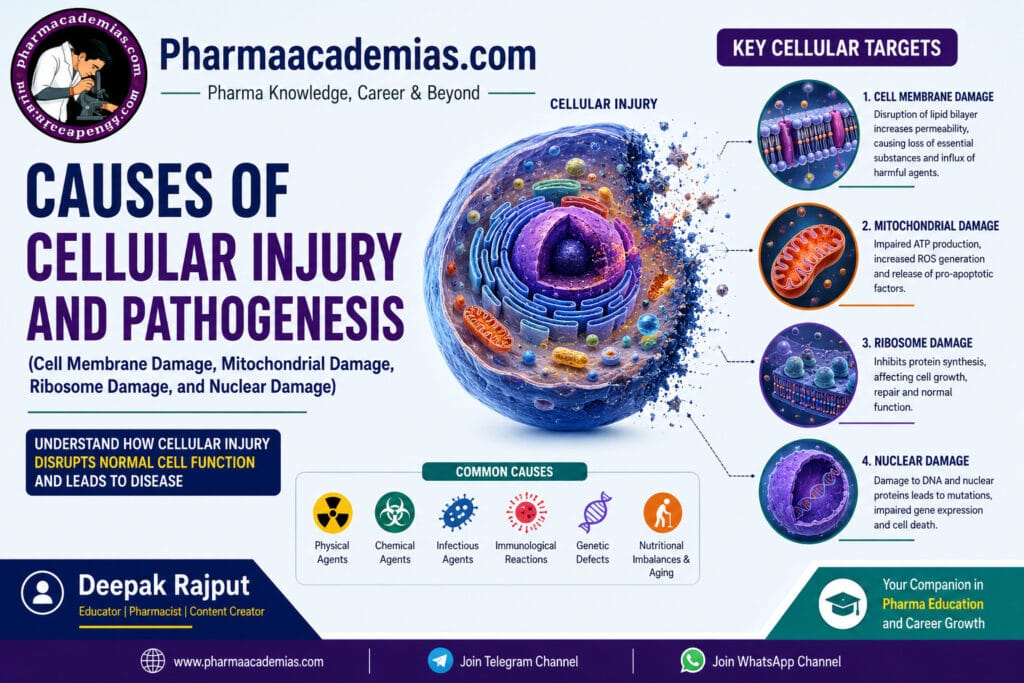
Cellular injury may result from a variety of physical, chemical, biological, nutritional, and genetic factors. These harmful stimuli interfere with normal cellular metabolism and damage vital cellular components such as the plasma membrane, mitochondria, ribosomes, and nucleus.
1. Hypoxia and Ischemia
Hypoxia refers to a deficiency of oxygen reaching the tissues, whereas ischemia is the reduced blood supply to an organ or tissue. Since oxygen is essential for the production of ATP through aerobic respiration, its deficiency rapidly impairs cellular metabolism. Without adequate ATP, ion pumps fail, intracellular sodium and water accumulate, and cells begin to swell. If oxygen deprivation continues for a prolonged period, irreversible cell injury and necrosis occur.
Hypoxia may result from respiratory diseases, severe anemia, carbon monoxide poisoning, or high-altitude exposure. Ischemia commonly occurs in conditions such as myocardial infarction, stroke, peripheral arterial disease, and shock.
2. Physical Agents
Physical agents can directly damage cells by disrupting their structure or interfering with normal physiological functions. These include mechanical trauma, excessive heat or cold, ionizing radiation, ultraviolet radiation, electric shock, and sudden changes in atmospheric pressure.
Mechanical injuries such as fractures and burns physically destroy cells, while radiation damages cellular DNA through the generation of free radicals. Extreme temperatures denature proteins and disrupt cell membranes, leading to irreversible injury.
3. Chemical Agents and Drugs
Many chemicals are capable of producing cellular injury depending on their concentration and duration of exposure. Strong acids, alkalis, heavy metals, pesticides, industrial solvents, alcohol, tobacco smoke, and environmental pollutants can interfere with cellular metabolism and damage essential organelles.
Certain drugs also produce cellular injury when administered in excessive doses. For example, overdose of paracetamol causes severe liver cell injury through the formation of toxic metabolites, while chemotherapeutic agents damage rapidly dividing normal cells in addition to cancer cells.
4. Infectious Agents
Microorganisms such as bacteria, viruses, fungi, parasites, and protozoa produce cellular injury by invading tissues, releasing toxins, and stimulating inflammatory responses. Bacterial toxins may directly destroy cell membranes, whereas viruses enter host cells and utilize cellular machinery for replication, ultimately leading to cell death.
For example, Mycobacterium tuberculosis damages lung tissue, hepatitis viruses injure liver cells, and HIV progressively destroys immune cells.
5. Immunological Reactions
Although the immune system normally protects the body against infections, abnormal immune responses may themselves cause cellular injury. Autoimmune diseases occur when the immune system mistakenly attacks normal body cells, while allergic reactions may produce tissue damage through excessive inflammation.
Examples include rheumatoid arthritis, systemic lupus erythematosus, autoimmune thyroid disease, and allergic asthma.
6. Nutritional Imbalances
Both nutritional deficiency and nutritional excess can impair cellular function. Deficiency of proteins, vitamins, minerals, or essential fatty acids interferes with normal metabolism, enzyme activity, and tissue repair. Conversely, excessive intake of calories, fats, or sugars contributes to obesity, diabetes mellitus, fatty liver disease, and cardiovascular disorders.
Vitamin deficiencies, such as vitamin C deficiency causing scurvy or vitamin D deficiency causing rickets, illustrate the importance of balanced nutrition in maintaining healthy cells.
7. Genetic Defects
Inherited genetic abnormalities may produce defective proteins, abnormal enzymes, or impaired cellular metabolism, resulting in cellular injury from birth. Some genetic disorders affect only specific organs, whereas others produce widespread tissue damage.
Examples include sickle cell anemia, cystic fibrosis, Tay-Sachs disease, phenylketonuria, and Duchenne muscular dystrophy.
8. Free Radical and Oxidative Stress
Free radicals are highly reactive molecules containing unpaired electrons. Excessive production of reactive oxygen species (ROS) damages cellular lipids, proteins, carbohydrates, and DNA through oxidative stress.
Oxidative stress plays a major role in ageing, cancer, neurodegenerative disorders, diabetes mellitus, atherosclerosis, and chronic inflammatory diseases.
Pathogenesis of Cellular Injury
The pathogenesis of cellular injury refers to the sequence of biochemical and structural events that occur after exposure to an injurious stimulus. Although different injurious agents initiate cellular injury by different mechanisms, most eventually damage four major cellular components:
- Cell membrane
- Mitochondria
- Ribosomes
- Nucleus
Damage to these organelles disrupts normal cellular metabolism and may ultimately lead to cell death.
1. Cell Membrane Damage
The cell membrane is a selectively permeable phospholipid bilayer that surrounds the cell and regulates the movement of substances between the intracellular and extracellular environments. It also maintains cell integrity and participates in communication with neighbouring cells.
When the cell membrane is injured, its permeability increases abnormally. This allows excessive entry of sodium, calcium, and water into the cell while essential intracellular components such as potassium, enzymes, and proteins leak out. The resulting osmotic imbalance causes cell swelling, one of the earliest features of reversible cell injury.
Damage to the membrane is commonly caused by lipid peroxidation due to free radicals, bacterial toxins, phospholipase activation, ischemia, and mechanical trauma. If membrane injury becomes severe, lysosomal enzymes are released into the cytoplasm, leading to digestion of cellular components and irreversible cell death.
Therefore, preservation of plasma membrane integrity is essential for cell survival.
2. Mitochondrial Damage
The mitochondria are known as the “powerhouses of the cell” because they generate ATP through oxidative phosphorylation. ATP is essential for virtually every cellular process, including protein synthesis, ion transport, muscle contraction, and active transport.
Mitochondrial injury is one of the earliest and most important events in cellular damage. Hypoxia, toxins, radiation, and oxidative stress impair mitochondrial respiration, resulting in a marked reduction in ATP production. As ATP levels decrease, sodium-potassium pumps fail, intracellular calcium increases, and cellular swelling develops.
Severe mitochondrial damage also leads to opening of the mitochondrial permeability transition pore, allowing leakage of proteins such as cytochrome c into the cytoplasm. Cytochrome c activates enzymes called caspases, initiating apoptosis (programmed cell death).
Thus, mitochondrial damage contributes to both reversible and irreversible cellular injury by causing energy depletion and activating cell death pathways.
3. Ribosome Damage
Ribosomes are the cellular organelles responsible for protein synthesis. They translate messenger RNA (mRNA) into proteins required for cell growth, repair, enzyme production, and maintenance of normal cellular functions.
During cellular injury, ATP depletion causes ribosomes attached to the rough endoplasmic reticulum to detach, leading to a marked reduction in protein synthesis. As a result, the production of structural proteins, membrane proteins, enzymes, and repair proteins decreases significantly.
Certain bacterial toxins, viral infections, radiation, and chemical agents may directly damage ribosomes or inhibit their function. Without adequate protein synthesis, damaged cells lose their ability to repair themselves, making recovery increasingly difficult.
Prolonged ribosomal dysfunction eventually contributes to irreversible cellular injury and cell death.
4. Nuclear Damage
The nucleus serves as the control center of the cell because it contains the genetic material (DNA) responsible for regulating protein synthesis, cell division, and cellular metabolism. Damage to the nucleus is usually a late event during severe or irreversible cellular injury.
Radiation, free radicals, toxic chemicals, and viral infections can directly damage DNA. If DNA injury is mild, repair mechanisms restore normal genetic integrity. However, when DNA damage is extensive, repair becomes impossible, and the cell undergoes apoptosis or necrosis.
During irreversible injury, characteristic nuclear changes occur:
Pyknosis is the shrinkage of the nucleus caused by condensation of chromatin.
Karyorrhexis is fragmentation of the pyknotic nucleus into small pieces.
Karyolysis is the complete dissolution of the nucleus due to enzymatic degradation of DNA.
These nuclear changes are considered important microscopic indicators of irreversible cell injury and necrosis.
Sequence of Cellular Injury
The development of cellular injury generally follows a predictable sequence. Initially, exposure to an injurious stimulus causes ATP depletion and oxidative stress. This is followed by failure of ion pumps, leading to sodium and water accumulation within the cell and the development of cellular swelling. Persistent injury results in damage to the plasma membrane, mitochondria, ribosomes, and nucleus. If the injury is mild and short-lived, the cell may recover completely after removal of the harmful stimulus. However, if the damage is severe or prolonged, irreversible injury occurs, culminating in apoptosis or necrosis.
Clinical Significance
Understanding the causes and mechanisms of cellular injury is fundamental in the study of pathophysiology, as it forms the basis of many human diseases. Conditions such as myocardial infarction, stroke, liver cirrhosis, acute kidney injury, neurodegenerative disorders, diabetes mellitus, and cancer all involve cellular injury as a primary event. Knowledge of these mechanisms also helps explain the action of many therapeutic drugs, antioxidants, anti-inflammatory agents, and cytoprotective therapies aimed at preventing or minimizing cell damage.
Conclusion
Cellular injury occurs when harmful stimuli exceed the adaptive capacity of the cell, disrupting normal structure and function. The major causes include hypoxia and ischemia, physical agents, chemical agents, infectious organisms, immunological reactions, nutritional imbalances, genetic abnormalities, and oxidative stress. The pathogenesis of cellular injury primarily involves damage to the cell membrane, mitochondria, ribosomes, and nucleus, leading to impaired metabolism, reduced protein synthesis, ATP depletion, DNA damage, and ultimately cell death. Understanding these mechanisms is essential for comprehending the development, progression, and treatment of many pathological conditions in human anatomy, physiology, and pathophysiology.
Editorial Note
This article has been carefully researched and written by Deepak Rajput with a focus on accuracy, clarity, and evidence-based healthcare information.