What are Capsules: Capsules are one of the most popular solid dosage forms used in pharmaceutical practice. They are widely preferred because they are easy to swallow, provide accurate dosing, mask the unpleasant taste and odor of drugs, and improve patient compliance. Capsules are commonly used for oral administration and are available in various sizes and formulations to accommodate different types of medications. Pharmaacademias.com
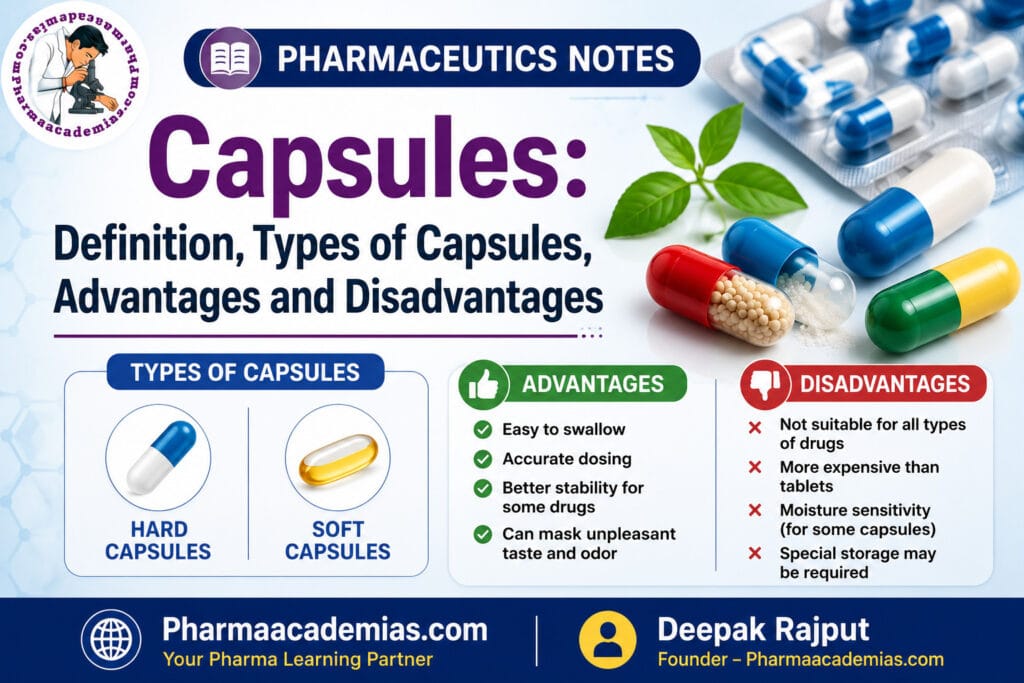
Unlike tablets, capsules consist of a shell that encloses the drug. The shell is generally made of gelatin or suitable plant-based polymers such as hydroxypropyl methylcellulose (HPMC). The drug inside the capsule may be in the form of powders, granules, pellets, semi-solids, or liquids, depending on the type of capsule and formulation requirements.
Capsules offer excellent flexibility in pharmaceutical formulation and can be designed for immediate release, delayed release, sustained release, or targeted drug delivery.
What are Capsules Definition of Capsules
A capsule is a solid unit dosage form in which one or more active pharmaceutical ingredients (APIs), along with suitable excipients, are enclosed within a hard or soft soluble shell, usually made of gelatin or other suitable polymers, for oral or other routes of administration.
According to pharmacopeial standards, capsules should:
- Contain the correct amount of drug.
- Disintegrate and dissolve appropriately after administration.
- Protect the drug from environmental factors.
- Be free from defects and contamination.
- Maintain stability throughout their shelf life.
Ideal Characteristics of Capsules
An ideal capsule should possess the following characteristics:
- It should contain an accurate dose of the drug.
- It should be easy to swallow.
- It should dissolve at the desired rate.
- It should protect the drug from light, moisture, and air.
- It should have sufficient mechanical strength.
- It should be chemically compatible with the drug.
- It should have an elegant appearance.
- It should be non-toxic and safe for administration.
- It should be stable during storage.
Components of a Capsule
A capsule generally consists of two main components:
1. Capsule Shell
The capsule shell encloses the drug and is usually prepared from:
- Gelatin
- Hydroxypropyl Methylcellulose (HPMC)
- Pullulan
- Starch-based polymers
The shell may also contain:
- Plasticizers (e.g., glycerin, sorbitol)
- Coloring agents
- Opacifying agents (e.g., titanium dioxide)
- Preservatives
- Flavoring agents
2. Capsule Fill Material
The fill material may contain:
- Active pharmaceutical ingredient (API)
- Diluents
- Disintegrants
- Lubricants
- Glidants
- Wetting agents
- Granules
- Pellets
- Semi-solid or liquid formulations (mainly in soft gelatin capsules)
Types of Capsules
Capsules are mainly classified into two major types:
- Hard Gelatin Capsules
- Soft Gelatin Capsules
1. Hard Gelatin Capsules (Hard Capsules)
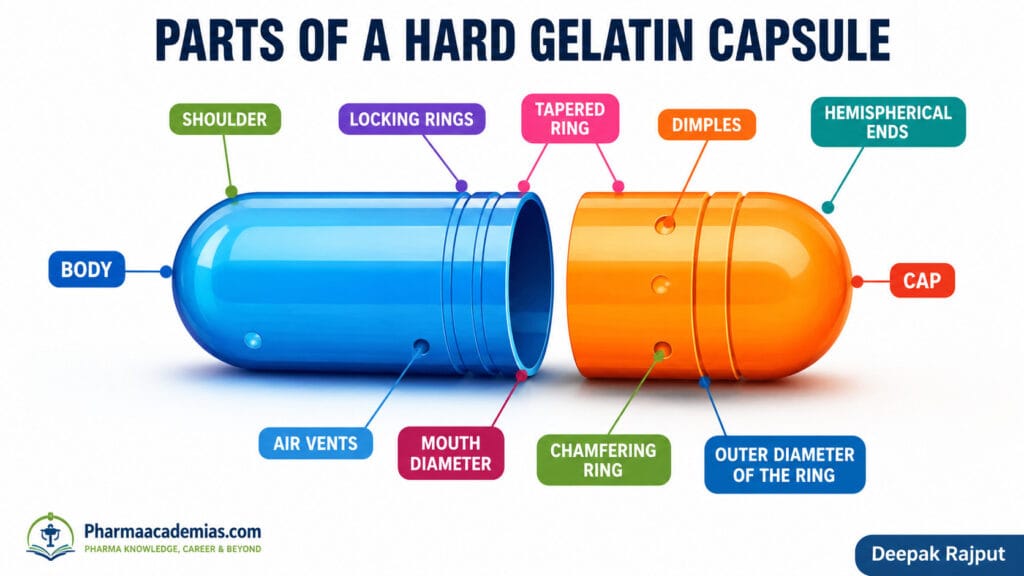
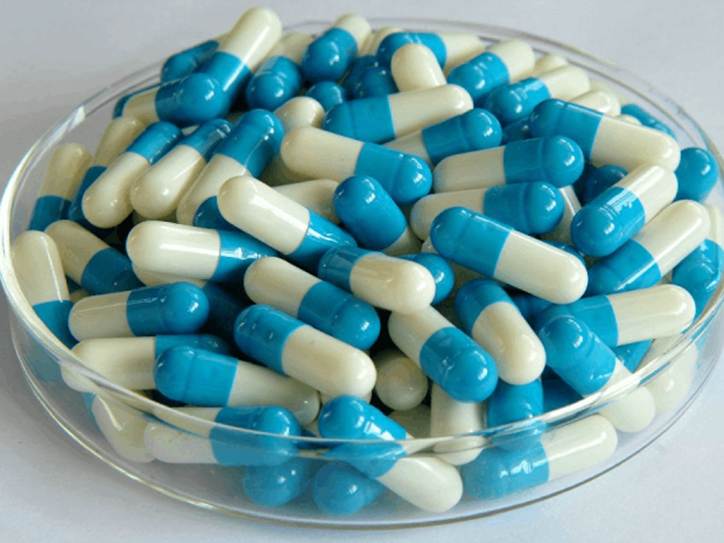
Hard gelatin capsules are two-piece capsules consisting of a body and a cap, which fit together to enclose the medication. These capsules are mainly used for dry solid formulations such as powders, granules, pellets, and mini-tablets.
They are the most commonly used capsule dosage form in the pharmaceutical industry.
Structure
A hard gelatin capsule consists of:
- Cap (larger portion)
- Body (smaller portion)
After filling, the cap is placed over the body to close the capsule.
Sizes of Hard Gelatin Capsules
Hard gelatin capsules are manufactured in different sizes to accommodate different fill weights.
| Capsule Size | Capacity |
| 000 | Largest |
| 00 | Large |
| 0 | Medium |
| 1 | Medium-small |
| 2 | Small |
| 3 | Smaller |
| 4 | Very small |
| 5 | Smallest |
The selection of capsule size depends on the bulk density and quantity of the formulation.
Filling Materials
Hard capsules are filled with:
- Powder
- Granules
- Pellets
- Mini-tablets
- Modified-release beads
Examples
- Amoxicillin Capsules
- Omeprazole Capsules
- Doxycycline Capsules
- Fluoxetine Capsules
Advantages of Hard Gelatin Capsules
Hard gelatin capsules are easy to manufacture and provide excellent dose accuracy. They effectively mask unpleasant taste and odor and can accommodate different types of solid formulations, including powders, granules, and pellets. They disintegrate rapidly in the gastrointestinal tract, allowing efficient drug release. They also offer flexibility in developing immediate-release and modified-release formulations, improving therapeutic outcomes and patient compliance.
Disadvantages of Hard Gelatin Capsules
Hard gelatin capsules are sensitive to moisture and humidity, which can make the shell brittle in dry conditions or soft in humid environments. They are generally unsuitable for aqueous liquid formulations because the shell may dissolve or deform. In addition, they are usually more expensive to manufacture than conventional tablets and may not be suitable for patients who avoid animal-derived products unless vegetarian shells are used.
2. Soft Gelatin Capsules (Soft Capsules)
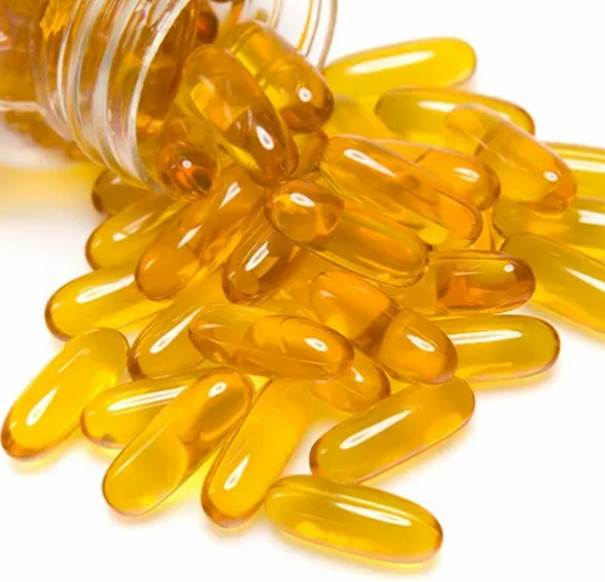
Soft gelatin capsules are one-piece, hermetically sealed capsules containing liquid, semi-solid, or suspension formulations. They are manufactured, filled, and sealed in a single operation.
Soft capsules are particularly useful for drugs that have poor water solubility because they can improve dissolution and bioavailability.
Composition of Soft Capsule Shell
The shell generally contains:
- Gelatin
- Plasticizer (glycerin or sorbitol)
- Water
- Coloring agents
- Preservatives
- Opacifying agents
The plasticizer provides flexibility and softness to the shell.
Filling Materials
Soft gelatin capsules may contain:
- Oils
- Liquid medications
- Suspensions
- Semi-solid preparations
- Fat-soluble vitamins
Examples
- Vitamin E Capsules
- Vitamin D Capsules
- Fish Oil Capsules
- Cod Liver Oil Capsules
- Omega-3 Capsules
Advantages of Soft Gelatin Capsules
Soft gelatin capsules are ideal for liquid and oily drugs and provide excellent protection against oxygen, moisture, and contamination. They improve the bioavailability of poorly water-soluble drugs and offer better content uniformity for liquid formulations. Their smooth surface makes them easy to swallow, and the sealed shell minimizes leakage and enhances product stability.
Disadvantages of Soft Gelatin Capsules
The manufacturing process for soft gelatin capsules is complex and requires specialized equipment, making production more expensive. The shells are sensitive to environmental conditions such as temperature and humidity, requiring careful storage. Certain formulations may interact with the gelatin shell, potentially affecting stability, and damaged capsules may leak their contents.
Other Types of Capsules
In addition to hard and soft gelatin capsules, several specialized capsule formulations are available.
1. Enteric-Coated Capsules
These capsules are coated or formulated to resist gastric acid and release the drug only in the intestine.
Examples
- Omeprazole Delayed-Release Capsules
- Esomeprazole Capsules
2. Sustained-Release Capsules
These capsules release the drug slowly over an extended period, reducing dosing frequency and maintaining consistent drug levels.
Examples
- Diltiazem Sustained-Release Capsules
- Venlafaxine Extended-Release Capsules
3. Modified-Release Capsules
Modified-release capsules are designed to alter the timing, rate, or site of drug release to achieve specific therapeutic objectives.
Examples
- Methylphenidate Modified-Release Capsules
- Duloxetine Delayed-Release Capsules
4. Vegetarian Capsules
Vegetarian capsules are manufactured from plant-derived polymers such as HPMC (Hydroxypropyl Methylcellulose) or pullulan instead of animal-derived gelatin. These capsules are suitable for individuals with dietary, religious, or ethical restrictions.
Examples
- Herbal Supplement Capsules
- Nutraceutical Capsules
Advantages of Capsules
Capsules offer numerous benefits that contribute to their popularity in pharmaceutical practice. They effectively mask unpleasant tastes and odors, making medications more acceptable to patients. Their smooth, slippery surface allows easy swallowing, improving compliance, particularly among adults and elderly patients.
Capsules provide accurate dosing and can accommodate a wide variety of formulations, including powders, granules, pellets, liquids, and semi-solids. The shell protects sensitive drugs from environmental factors such as light, air, and moisture, enhancing stability. Capsules also disintegrate rapidly in the gastrointestinal tract, leading to faster drug release in many formulations.
From a manufacturing perspective, capsules require fewer excipients than tablets and are especially suitable for drugs with poor compressibility. Soft gelatin capsules can improve the bioavailability of poorly water-soluble drugs by delivering them in dissolved or suspended form. Additionally, capsules can be formulated for immediate, delayed, or sustained drug release, providing flexibility in therapy.
Disadvantages of Capsules
Despite their advantages, capsules have several limitations. Gelatin shells are sensitive to moisture and temperature, requiring controlled storage conditions to maintain quality. High humidity can soften the shell, while low humidity can cause brittleness and cracking.
Capsules are generally more expensive to manufacture than tablets, especially soft gelatin capsules, which require specialized production equipment. Certain drugs, particularly highly hygroscopic or reactive substances, may interact with the capsule shell and affect stability. Hard gelatin capsules are not suitable for aqueous liquids, and damaged soft capsules may leak their contents.
Another limitation is that gelatin capsules may not be acceptable to vegetarians, vegans, or individuals with certain religious dietary restrictions, although HPMC and other plant-based alternatives are increasingly available. Some patients, especially young children and individuals with swallowing disorders, may still experience difficulty swallowing large capsules.
Difference Between Hard Gelatin Capsules and Soft Gelatin Capsules
| Feature | Hard Gelatin Capsules | Soft Gelatin Capsules |
| Structure | Two-piece (cap and body) | One-piece, sealed shell |
| Shell composition | Gelatin or HPMC | Gelatin with plasticizer |
| Nature of fill | Powders, granules, pellets | Liquids, oils, suspensions, semi-solids |
| Manufacturing | Filling and closing are separate processes | Filling and sealing occur simultaneously |
| Flexibility | Rigid shell | Soft and flexible shell |
| Leakage | Rare | Possible if damaged |
| Cost | Lower | Higher |
| Common examples | Amoxicillin, Omeprazole | Fish Oil, Vitamin E, Omega-3 |
Conclusion
Capsules are versatile and widely accepted pharmaceutical dosage forms that provide accurate dosing, improved patient compliance, and protection of the active pharmaceutical ingredient. Based on their construction, capsules are broadly classified into hard gelatin capsules and soft gelatin capsules, each designed for specific types of formulations. Hard capsules are mainly used for powders, granules, and pellets, whereas soft capsules are ideal for liquids, oils, and semi-solid preparations.
The advantages of capsules include ease of swallowing, effective taste masking, rapid disintegration, flexibility in formulation, and enhanced protection of the drug. However, they also have limitations, such as sensitivity to moisture, higher manufacturing costs, and restrictions related to gelatin-based shells. By selecting the appropriate type of capsule and formulation strategy, pharmaceutical scientists can optimize drug stability, bioavailability, and therapeutic effectiveness.