Introduction
Pediatric dose calculation is a critical aspect of clinical pharmacology, as children are not simply “small adults.” Their physiological parameters—such as metabolic rate, organ function, and body composition—differ significantly from adults. Therefore, accurate dosing is essential to ensure therapeutic efficacy while minimizing toxicity.
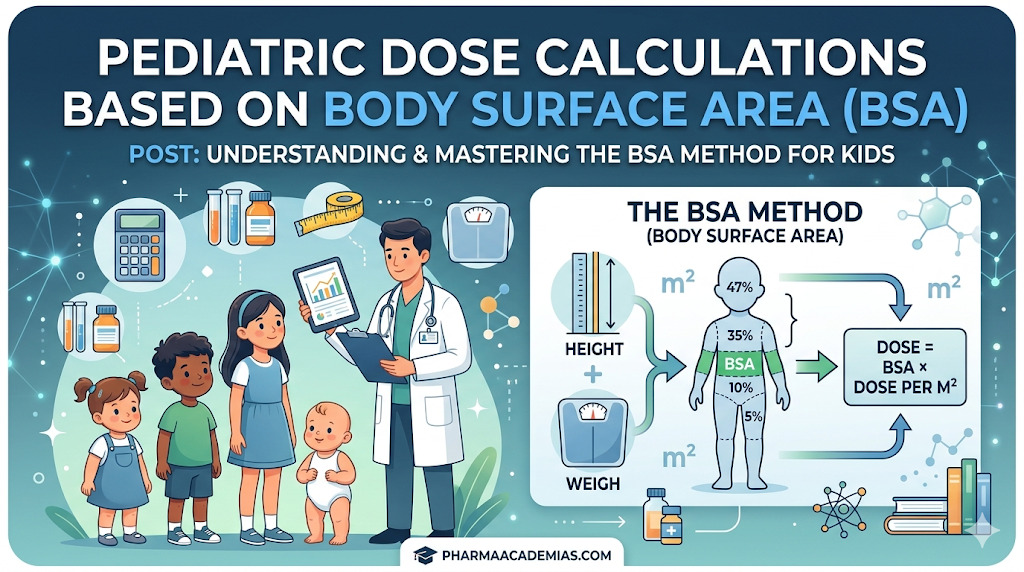
Among various methods used for pediatric dosing, Body Surface Area (BSA)-based dosing is considered one of the most accurate and reliable approaches. It is particularly useful for drugs with narrow therapeutic index, such as anticancer agents.
Pediatric Dose Calculations
Concept of Body Surface Area (BSA)
Body Surface Area (BSA) represents the total external surface area of the human body, expressed in square meters (m²). It correlates more closely than body weight with:
- Cardiac output
- Renal function
- Hepatic metabolism
- Basal metabolic rate
Because of this strong physiological correlation, BSA is widely used for dose individualization in pediatric patients.
Formula for BSA Calculation
The most commonly used formula for calculating BSA is the Mosteller Formula, which is simple and clinically practical:
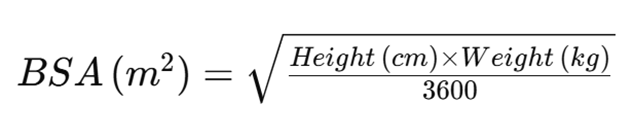
This formula provides an accurate estimation of BSA using height and weight.
Pediatric Dose Calculation Using BSA
Once BSA is calculated, the pediatric dose can be determined using the standard formula:

Where:
- 1.73 m² is the average adult BSA
- Child’s BSA is calculated using the formula above
Step-by-Step Calculation
To calculate pediatric dose using BSA:
First, measure the child’s height (cm) and weight (kg). Next, calculate BSA using the Mosteller formula. Then, apply the pediatric dose formula by comparing child BSA with standard adult BSA (1.73 m²).
Example Calculation
Let us consider:
- Weight = 20 kg
- Height = 110 cm
- Adult dose = 200 mg
Step 1: Calculate BSA
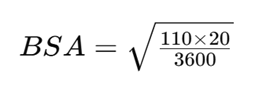
BSA ≈ 0.82 m²
Step 2: Calculate Pediatric Dose
Child\ Dose =
Child dose ≈ 95 mg
Use of Nomograms
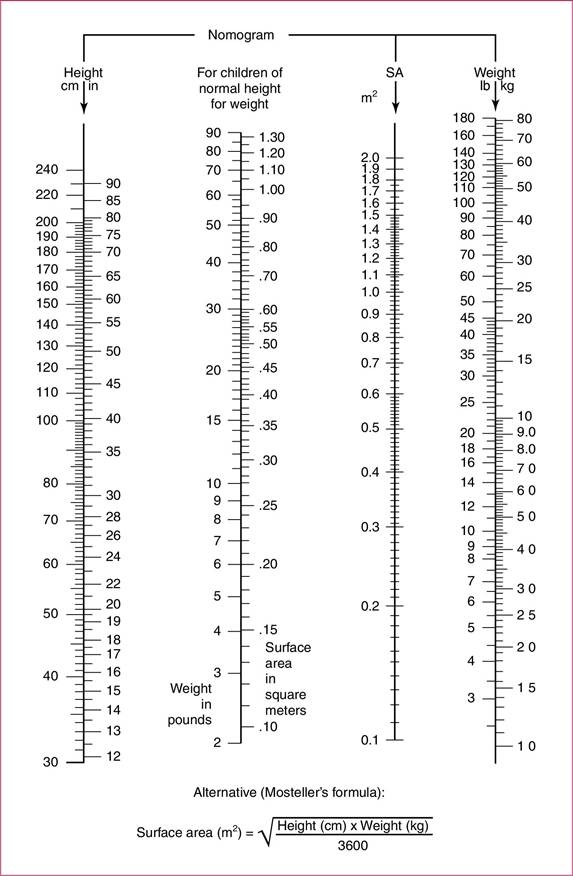
In clinical practice, BSA nomograms are often used for quick calculation. These graphical tools allow healthcare professionals to estimate BSA by simply aligning height and weight values.
Advantages of nomograms:
- Quick and convenient
- Reduces calculation errors
- Useful in busy clinical settings
Advantages of BSA-Based Dosing
BSA-based dosing offers several advantages:
- More accurate than weight-based dosing
- Reflects metabolic activity better
- Useful for drugs with narrow therapeutic index
- Widely accepted in oncology and critical care
Limitations of BSA Method
Despite its advantages, BSA-based dosing has certain limitations:
- Requires accurate measurement of height and weight
- May not be suitable for obese or severely malnourished children
- Calculation errors may occur if not done carefully
- Does not account for organ dysfunction
Clinical Applications
BSA-based dosing is particularly important in:
- Anticancer chemotherapy
- Immunosuppressive therapy
- Drugs with narrow therapeutic index
- Pediatric critical care
Comparison with Other Methods
| Method | Basis | Accuracy |
| Age-based | Age | Low |
| Weight-based | Body weight | Moderate |
| BSA-based | Surface area | High |
BSA method is preferred when precision is essential.
Safety Considerations
- Always double-check calculations
- Use standardized formulas or nomograms
- Monitor patient response and adjust dose accordingly
- Consider organ function and clinical condition
Conclusion
Pediatric dose calculation based on Body Surface Area (BSA) is a scientifically sound and clinically reliable method for determining appropriate drug dosage in children. By correlating with physiological parameters such as metabolism and organ function, BSA-based dosing ensures improved therapeutic outcomes and reduced risk of toxicity.
Although it requires careful calculation, it remains the gold standard method for dosing in critical conditions, especially in pediatric oncology and specialized therapies.
Visit for more: Pharmaacademias.com