
Introduction to Lipids
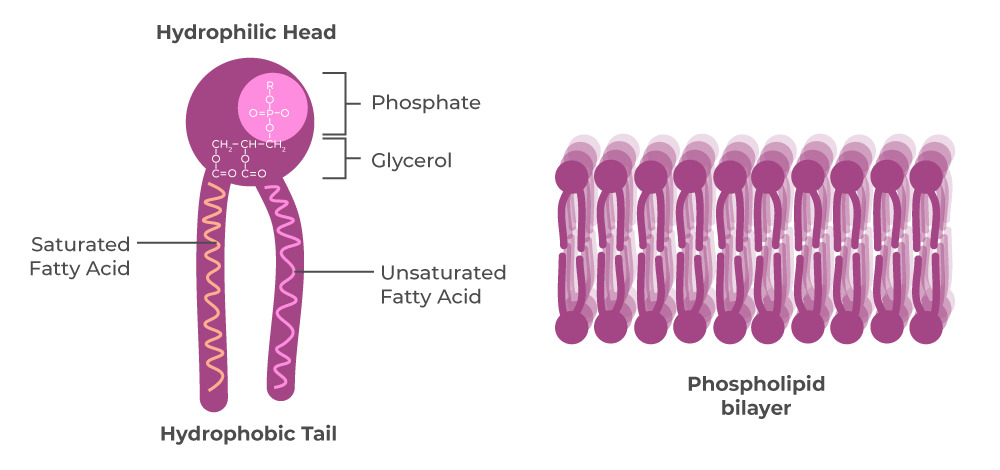
Lipids are a diverse group of organic compounds that are insoluble in water but soluble in non-polar solvents such as ether, chloroform, and benzene. They include fats, oils, waxes, phospholipids, and steroids, and play essential roles in biological systems. Structurally, most lipids are composed of fatty acids and glycerol, although some complex lipids contain additional functional groups.
Qualitative Tests for Lipids
Qualitative tests are used to identify the presence and type of lipids in a given sample. These tests are based on the chemical properties of lipids such as unsaturation, ester linkage, and solubility.
1. Solubility Test
Lipids are insoluble in water but dissolve readily in organic solvents like chloroform, ether, and benzene. When a lipid sample is added to water, it forms a separate layer, whereas it dissolves completely in organic solvents. This property helps distinguish lipids from other biomolecules like carbohydrates and proteins.
2. Sudan III or Sudan IV Test
Sudan dyes are fat-soluble dyes used to detect lipids. When Sudan III or Sudan IV is added to a sample containing lipids, the lipids get stained red or orange. This occurs because the dye dissolves in the lipid fraction, making it visible. This test is commonly used in biological and histological studies.
3. Emulsion Test
In this test, the lipid sample is first dissolved in ethanol and then water is added. If lipids are present, a milky white emulsion forms. This happens because lipids are insoluble in water and form tiny droplets dispersed in the aqueous medium, indicating their presence.
4. Grease Spot Test
When a small amount of lipid is placed on filter paper, it produces a translucent greasy spot that does not disappear upon drying. This is due to the non-volatile nature of lipids, and it serves as a simple preliminary test for their presence.
5. Saponification Test
Lipids containing ester bonds (such as triglycerides) undergo hydrolysis when heated with an alkali like sodium hydroxide. This reaction produces glycerol and soap (salts of fatty acids). The formation of soap indicates the presence of saponifiable lipids.
6. Acrolein Test
When fats are heated strongly in the presence of a dehydrating agent like potassium bisulfate, glycerol is dehydrated to form acrolein, which has a characteristic pungent odor. The detection of this odor confirms the presence of glycerol-containing lipids.
7. Bromine Water Test
This test is used to detect unsaturation in lipids. When bromine water is added to an unsaturated lipid, the brown color of bromine disappears due to addition across double bonds. This indicates the presence of unsaturated fatty acids.
8. Iodine Test
Similar to the bromine test, iodine reacts with double bonds in unsaturated fatty acids. The degree of iodine absorption reflects the level of unsaturation. Decolorization of iodine indicates unsaturated lipids.
Functions of Lipids
Lipids perform a wide variety of essential functions in living organisms, ranging from energy storage to structural and regulatory roles.
Energy Storage and Source
Lipids serve as a major source of energy in the body. They provide more energy per gram compared to carbohydrates and proteins. Stored mainly as triglycerides in adipose tissue, they act as a long-term energy reserve and are utilized during periods of fasting or increased energy demand.
Structural Components of Cells
Lipids are fundamental components of cell membranes. Phospholipids and cholesterol form the lipid bilayer, which provides structural integrity and regulates the movement of substances in and out of the cell. This membrane structure is essential for maintaining cellular homeostasis.
Insulation and Protection
Lipids provide thermal insulation by forming a layer beneath the skin, helping to maintain body temperature. They also cushion and protect vital organs such as the kidneys and heart from mechanical injury.
Hormonal and Regulatory Functions
Certain lipids act as precursors for hormones and signaling molecules. For example, cholesterol is the precursor for steroid hormones, including estrogen, testosterone, and cortisol. Lipids also participate in cell signaling pathways, influencing various physiological processes.
Absorption of Fat-Soluble Vitamins
Lipids play a crucial role in the absorption and transport of fat-soluble vitamins such as vitamins A, D, E, and K. Without lipids, the body cannot efficiently absorb these essential nutrients.
Water Barrier Function
Lipids such as waxes and certain fatty acids help in preventing water loss from the body. They form a protective barrier on the skin and plant surfaces, reducing dehydration.
Electrical Insulation
In the nervous system, lipids form the myelin sheath around nerve fibers. This sheath acts as an electrical insulator, allowing rapid transmission of nerve impulses.
Conclusion
Lipids are vital biomolecules with diverse structural and functional roles in living organisms. Their identification through qualitative tests is essential in biochemical analysis, while their physiological functions highlight their importance in maintaining health and normal body processes. Understanding both the qualitative analysis and biological roles of lipids provides a strong foundation for studies in biochemistry, pharmacology, and medical sciences.


