Antiviral drugs are a specialized group of medications used for the treatment, suppression, and prevention of viral infections. Unlike antibacterial agents, which act against bacteria, antiviral medications are designed to target specific stages of the viral life cycle, such as viral entry, genome replication, protein synthesis, maturation, or release from host cells. Their primary goal is not always to kill the virus directly, but to reduce viral multiplication, shorten the course of illness, decrease complications, and prevent transmission.
These medicines play a critical role in the management of major viral diseases such as herpes simplex infection, influenza, hepatitis B and C, HIV/AIDS, cytomegalovirus infection, respiratory syncytial virus, and other emerging viral illnesses. With advances in pharmacology, antiviral therapy has become increasingly targeted, improving patient outcomes while minimizing host cell toxicity.
Classification of Antiviral Drugs
Antiviral drugs are commonly classified according to their mechanism of action, chemical structure, and the type of virus they target. Because viruses rely on host cellular machinery for replication, antiviral agents are generally designed to selectively inhibit viral enzymes or virus-specific processes.
1) Nucleoside and Nucleotide Analogues
This is one of the most important and widely used classes of antiviral drugs. These agents structurally resemble the natural nucleosides or nucleotides required for viral DNA or RNA synthesis. Once incorporated into the growing viral nucleic acid chain, they cause premature chain termination or defective genome synthesis, thereby halting viral replication.
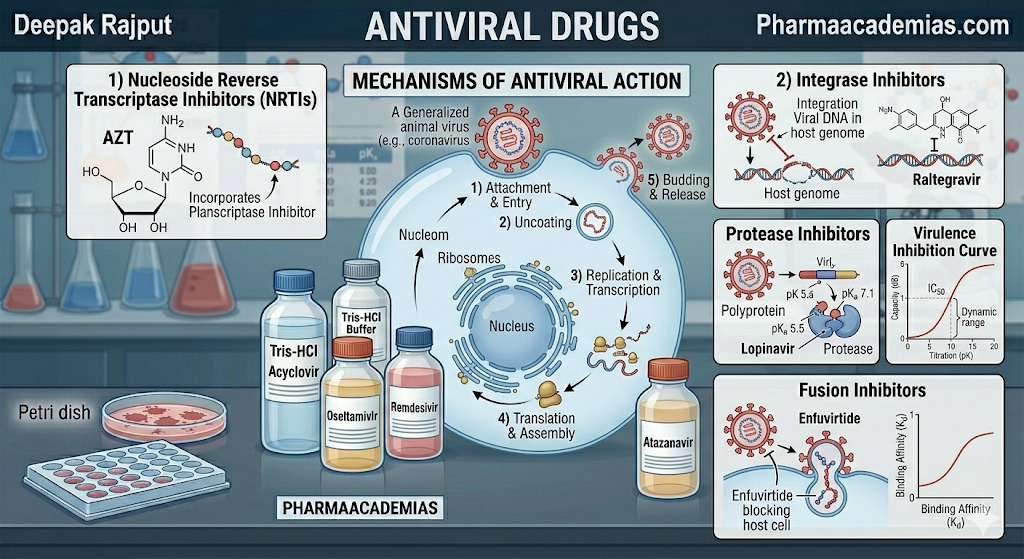
Common examples include acyclovir, valacyclovir, ganciclovir, zidovudine, tenofovir, lamivudine, and cidofovir. These drugs are extensively used in herpesvirus infections, HIV, hepatitis B, and cytomegalovirus infections.
2) Protease Inhibitors
Protease inhibitors block viral protease enzymes that are required to cleave large viral polyproteins into smaller functional proteins. Without this cleavage step, newly formed viral particles remain immature and noninfectious.
This class is especially important in HIV treatment regimens, where drugs such as ritonavir, lopinavir, atazanavir, and darunavir are frequently used as part of combination antiretroviral therapy.
3) Neuraminidase Inhibitors
These drugs are specifically active against influenza A and B viruses. They inhibit the neuraminidase enzyme on the viral surface, preventing the release of newly formed viral particles from infected respiratory epithelial cells.
The most common drugs in this group are oseltamivir and zanamivir, which are highly effective when started within the first 48 hours of symptom onset.
4) Fusion and Entry Inhibitors
Fusion inhibitors prevent the virus from entering host cells by blocking the fusion of the viral envelope with the host cell membrane. This mechanism is especially useful in the treatment of HIV.
A major example is enfuvirtide, which prevents HIV from fusing with CD4 cells, thereby reducing viral spread.
5) Polymerase Inhibitors
These agents inhibit viral RNA or DNA polymerase enzymes, which are essential for the synthesis of new viral genetic material.
Important examples include sofosbuvir, used in hepatitis C, and remdesivir, used in selected viral RNA infections. Polymerase inhibitors are considered highly effective because they target a central step in viral multiplication.
6) Interferons
Interferons are naturally occurring immunomodulatory proteins that enhance the host immune response against viral infections. Therapeutically, interferon-alpha and interferon-beta are used in certain chronic viral diseases, particularly hepatitis B and hepatitis C, although their use has reduced with newer direct-acting antivirals.
7) Non-Nucleoside Reverse Transcriptase Inhibitors (NNRTIs)
These drugs directly bind to reverse transcriptase and inhibit its activity without requiring intracellular activation. They are mainly used in HIV infection.
Examples include efavirenz, nevirapine, etravirine, and rilpivirine.
8) Miscellaneous Antiviral Agents
This category includes drugs with unique mechanisms, such as ribavirin, which has broad-spectrum antiviral activity, and amantadine or rimantadine, which block the M2 ion channel of influenza A virus.
Dose of Antiviral Drugs
The dose of antiviral drugs varies significantly depending on the specific viral infection, patient age, body weight, renal and hepatic function, severity of illness, and route of administration. Therefore, no single universal dosage applies to all antiviral medications.
For example, acyclovir for herpes simplex is often prescribed as 200–400 mg orally multiple times daily, while oseltamivir for influenza is commonly given as 75 mg twice daily for 5 days in adults. In HIV therapy, antiviral dosing is usually part of a fixed-dose combination regimen, which improves adherence and treatment success.
Dose adjustments are especially important in:
- Renal impairment
- Pediatric patients
- Elderly individuals
- Pregnant women
- Immunocompromised patients
Because improper dosing can lead to viral resistance or toxicity, antiviral drugs should always be prescribed under medical supervision.
Indications of Antiviral Drugs
Antiviral medications are indicated in a broad range of viral illnesses. Their use may be curative, suppressive, prophylactic, or supportive, depending on the disease.
They are commonly indicated in:
Herpesvirus infections, including herpes simplex virus (HSV-1 and HSV-2), varicella-zoster virus (chickenpox and shingles), and cytomegalovirus (CMV).
Influenza virus infections, particularly influenza A and B, where early treatment reduces disease severity and complications.
Hepatitis B and hepatitis C, where long-term antiviral therapy helps prevent cirrhosis, liver failure, and hepatocellular carcinoma.
Human immunodeficiency virus (HIV/AIDS), where combination antiviral therapy suppresses viral load and improves immune function.
Respiratory viral infections, such as RSV and severe viral pneumonia.
Emerging viral diseases, including some cases of Ebola, SARS-CoV-2, and other high-risk viral outbreaks, where selected antiviral agents may be used based on current guidelines.
Contraindications of Antiviral Drugs
Although antiviral drugs are highly beneficial, they are not suitable for all patients, and contraindications vary from drug to drug.
The most important contraindications include known hypersensitivity or allergy to the drug or its components. A patient with previous severe allergic reactions should avoid the same medication.
Pregnancy and lactation require special caution, as some antiviral agents may cross the placenta or be secreted in breast milk. The risk-benefit ratio must always be assessed carefully.
Renal dysfunction is a major concern because many antivirals, particularly acyclovir, ganciclovir, and tenofovir, are excreted through the kidneys. Reduced renal clearance can cause drug accumulation and toxicity.
Similarly, severe liver disease may increase toxicity risk for drugs metabolized hepatically, especially some HIV antivirals and hepatitis medications.
Another important contraindication is drug interaction risk. Antiviral drugs, particularly protease inhibitors and NNRTIs, can interact with antibiotics, antifungals, anticoagulants, anticonvulsants, and herbal supplements, potentially leading to serious adverse effects.
Patients with bone marrow suppression, electrolyte disturbances, or severe immunosuppression may also need alternative therapy depending on the antiviral selected.
Conclusion
Antiviral drugs have transformed the management of viral diseases by specifically targeting viral replication and limiting disease progression. Their classification includes nucleoside analogues, protease inhibitors, neuraminidase inhibitors, fusion inhibitors, polymerase inhibitors, interferons, and NNRTIs, each with distinct mechanisms and clinical uses.
Proper selection of the right antiviral drug, correct dose, clinical indication, and awareness of contraindications is essential for safe and effective treatment. With the increasing emergence of viral resistance and new viral diseases, antiviral pharmacotherapy continues to remain one of the most important areas of modern medicine.