
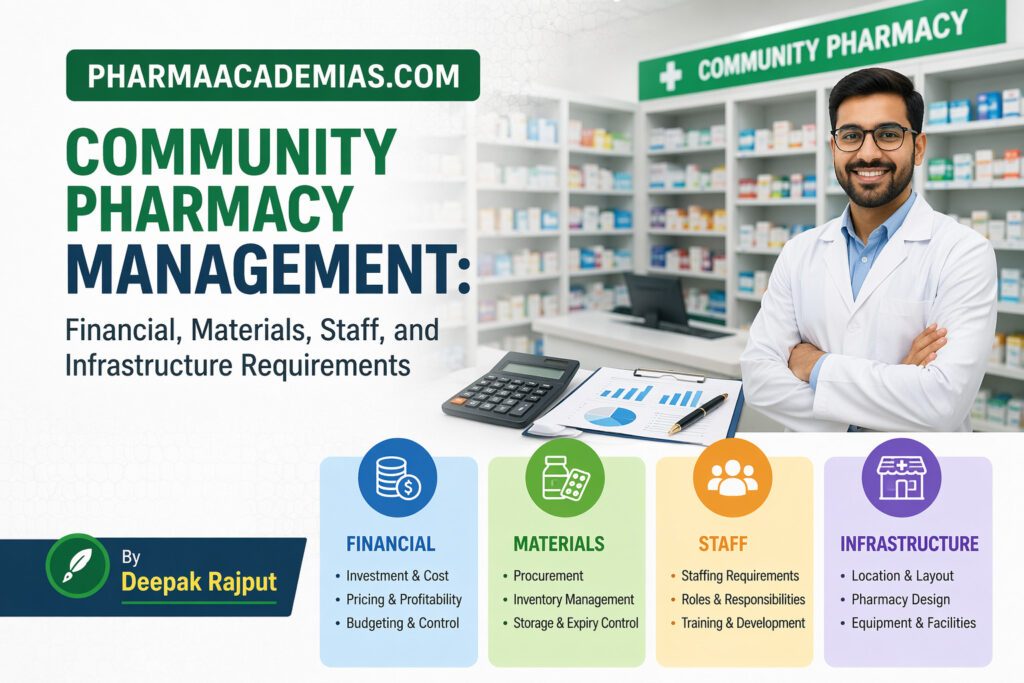
Community pharmacy management is a critical aspect of modern healthcare systems, ensuring the safe, efficient, and patient-centered delivery of pharmaceutical services. A well-managed community pharmacy not only dispenses medications but also provides healthcare counseling, disease management support, and preventive care services. Effective management requires a balanced integration of financial planning, material resources, human resources (staff), and infrastructure development. Each of these components plays a vital role in ensuring operational efficiency, regulatory compliance, and long-term sustainability.
Introduction to Community Pharmacy Management
Community pharmacy management refers to the systematic organization, coordination, and supervision of all activities within a retail pharmacy setting. It includes planning, procurement, inventory control, staffing, financial oversight, patient service delivery, and adherence to legal and ethical standards. With the expanding role of pharmacists in primary healthcare, management practices have evolved from simple dispensing to comprehensive healthcare service delivery.
A successful community pharmacy must strike a balance between healthcare service quality and business profitability. This requires strategic planning, efficient resource utilization, and continuous monitoring of operations.
Financial Requirements in Community Pharmacy Management
Financial management is the backbone of any community pharmacy. It ensures that the pharmacy remains profitable while delivering quality healthcare services. Proper financial planning involves budgeting, cost control, revenue generation, and financial reporting.
The initial investment in a community pharmacy includes costs related to licensing, infrastructure setup, furniture, equipment, and procurement of initial stock. Depending on the location and scale, this investment can vary significantly. In addition, working capital is essential for day-to-day operations, including purchasing medicines, paying salaries, utility bills, and other operational expenses.
Revenue generation in a community pharmacy primarily comes from the sale of prescription drugs, over-the-counter (OTC) products, health supplements, and medical devices. Additional income streams may include health screening services, vaccination services, and consultation fees.
Profitability depends on several factors such as pricing strategies, supplier discounts, inventory turnover, and customer retention. Efficient inventory management reduces wastage due to expired drugs and minimizes capital blockage. Pharmacies must also maintain accurate financial records, including sales, purchases, profit margins, and tax obligations, to ensure transparency and compliance with regulatory requirements.
Another important aspect is financial risk management. Pharmacies must plan for uncertainties such as fluctuating drug prices, delayed payments from customers or insurance providers, and changes in government regulations. The use of pharmacy management software can significantly improve financial tracking and decision-making.
Also read this
Material Requirements in Community Pharmacy
Material management involves the procurement, storage, and control of all physical resources required for pharmacy operations. This includes medicines, medical devices, packaging materials, and other consumables.
Medicines form the core inventory of a community pharmacy and must be managed carefully to ensure availability, quality, and safety. Proper categorization of drugs—such as prescription drugs, OTC medications, controlled substances, and refrigerated products—is essential for efficient handling.
Storage conditions play a crucial role in maintaining drug efficacy. Temperature-sensitive products such as vaccines and insulin require refrigeration, while certain medications must be stored in cool, dry conditions. Pharmacies must adhere to guidelines regarding temperature, humidity, and light exposure.
Inventory control techniques such as First-In-First-Out (FIFO) and First-Expiry-First-Out (FEFO) are widely used to minimize wastage. Regular stock audits help identify discrepancies and prevent losses due to theft or mismanagement.
In addition to medicines, pharmacies require packaging materials such as bottles, labels, and bags. Proper labeling is essential for patient safety, as it provides information on dosage, administration, and precautions.
Automation and digital inventory systems have become increasingly important in modern pharmacy management. These systems help track stock levels, generate alerts for low stock or expiry, and streamline procurement processes
Staff Requirements in Community Pharmacy
Human resources are one of the most valuable assets in a community pharmacy. The quality of services provided depends largely on the competence, professionalism, and communication skills of the staff.
A typical community pharmacy team includes a registered pharmacist, pharmacy assistants, and support staff. The registered pharmacist is responsible for dispensing medications, providing patient counseling, ensuring compliance with legal regulations, and overseeing overall operations.
Pharmacy assistants help in managing inventory, handling billing, and assisting customers under the supervision of the pharmacist. Support staff may include cashiers, cleaners, and delivery personnel.
Staff training and development are essential for maintaining high standards of service. Continuous education programs help pharmacists stay updated with new drugs, treatment guidelines, and regulatory changes. Training in communication skills is also important, as pharmacists play a key role in patient education and adherence.
Workforce planning involves determining the appropriate number of staff based on the pharmacy’s workload and operating hours. Adequate staffing ensures smooth operations and reduces the risk of errors in dispensing.
Employee motivation and job satisfaction are critical for retaining skilled staff. Providing a positive work environment, fair compensation, and opportunities for career growth can significantly enhance staff performance.
Infrastructure Requirements in Community Pharmacy
Infrastructure forms the physical foundation of a community pharmacy. A well-designed pharmacy layout enhances operational efficiency, ensures patient safety, and improves customer experience.
The location of the pharmacy is a key factor in its success. Pharmacies located in residential areas, near hospitals, or in high-traffic commercial zones tend to attract more customers. Accessibility and visibility are important considerations.
The internal layout should be organized to facilitate smooth workflow. It typically includes areas for dispensing, storage, billing, and patient counseling. A separate counseling area ensures privacy during patient interactions, which is particularly important for sensitive health issues.
Storage facilities must be designed to accommodate different categories of drugs, including controlled substances and refrigerated items. Shelving systems should be arranged systematically to allow easy identification and retrieval of products.
Modern pharmacies are increasingly adopting digital infrastructure, including computerized billing systems, electronic health records, and inventory management software. These technologies improve efficiency, reduce errors, and enhance data management.
Safety and compliance are also critical aspects of infrastructure. Pharmacies must comply with regulatory standards related to hygiene, fire safety, and waste disposal. Proper ventilation, lighting, and cleanliness contribute to a safe and comfortable environment for both staff and customers.
Integration of Management Components
The effectiveness of community pharmacy management lies in the integration of financial, material, staff, and infrastructure components. These elements are interdependent and must be managed cohesively to achieve optimal performance.
For example, efficient financial management supports timely procurement of materials, while proper staffing ensures effective utilization of resources. Similarly, a well-designed infrastructure enhances workflow efficiency and improves patient satisfaction.
The adoption of technology plays a crucial role in integrating these components. Pharmacy management systems can streamline operations by linking inventory, billing, and financial data, enabling better decision-making.
Challenges and Future Trends
Community pharmacies face several challenges, including increasing competition, regulatory changes, rising operational costs, and the need to adapt to evolving healthcare demands. The shift towards patient-centered care requires pharmacies to expand their services beyond traditional dispensing.
Future trends in community pharmacy management include the integration of telepharmacy, personalized medicine, and digital health solutions. The use of artificial intelligence and data analytics is expected to further enhance efficiency and patient care.
Pharmacies are also playing a growing role in public health initiatives such as vaccination programs, chronic disease management, and health awareness campaigns.
Conclusion
Community pharmacy management is a multifaceted discipline that requires careful planning and execution across financial, material, staff, and infrastructure domains. A well-managed pharmacy not only ensures profitability but also contributes significantly to public health by providing accessible and high-quality healthcare services.
By adopting modern management practices, leveraging technology, and focusing on patient-centered care, community pharmacies can thrive in an increasingly competitive and dynamic healthcare environment.
Editorial Note
This article has been carefully researched and written by Deepak Rajput with a focus on accuracy, clarity, and evidence-based healthcare information. Pharmaacademias.com