Kava-Kava is a well-known herbal drug widely used for its anxiolytic, sedative, and muscle-relaxant properties. Scientifically known as Piper methysticum, it belongs to the family Piperaceae and is traditionally used in the South Pacific islands as a ceremonial and medicinal beverage.
In modern herbal medicine, Kava-Kava is primarily utilized for the management of anxiety disorders, stress, insomnia, and nervous tension. It is considered a natural alternative to synthetic anxiolytic drugs due to its ability to produce calming effects without significant cognitive impairment at therapeutic doses.
However, despite its therapeutic benefits, Kava-Kava has gained considerable attention due to its potential hepatotoxicity and serious drug interactions, making its clinical use a subject of caution.
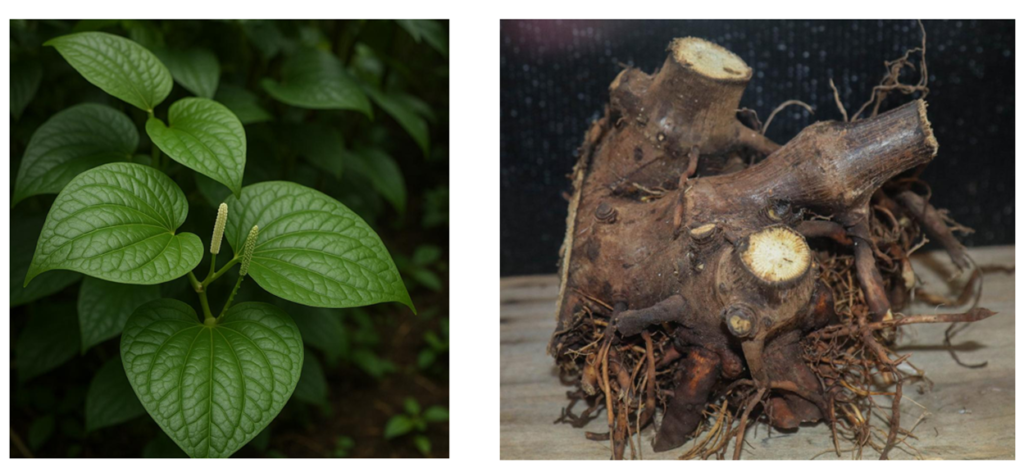
Botanical and Pharmacognostic Profile of Kava Kava
Kava-Kava is a perennial shrub characterized by:
- Large, heart-shaped leaves
- Thick, woody stems
- Extensive root system (medicinally important part)
The roots and rhizomes are the primary parts used for medicinal purposes, typically processed into powders, extracts, or beverages.
Phytochemical Composition of Kava Kava
The pharmacological activity of Kava-Kava is mainly attributed to a group of active compounds known as kavalactones.
Major constituents include:
- Kavain
- Dihydrokavain
- Methysticin
- Dihydromethysticin
- Yangonin and desmethoxyyangonin
These compounds are responsible for its anxiolytic and sedative effects.
Pharmacological Actions of Kava Kava
Kava-Kava exhibits multiple pharmacological properties:
- Anxiolytic (anti-anxiety)
- Sedative and hypnotic
- Muscle relaxant
- Anticonvulsant
- Mild analgesic
It is particularly effective in managing generalized anxiety without causing significant dependence when used appropriately.
Mechanism of Action
Kava-Kava exerts its pharmacological effects through several mechanisms:
- Modulation of GABA (gamma-aminobutyric acid) receptors, enhancing inhibitory neurotransmission
- Inhibition of voltage-gated sodium and calcium channels
- Modulation of dopamine and serotonin pathways
- Reduction of neuronal excitability
These actions collectively produce calming and anxiolytic effects.
Therapeutic Uses of Kava Kava
Kava-Kava is commonly used in the management of:
- Anxiety disorders
- Stress and nervous tension
- Insomnia
- Muscle spasms
- Mild depressive symptoms
Side Effects of Kava-Kava
Despite its therapeutic benefits, Kava-Kava is associated with several adverse effects, some of which are serious.
Common Side Effects
- Drowsiness and sedation
- Dizziness
- Gastrointestinal disturbances
- Headache
Dermatological Effects
Chronic use may lead to a condition known as “kava dermopathy”, characterized by:
- Dry, scaly skin
- Yellowish discoloration
Hepatotoxicity (Major Concern)
One of the most serious adverse effects of Kava-Kava is liver toxicity, which may lead to:
- Hepatitis
- Liver failure
- Elevated liver enzymes
This has resulted in restrictions or bans in several countries.
Central Nervous System Effects
- Excess sedation
- Impaired motor coordination
- Reduced alertness
Herb–Drug Interactions
Kava-Kava exhibits significant interactions with various drugs, particularly those affecting the central nervous system.
Interaction with CNS Depressants
Kava-Kava enhances the effects of CNS depressants such as:
- Benzodiazepines
- Barbiturates
- Alcohol
This may lead to:
- Excessive sedation
- Respiratory depression
- Increased risk of accidents
Interaction with Hepatotoxic Drugs
Concurrent use with drugs that affect the liver increases the risk of hepatotoxicity.
Examples include:
- Paracetamol (acetaminophen)
- Antitubercular drugs
- Certain antifungals
Interaction with Antidepressants
- May enhance sedative effects
- Potential risk of additive CNS depression
Interaction with Dopaminergic Drugs
Kava-Kava may antagonize dopamine receptors, potentially interfering with drugs used in Parkinson’s disease.
Herb–Food Interactions
Kava-Kava may interact with certain dietary substances:
- Alcohol significantly increases sedative and hepatotoxic effects
- Fat-rich meals may influence absorption of kavalactones
Clinical Significance
The interactions and adverse effects of Kava-Kava are clinically significant because they can:
- Lead to severe liver damage
- Cause excessive CNS depression
- Increase risk of drug toxicity
Due to these risks, its use must be carefully monitored.
Safety and Precautions
- Avoid use in patients with liver disease
- Do not combine with alcohol or CNS depressants
- Not recommended during pregnancy and lactation
- Limit duration of use
- Use only standardized extracts from reliable sources
Conclusion
Kava-Kava (Piper methysticum) is a potent herbal drug with significant anxiolytic and sedative properties. Its activity is primarily mediated by kavalactones, which modulate neurotransmitter systems and reduce neuronal excitability. However, its clinical use is limited by serious adverse effects, particularly hepatotoxicity, and significant herb–drug interactions.
Therefore, while Kava-Kava can be effective in managing anxiety and stress, it must be used with extreme caution, proper medical supervision, and awareness of its potential risks.
Editorial Note
This article has been carefully researched and written by Deepak Rajput with a focus on accuracy, clarity, and evidence-based healthcare information. Pharmaacademias.com