Herbal Drug Interactions: The increasing global use of herbal medicines and nutraceuticals, alongside conventional pharmaceutical therapies, has led to a growing concern regarding Herb–Drug Interactions (HDIs) and Herb–Food Interactions (HFIs). These interactions occur when herbal products influence the pharmacokinetics or pharmacodynamics of drugs or nutrients, potentially altering their efficacy, safety, and therapeutic outcomes.
Herbal medicines are often perceived as safe due to their natural origin; however, they contain bioactive phytochemicals capable of interacting with drug-metabolizing enzymes, transport proteins, and physiological systems. Such interactions may lead to synergistic (enhanced effect), antagonistic (reduced effect), or toxic outcomes, thereby posing significant clinical challenges.
Understanding these interactions is essential for ensuring safe and rational use of herbal products, particularly in patients undergoing long-term pharmacotherapy or consuming functional foods.
Concept of Herbal Drug Interactions
Herb–Drug and Herb–Food interactions involve complex biochemical and physiological processes that affect drug absorption, distribution, metabolism, and excretion (ADME), as well as pharmacological response.
- Herb–Drug Interaction (HDI) refers to the modification of the pharmacological effect of a drug due to the concurrent use of herbal products.
- Herb–Food Interaction (HFI) involves changes in nutrient utilization or drug action caused by dietary components or herbal foods.
These interactions are particularly important in clinical settings, where they may lead to therapeutic failure or adverse drug reactions (ADRs).
Factors Influencing Herbal Drug Interactions
The occurrence and severity of interactions depend on multiple factors, including:
- The chemical composition and concentration of herbal constituents
- Dosage and duration of use
- Individual patient variability (age, genetics, disease state)
- Route of administration
- Concurrent use of multiple drugs or supplements
Classification of Herbal Drug Interactions
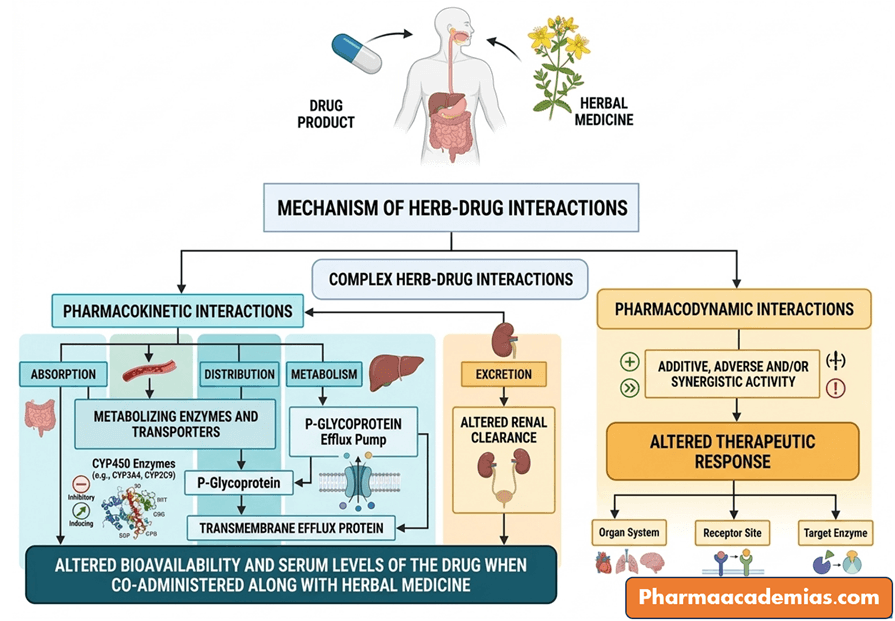
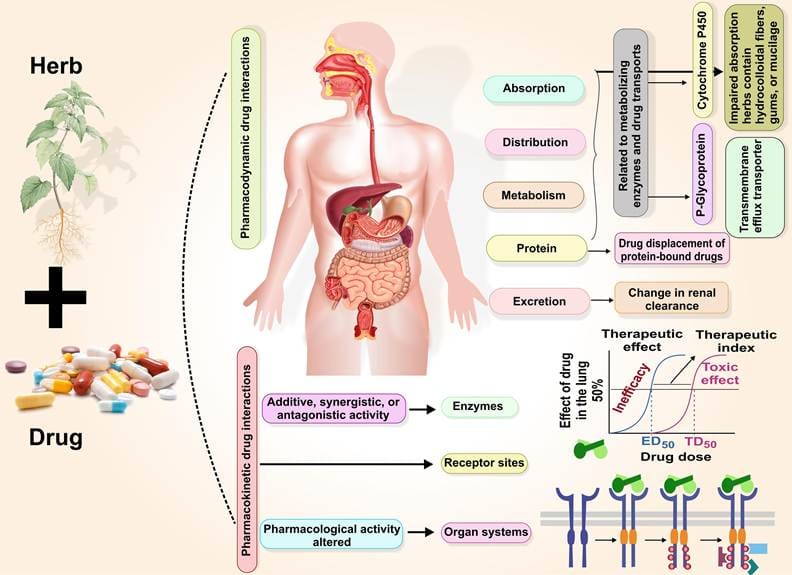
Herb–Drug and Herb–Food interactions are broadly classified based on their mechanism of action into Pharmacokinetic interactions and Pharmacodynamic interactions.
1. Pharmacokinetic Interactions
Pharmacokinetic interactions involve alterations in the absorption, distribution, metabolism, or excretion (ADME) of drugs due to herbal or dietary components.
Absorption Interactions
Herbs or foods may affect drug absorption by:
- Altering gastrointestinal pH
- Modifying gastric emptying time
- Binding to drugs and reducing their bioavailability
For example, fiber-rich herbal products may reduce the absorption of certain medications.
Distribution Interactions
Some herbal constituents may compete with drugs for plasma protein binding, leading to:
- Increased free (active) drug concentration
- Enhanced pharmacological or toxic effects
Metabolism Interactions
One of the most significant interaction mechanisms involves modulation of liver enzymes, particularly the Cytochrome P450 (CYP450) system.
Herbs may:
- Induce enzymes, increasing drug metabolism and reducing efficacy
- Inhibit enzymes, decreasing drug metabolism and increasing toxicity
This is a major pathway through which many herb–drug interactions occur.
Excretion Interactions
Herbs may influence renal excretion by:
- Altering urine pH
- Affecting renal transport mechanisms
This can lead to either increased elimination or accumulation of drugs.
2. Pharmacodynamic Interactions
Pharmacodynamic interactions occur when herbal products and drugs affect the same physiological systems or receptors, leading to additive, synergistic, or antagonistic effects.
Synergistic Effects
In this type of interaction, the combined effect of the herb and drug is greater than the sum of their individual effects.
Example:
- Herbal anticoagulants enhancing the effect of blood-thinning drugs, increasing bleeding risk
Additive Effects
The herb and drug produce similar effects, leading to an overall increase in pharmacological response.
Antagonistic Effects
The herb reduces or counteracts the effect of the drug, leading to decreased therapeutic efficacy.
3. Herb–Food Interactions
Herb–Food interactions involve the influence of dietary components on the activity of herbal products or drugs.
Nutrient–Herb Interactions
Certain foods may:
- Enhance the absorption of herbal compounds
- Inhibit their bioavailability
For example, fatty foods may increase the absorption of fat-soluble phytochemicals.
Food-Induced Enzyme Modulation
Certain foods can influence drug-metabolizing enzymes, thereby affecting herbal and drug activity.
Example:
- Foods affecting liver enzyme activity can alter drug metabolism
Interaction with Functional Foods
Functional foods containing bioactive compounds may interact with herbal medicines, leading to:
- Enhanced therapeutic effects
- Potential toxicity if not properly monitored
Clinical Significance
Herb–Drug and Herb–Food interactions are clinically significant because they can:
- Alter drug efficacy and safety
- Lead to adverse drug reactions (ADRs)
- Cause therapeutic failure
- Increase risk of toxicity
These interactions are particularly important in:
- Elderly patients
- Patients with chronic diseases
- Individuals on multiple medications (polypharmacy)
Importance of Awareness and Monitoring
Proper understanding and monitoring of these interactions are essential for:
- Safe integration of herbal and conventional therapies
- Rational prescribing and patient counseling
- Prevention of adverse effects
Healthcare professionals should obtain a complete history of herbal and dietary supplement use before initiating therapy.
Conclusion
Herb–Drug and Herb–Food interactions represent a critical aspect of modern pharmacotherapy and nutraceutical science. With the increasing use of herbal medicines and functional foods, the potential for interactions has become more significant. These interactions, primarily classified into pharmacokinetic and pharmacodynamic types, can profoundly influence therapeutic outcomes.
A comprehensive understanding of these interactions is essential for ensuring safe, effective, and evidence-based use of herbal products, thereby minimizing risks and maximizing therapeutic benefits.
Editorial Note
This article has been carefully researched and written by Deepak Rajput with a focus on accuracy, clarity, and evidence-based healthcare information. Pharmaacademias.com