Skip to content

  • Home
  • CoursesExpand
    • B.Pharm Old Syllabus Notes (Archive)Expand
      • SEM-I oldExpand
        • Human Anatomy and Physiology-IExpand
          • Unit 1
          • Unit 2
          • Unit 3
          • Unit 4
          • Unit 5
        • Pharmaceutical AnalysisExpand
          • Unit 1
          • Unit 2
          • Unit 3
          • Unit 4
          • Unit 5
        • Pharmaceutics – 1Expand
          • Unit 1
          • Unit 2
          • Unit 3
          • Unit 4
          • Unit 5
        • Pharmaceutical Inorganic ChemistryExpand
          • Unit 1
          • Unit 2
          • Unit 3
          • Unit 4
          • Unit 5
        • Remedial BiologyExpand
          • Unit 1
          • rb Unit 2
      • SEM-IIExpand
        • Human Anatomy and Physiology – IIExpand
          • Unit 1
          • Unit 2
          • Unit 3
          • Unit 4
          • Unit 5
        • BiochemistryExpand
          • Unit 1
          • Unit 2
          • Unit 3
          • Unit 4
          • Unit 5
        • PathophysiologyExpand
          • Unit 1
          • Unit 2
          • Unit 3
          • Unit 4
          • Unit 5
        • Pharmaceutical Organic Chemistry IExpand
          • poc1 Unit 1
      • SEM-IIIExpand
        • Pharmaceutical Organic Chemistr IIExpand
          • Unit 1
          • Unit 2
          • Unit 3
          • Unit 4
          • Unit 5
        • Physical Pharmaceutics IExpand
          • Unit 1
          • Unit 2
          • Unit 3
          • Unit 4
          • Unit 5
        • Pharmaceutical MicrobiologyExpand
          • Unit 1
          • Unit 2
          • Unit 3
          • Unit 4
          • Unit 5
        • Pharmaceutical EngineeringExpand
          • Unit 1
          • Unit 2
          • Unit 3
          • Unit 4
          • Unit 5
        • Universal human values and professional ethicsExpand
          • value Unit 1
      • SEM-IVExpand
        • Pharmaceutical Organic Chemistry IIIExpand
          • POC 3 Unit 1
          • POC 3 Unit 2
        • Medicinal Chemistry – IExpand
          • Unit 1
        • Physical Pharmaceutics – IIExpand
          • Unit 1
          • pp2 Unit 2
        • Pharmacology-1Expand
          • Unit 1
          • Unit 2
          • Unit 3
          • Unit 4
          • Unit 5
        • Pharmacognosy and Phytochemistry – IExpand
          • Unit 1
          • Unit 2
          • Unit 3
          • Unit 4
          • Unit 5
      • SEM-VExpand
        • Medicinal Chemistry IIExpand
          • mc2 Unit 1
        • Industrial Pharmacy IExpand
          • Unit 1
          • Unit 2
          • BIP Unit 3
          • BIP Unit 4
        • Pharmacology-IIExpand
          • Unit 1
          • Unit 2
          • colo2 Unit 3
        • Pharmacognosy & Phytochemistry IIExpand
          • Unit 1
          • Unit 2
          • cog Unit 3
        • Pharmaceutical JurisprudenceExpand
          • Unit 1
          • Unit 2
          • Unit 3
          • juris Unit 4
      • SEM-VIExpand
        • Medicinal Chemistry IIIExpand
          • MC III Unit 1
        • Herbal Drug TechnologyExpand
          • Unit 1
          • HDT Unit 2
        • Biopharmaceutics & PharmacokineticsExpand
          • kinet Unit 1
          • Kinet Unit 2
        • Pharmaceutical BiotechnologyExpand
          • Unit 1
          • Unit 2
          • biotech Unit 3
        • Pharmaceutical Quality AssuranceExpand
          • Unit 1
      • SEM- VIIExpand
        • Instrumental Method of AnalysisExpand
          • lysis Unit 1
          • Unit 3
          • Unit 4
          • Unit 5
        • Industrial Pharmacy-IIExpand
          • IP 2 Unit 1
        • Pharmacy PracticeExpand
          • Unit 1
          • pp Unit 2
        • Novel Drug Delivery SystemExpand
          • Unit 1
          • ndds Unit 2
      • SEM-VIIIExpand
        • Biostatistics and Research MethodologyExpand
          • Unit 1
        • PharmacovigilanceExpand
          • Unit-1
          • Unit 2
          • Unit 3
          • vigi Unit 4
        • Social and Preventive PharmacyExpand
          • Social Unit 1
    • B.Pharm New PCI Syllabus 2026Expand
      • SEM-1 newExpand
        • Basics of Python Programming for Pharmaceutical SciencesExpand
          • Unit 1
        • General PharmacyExpand
          • Unit 1
          • Unit 2
          • GP Unit 3
        • Healthcare Psychology and Communication SkillsExpand
          • Unit 1
        • Human Anatomy, Physiology and Pathophysiology IExpand
          • New HAP Unit 1
        • Introduction to PharmacognosyExpand
          • ITP Unit 1
        • Pharmaceutical Inorganic and Analytical ChemistryExpand
          • Unit 1
    • D.PharmaExpand
      • PharmaceuticsExpand
        • Chapter 1
        • Chapter 2
        • Chpater 3
        • Chpater 4
        • dceu Chapter 5
      • Pharmaceutical ChemistryExpand
        • Chapter 1
        • Chapter 2
        • Chapter 3
        • Chapter 4
        • Chapter 5
        • dchem Chapter 6
      • PharmacognosyExpand
        • Chapter 3
        • Chapter 1
        • Chapter 2
        • Chapter 4
        • cogno Chapter 5
      • Human Anatomy and PhysiologyExpand
        • Chapter 1
        • Chapter 2
        • Chapter 3
        • Chapter 4
        • Chapter 5
        • Chapter 6
        • Chapter 7
        • Chapter 8
        • Chapter 9
        • Chapter 10
        • Chapter 11
        • Chapter 12
        • Chapter 13
        • Chapter 14
        • Chapter 15
      • Social PharmacyExpand
        • Chapter 1
        • Chapter 2
        • Chapter 3
        • sp Chapter 4
      • PharmacologyExpand
        • Chapter 1
        • Chapter 2
        • Chapter 3
        • Chapter 4
        • Chapter 5
        • Chapter 6
        • Chapter 7
        • Chapter 8
        • Chapter 9
        • Chapter 10
        • Chapter 11
        • Chapter 12
        • Chapter 13
      • Community pharmacy and managementExpand
        • Chapter 1
        • Chapter 2
        • Chapter 3
        • Chapter 5
        • Chapter 6
        • Chapter 7
        • cpm Chapter 8
      • Biochemistry & Clinical PathologyExpand
        • Chapter 1
        • Chapter 2
        • Chapter 3
        • Chapter 4
        • Chapter 5
        • Chapter 6
        • Chapter 7
      • PharmacotherapeuticsExpand
        • Chapter 1
        • the Chapter 2
      • Hospital and Clinical PharmacyExpand
        • Chapter 1
        • Chapter 2
        • hcp Chapter 3
      • Pharmacy law and EthicsExpand
        • Chapter 1
        • Chapter 2
    • M.PharmExpand
      • Pharmacology Branch
    • Pharm DExpand
      • Human Anatomy & Physiology (D)Expand
        • Unit 1
        • Unit 2
        • Unit 3
        • hap Unit 4 (D)
        • Unit 5
        • Unit 6
        • Unit 7
        • Unit 8
        • Unit 9
        • Unit 10
        • Unit 11
        • Unit 12
        • hap Unit 13
    • DMLTExpand
      • dmlt 1 yearExpand
        • Anatomy and Physiology
  • Study MaterialExpand
    • Practicals
    • Notes pdf
    • Previous year papers
    • Books
  • Blog
  • Jobs
  • Syllabus
  • Nervous system: Structure and Functions
    Home | Unit 10 | Unit 4

    Nervous system: Structure and Functions

    ByDeepak Rajput October 15, 2023November 13, 2025

    Definition of the Nervous System The nervous system is a highly specialized and intricate network of cells that regulates and coordinates various physiological processes in the body. It is responsible for receiving external and internal stimuli, processing the information, and generating appropriate responses. The nervous system ensures proper communication between different organs, enabling an organism…

    Read More Nervous system: Structure and FunctionsContinue

  • Nervous system: Definition, Classification and Functions
    Home | Unit 4

    Nervous system: Definition, Classification and Functions

    ByDeepak Rajput October 15, 2023February 24, 2025

    The nervous system is a complex and intricate network of cells, tissues, and organs that play a vital role in transmitting signals, coordinating bodily functions, and allowing organisms to respond to their environment. The central nervous system (CNS) and the peripheral nervous system (PNS) divide it into two major components. Here’s an overview of the…

    Read More Nervous system: Definition, Classification and FunctionsContinue

  • Lymph Circulation: Anatomy, Mechanism, Circulation and Disorders
    Home | Unit 3

    Lymph Circulation: Anatomy, Mechanism, Circulation and Disorders

    ByDeepak Rajput October 15, 2023April 7, 2025

    Lymph circulation is a vital physiological process that ensures the movement of lymph—a clear fluid containing white blood cells, proteins, lipids, and waste products—through the lymphatic system and eventually back into the bloodstream. This circulation plays a crucial role in fluid balance, immune function, and nutrient transport. Unlike the cardiovascular system, which is a closed-loop…

    Read More Lymph Circulation: Anatomy, Mechanism, Circulation and DisordersContinue

  • Lymphatic Vessels: Structure, Functions, Types, and clinical significance
    Home | Unit 3

    Lymphatic Vessels: Structure, Functions, Types, and clinical significance

    ByDeepak Rajput October 15, 2023April 3, 2025

    Lymphatic vessels are a critical part of the lymphatic system, responsible for transporting lymph (a fluid containing white blood cells, proteins, and waste products) from tissues back into the bloodstream. These vessels form an extensive network throughout the body, functioning similarly to veins but with distinct structural and physiological differences. The primary roles of lymphatic…

    Read More Lymphatic Vessels: Structure, Functions, Types, and clinical significanceContinue

  • Lymphatic System: Structure, Functions, and Clinical Significance
    Home | Unit 3 | Unit 6

    Lymphatic System: Structure, Functions, and Clinical Significance

    ByDeepak Rajput October 15, 2023November 12, 2025

    The lymphatic system is a crucial component of the circulatory and immune systems, playing a vital role in maintaining fluid balance, immune defense, and the absorption of dietary fats. It is a vast network of lymphatic vessels, lymph nodes, lymphoid organs, and lymphatic fluid (lymph) that works in close association with the cardiovascular and immune…

    Read More Lymphatic System: Structure, Functions, and Clinical SignificanceContinue

  • Reticuloendothelial System (RES)
    Home | Unit 3

    Reticuloendothelial System (RES)

    ByDeepak Rajput October 15, 2023April 3, 2025

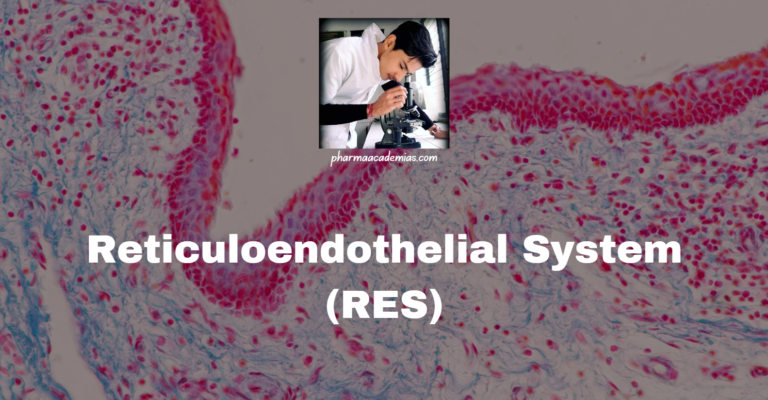
    The reticuloendothelial system (RES), also known as the mononuclear phagocyte system (MPS), is a highly specialized and intricate network of cells and tissues distributed throughout the body. It plays a critical role in immune defense, blood filtration, tissue homeostasis, and metabolic regulation. This system is primarily responsible for phagocytosis, in which specialized cells engulf and…

    Read More Reticuloendothelial System (RES)Continue

  • Disorders of blood
    Home | Unit 3

    Disorders of blood

    ByDeepak Rajput October 15, 2023April 3, 2025

    Disorders of blood, also known as hematological disorders, encompass a wide range of medical conditions that affect the blood, its components, or the organs involved in blood production and regulation. These disorders can impact the red blood cells, white blood cells, platelets, plasma, or bone marrow. Some common blood disorders include: Disorders of blood 1….

    Read More Disorders of bloodContinue

  • Blood transfusion: Definition, History, Procedure
    Home | Unit 3

    Blood transfusion: Definition, History, Procedure

    ByDeepak Rajput October 15, 2023April 3, 2025

    Blood transfusion is a life-saving medical procedure in which blood or its components are transferred from a donor to a recipient through intravenous infusion. It is commonly used to replace lost blood during surgery, injury, or diseases that affect blood production. Blood transfusions can help manage conditions such as anemia, bleeding disorders, and severe infections….

    Read More Blood transfusion: Definition, History, ProcedureContinue

  • Blood groups
    Chapter 5 | Home | Unit 3 | Unit 5

    Blood groups

    ByDeepak Rajput October 15, 2023November 12, 2025

    Blood groups: In the year 1900, Austrian scientist Karl Landsteiner discovered the ABO blood group system. In his experiments, he mixed different blood types, observing that the plasma from specific blood types produced agglutinates or formed clusters. This phenomenon was caused by the absence of molecules on red blood cells, which, in turn, led to…

    Read More Blood groupsContinue

  • Mechanisms of coagulation
    Chapter 5 | Home | Unit 3 | Unit 5

    Mechanisms of coagulation

    ByDeepak Rajput October 15, 2023November 12, 2025

    Mechanisms of coagulation: Blood coagulation, or clotting, is a complex and tightly regulated physiological mechanism that prevents excessive bleeding following a vascular injury. It involves a series of sequential and interrelated reactions that ultimately lead to the formation of a blood clot. The coagulation process can be divided into three main pathways: intrinsic, extrinsic, and…

    Read More Mechanisms of coagulationContinue

Page navigation

Previous PagePrevious 1 … 207 208 209 210 211 212 Next PageNext
  • About Pharmaacademias
  • Contact Us
  • Disclaimer
  • Privacy Policy
  • Terms and Conditions

© 2026 - WordPress Theme by Kadence WP

×

🎓 Pharmacy Students & Aspirants

Notes aur Pharmacy Jobs ki notification pane ke liye Telegram group join karein!

Join Now
  • Home
  • Courses
    • B.Pharm Old Syllabus Notes (Archive)
      • SEM-I old
        • Human Anatomy and Physiology-I
          • Unit 1
          • Unit 2
          • Unit 3
          • Unit 4
          • Unit 5
        • Pharmaceutical Analysis
          • Unit 1
          • Unit 2
          • Unit 3
          • Unit 4
          • Unit 5
        • Pharmaceutics – 1
          • Unit 1
          • Unit 2
          • Unit 3
          • Unit 4
          • Unit 5
        • Pharmaceutical Inorganic Chemistry
          • Unit 1
          • Unit 2
          • Unit 3
          • Unit 4
          • Unit 5
        • Remedial Biology
          • Unit 1
          • rb Unit 2
      • SEM-II
        • Human Anatomy and Physiology – II
          • Unit 1
          • Unit 2
          • Unit 3
          • Unit 4
          • Unit 5
        • Biochemistry
          • Unit 1
          • Unit 2
          • Unit 3
          • Unit 4
          • Unit 5
        • Pathophysiology
          • Unit 1
          • Unit 2
          • Unit 3
          • Unit 4
          • Unit 5
        • Pharmaceutical Organic Chemistry I
          • poc1 Unit 1
      • SEM-III
        • Pharmaceutical Organic Chemistr II
          • Unit 1
          • Unit 2
          • Unit 3
          • Unit 4
          • Unit 5
        • Physical Pharmaceutics I
          • Unit 1
          • Unit 2
          • Unit 3
          • Unit 4
          • Unit 5
        • Pharmaceutical Microbiology
          • Unit 1
          • Unit 2
          • Unit 3
          • Unit 4
          • Unit 5
        • Pharmaceutical Engineering
          • Unit 1
          • Unit 2
          • Unit 3
          • Unit 4
          • Unit 5
        • Universal human values and professional ethics
          • value Unit 1
      • SEM-IV
        • Pharmaceutical Organic Chemistry III
          • POC 3 Unit 1
          • POC 3 Unit 2
        • Medicinal Chemistry – I
          • Unit 1
        • Physical Pharmaceutics – II
          • Unit 1
          • pp2 Unit 2
        • Pharmacology-1
          • Unit 1
          • Unit 2
          • Unit 3
          • Unit 4
          • Unit 5
        • Pharmacognosy and Phytochemistry – I
          • Unit 1
          • Unit 2
          • Unit 3
          • Unit 4
          • Unit 5
      • SEM-V
        • Medicinal Chemistry II
          • mc2 Unit 1
        • Industrial Pharmacy I
          • Unit 1
          • Unit 2
          • BIP Unit 3
          • BIP Unit 4
        • Pharmacology-II
          • Unit 1
          • Unit 2
          • colo2 Unit 3
        • Pharmacognosy & Phytochemistry II
          • Unit 1
          • Unit 2
          • cog Unit 3
        • Pharmaceutical Jurisprudence
          • Unit 1
          • Unit 2
          • Unit 3
          • juris Unit 4
      • SEM-VI
        • Medicinal Chemistry III
          • MC III Unit 1
        • Herbal Drug Technology
          • Unit 1
          • HDT Unit 2
        • Biopharmaceutics & Pharmacokinetics
          • kinet Unit 1
          • Kinet Unit 2
        • Pharmaceutical Biotechnology
          • Unit 1
          • Unit 2
          • biotech Unit 3
        • Pharmaceutical Quality Assurance
          • Unit 1
      • SEM- VII
        • Instrumental Method of Analysis
          • lysis Unit 1
          • Unit 3
          • Unit 4
          • Unit 5
        • Industrial Pharmacy-II
          • IP 2 Unit 1
        • Pharmacy Practice
          • Unit 1
          • pp Unit 2
        • Novel Drug Delivery System
          • Unit 1
          • ndds Unit 2
      • SEM-VIII
        • Biostatistics and Research Methodology
          • Unit 1
        • Pharmacovigilance
          • Unit-1
          • Unit 2
          • Unit 3
          • vigi Unit 4
        • Social and Preventive Pharmacy
          • Social Unit 1
    • B.Pharm New PCI Syllabus 2026
      • SEM-1 new
        • Basics of Python Programming for Pharmaceutical Sciences
          • Unit 1
        • General Pharmacy
          • Unit 1
          • Unit 2
          • GP Unit 3
        • Healthcare Psychology and Communication Skills
          • Unit 1
        • Human Anatomy, Physiology and Pathophysiology I
          • New HAP Unit 1
        • Introduction to Pharmacognosy
          • ITP Unit 1
        • Pharmaceutical Inorganic and Analytical Chemistry
          • Unit 1
    • D.Pharma
      • Pharmaceutics
        • Chapter 1
        • Chapter 2
        • Chpater 3
        • Chpater 4
        • dceu Chapter 5
      • Pharmaceutical Chemistry
        • Chapter 1
        • Chapter 2
        • Chapter 3
        • Chapter 4
        • Chapter 5
        • dchem Chapter 6
      • Pharmacognosy
        • Chapter 3
        • Chapter 1
        • Chapter 2
        • Chapter 4
        • cogno Chapter 5
      • Human Anatomy and Physiology
        • Chapter 1
        • Chapter 2
        • Chapter 3
        • Chapter 4
        • Chapter 5
        • Chapter 6
        • Chapter 7
        • Chapter 8
        • Chapter 9
        • Chapter 10
        • Chapter 11
        • Chapter 12
        • Chapter 13
        • Chapter 14
        • Chapter 15
      • Social Pharmacy
        • Chapter 1
        • Chapter 2
        • Chapter 3
        • sp Chapter 4
      • Pharmacology
        • Chapter 1
        • Chapter 2
        • Chapter 3
        • Chapter 4
        • Chapter 5
        • Chapter 6
        • Chapter 7
        • Chapter 8
        • Chapter 9
        • Chapter 10
        • Chapter 11
        • Chapter 12
        • Chapter 13
      • Community pharmacy and management
        • Chapter 1
        • Chapter 2
        • Chapter 3
        • Chapter 5
        • Chapter 6
        • Chapter 7
        • cpm Chapter 8
      • Biochemistry & Clinical Pathology
        • Chapter 1
        • Chapter 2
        • Chapter 3
        • Chapter 4
        • Chapter 5
        • Chapter 6
        • Chapter 7
      • Pharmacotherapeutics
        • Chapter 1
        • the Chapter 2
      • Hospital and Clinical Pharmacy
        • Chapter 1
        • Chapter 2
        • hcp Chapter 3
      • Pharmacy law and Ethics
        • Chapter 1
        • Chapter 2
    • M.Pharm
      • Pharmacology Branch
    • Pharm D
      • Human Anatomy & Physiology (D)
        • Unit 1
        • Unit 2
        • Unit 3
        • hap Unit 4 (D)
        • Unit 5
        • Unit 6
        • Unit 7
        • Unit 8
        • Unit 9
        • Unit 10
        • Unit 11
        • Unit 12
        • hap Unit 13
    • DMLT
      • dmlt 1 year
        • Anatomy and Physiology
  • Study Material
    • Practicals
    • Notes pdf
    • Previous year papers
    • Books
  • Blog
  • Jobs
  • Syllabus
Search