
Ashwagandha as Health Food; Ashwagandha is one of the most important and extensively used medicinal herbs in traditional Indian medicine, particularly Ayurveda. Scientifically known as Withania somnifera, it belongs to the family Solanaceae and is commonly referred to as “Indian Ginseng” due to its rejuvenating and adaptogenic properties.

The term Ashwagandha is derived from Sanskrit, meaning “smell of a horse,” which signifies both its characteristic odor and its ability to impart strength, vitality, and stamina. It is classified as a Rasayana (rejuvenator) in Ayurveda and is widely used to promote longevity, enhance resistance to stress, and improve overall health.
In modern nutraceutical science, Ashwagandha is recognized as a potent adaptogen and functional health food, capable of modulating physiological processes and supporting mental, physical, and immunological well-being.
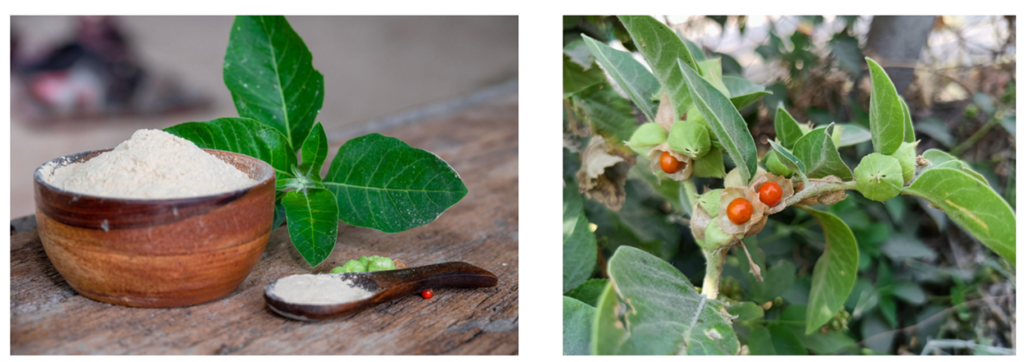
Botanical and Agronomic Profile Ashwagandha as Health Food
Ashwagandha is a small, woody shrub that grows in dry and subtropical regions. It typically reaches a height of 30–150 cm and is characterized by:
- Ovate leaves with a dull green appearance
- Small greenish-yellow flowers
- Bright red berries enclosed in a papery calyx
- Thick, tuberous roots (primary medicinal part)
The roots are the most therapeutically significant part of the plant and are widely used in herbal formulations.
Nutritional and Phytochemical Composition of Ashwagandha as Health Food
The pharmacological activity of Ashwagandha is attributed to its rich and diverse chemical composition, including both nutritional and bioactive constituents.
Nutritional Components
Ashwagandha contains:
- Carbohydrates and dietary fibers
- Proteins and amino acids
- Iron and other essential minerals
- Small amounts of vitamins
Bioactive Phytoconstituents
The major active compounds responsible for its therapeutic effects include:
- Withanolides (steroidal lactones) – primary active constituents with adaptogenic and anti-inflammatory properties
- Alkaloids (e.g., somniferine, withanine)
- Saponins and flavonoids
- Withaferin A, known for its anticancer and immunomodulatory effects
These compounds act synergistically to produce a wide range of biological activities.
Functions of Ashwagandha as Health Food
Ashwagandha is widely used as a functional food and dietary supplement due to its ability to enhance physical performance, mental health, and stress resilience. It is commonly consumed in the form of powders, capsules, teas, and extracts.
Its regular use is associated with:
- Improved energy levels
- Enhanced stress tolerance
- Better cognitive function
- Strengthened immunity
It is particularly valued in preventive healthcare and holistic wellness.
Health Benefits of Ashwagandha as Health Food
Ashwagandha exhibits a broad spectrum of pharmacological activities, making it one of the most versatile nutraceutical herbs.
Adaptogenic and Anti-stress Effects
Ashwagandha is best known for its adaptogenic properties, helping the body cope with stress.
It:
- Reduces cortisol levels
- Enhances resistance to stress
- Improves mental and physical endurance
Neuroprotective and Cognitive Benefits
Ashwagandha supports brain health by:
- Enhancing memory and learning ability
- Reducing anxiety and depression
- Protecting neurons from oxidative damage
It is beneficial in neurodegenerative conditions and cognitive decline.
Immunomodulatory Activity
Ashwagandha strengthens the immune system by:
- Stimulating immune cell function
- Enhancing resistance to infections
- Modulating immune responses
Anti-inflammatory and Antioxidant Effects
The herb exhibits potent anti-inflammatory and antioxidant activities, which help in:
- Reducing chronic inflammation
- Preventing oxidative stress
- Protecting tissues from damage
Role in Endocrine and Hormonal Balance
Ashwagandha plays a key role in regulating hormonal balance by:
- Supporting thyroid function
- Enhancing reproductive health
- Improving testosterone levels in males
Role in Diabetes Management
Ashwagandha contributes to metabolic regulation by:
- Reducing blood glucose levels
- Improving insulin sensitivity
- Enhancing glucose metabolism
Cardiovascular Benefits
Ashwagandha supports cardiovascular health by:
- Reducing cholesterol levels
- Lowering blood pressure
- Improving circulation
Anti-cancer Potential
Ashwagandha has shown promising anticancer activity through:
- Induction of apoptosis in cancer cells
- Inhibition of tumor growth
- Modulation of immune responses
Withaferin A plays a significant role in these effects.
Mechanisms of Action
The therapeutic effects of Ashwagandha are mediated through multiple mechanisms:
- Modulation of the hypothalamic-pituitary-adrenal (HPA) axis
- Reduction of stress hormones such as cortisol
- Antioxidant activity via free radical scavenging
- Regulation of inflammatory cytokines
- Enhancement of immune system function
These mechanisms highlight its role as a multi-target adaptogenic nutraceutical.
Commercial Forms and Applications
Ashwagandha is widely available in various forms:
- Root powder (traditional use)
- Capsules and tablets
- Liquid extracts
- Herbal teas and formulations
It is used in dietary supplements, Ayurvedic preparations, and functional foods.
Safety and Precautions
Ashwagandha is generally safe when used in recommended doses; however, certain precautions should be considered:
- Excess intake may cause gastrointestinal discomfort
- Should be used cautiously during pregnancy
- May interact with sedatives, thyroid medications, and antidiabetic drugs
Conclusion
Ashwagandha (Withania somnifera) is a highly potent herbal health food with extensive therapeutic applications. Its rich composition of withanolides and other bioactive compounds enables it to exert adaptogenic, neuroprotective, immunomodulatory, and metabolic regulatory effects. As a cornerstone of Ayurvedic medicine and modern nutraceutical science, Ashwagandha plays a crucial role in enhancing resilience to stress, promoting overall health, and preventing chronic diseases.
With increasing scientific validation and global acceptance, Ashwagandha continues to be a key component of integrative and preventive healthcare systems.
Editorial Note
This article has been carefully researched and written by Deepak Rajput with a focus on accuracy, clarity, and evidence-based healthcare information. Pharmaacademias.com