
Modified-release tablets represent a diverse and sophisticated category of pharmaceutical dosage forms that are meticulously designed to regulate and optimize the release characteristics of active pharmaceutical ingredients (APIs) within the body. Unlike conventional immediate-release tablets, these formulations are engineered to modify the rate, timing, and/or site of drug release, thereby improving therapeutic outcomes and minimizing undesirable effects. Based on their functional design and release behavior, modified-release tablets can be classified into several comprehensive types, each with unique mechanisms and clinical applications.
Need for Types of Modified Release Tablets
Modified-release tablets are not developed arbitrarily; rather, their various types—such as extended-release, sustained-release, controlled-release, delayed-release, targeted-release, and pulsatile-release—exist to address specific biopharmaceutical, therapeutic, and patient-related challenges that cannot be effectively managed by conventional immediate-release formulations. The need for these diverse types arises from the complexity of drug behavior in the body and the necessity to optimize therapeutic outcomes while minimizing risks.
Types of Modified Tablets
1. Extended-Release Tablets (ER)
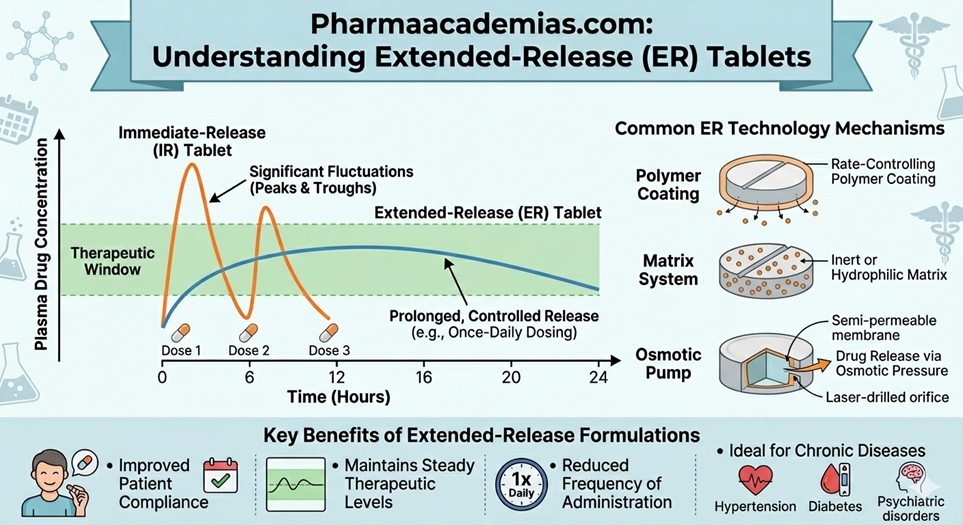
Extended-release tablets are highly advanced formulations developed to prolong the duration of drug release over an extended period, often ranging from several hours to an entire day. These systems are carefully formulated to maintain therapeutically effective plasma concentrations of the drug without significant fluctuations. By ensuring a gradual and continuous release of the drug, extended-release tablets effectively reduce the frequency of administration, which is particularly beneficial in the management of chronic diseases such as hypertension, diabetes, and psychiatric disorders. The technology behind these tablets often involves matrix systems, polymer coatings, or osmotic pump mechanisms that control drug diffusion and dissolution rates.
2. Sustained-Release Tablets (SR)
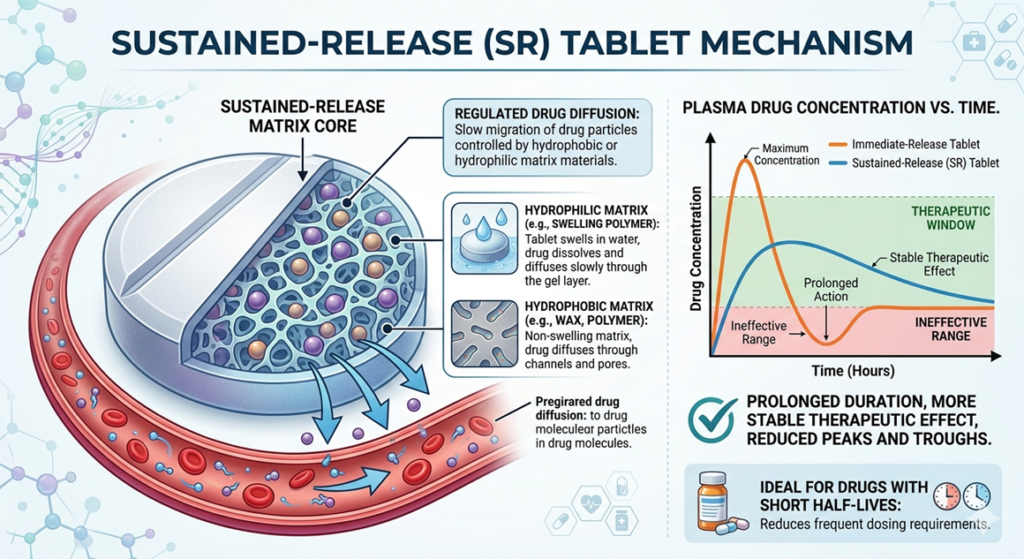
Sustained-release tablets are designed to maintain drug release over a prolonged duration, although not necessarily at a constant rate. These formulations aim to extend the pharmacological action of the drug by slowing down its release into the systemic circulation. Typically, sustained-release systems utilize hydrophilic or hydrophobic matrix materials that regulate the diffusion of the drug. This results in a more stable therapeutic effect compared to immediate-release tablets, with reduced peaks and troughs in plasma drug concentration. Such formulations are particularly advantageous for drugs with short half-lives that require frequent dosing.
3. Controlled-Release Tablets (CR)
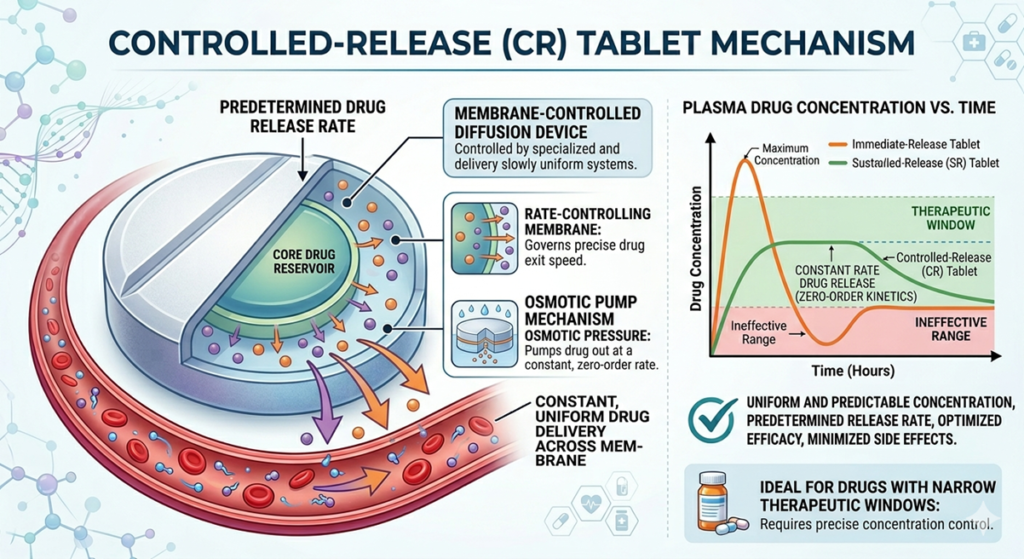
Controlled-release tablets represent a more refined and precise form of drug delivery system, engineered to release the drug at a predetermined, constant rate, often approximating zero-order kinetics. These formulations are designed to provide a uniform and predictable plasma drug concentration over an extended period, thereby optimizing therapeutic efficacy and minimizing side effects associated with fluctuating drug levels. Advanced technologies such as osmotic pressure systems, reservoir devices, and membrane-controlled diffusion mechanisms are commonly employed in these tablets. Controlled-release systems are particularly useful for drugs that require strict plasma concentration control.
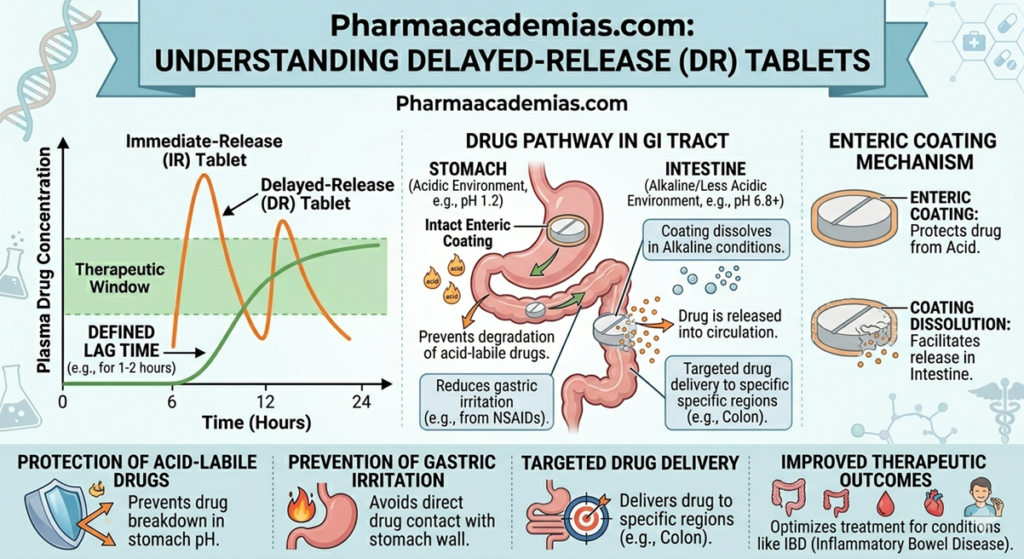
4. Delayed-Release Tablets (DR)
Delayed-release tablets are specifically formulated to release the drug after a defined lag time, rather than immediately after administration. This delay is often achieved through the use of enteric coatings that resist dissolution in the acidic environment of the stomach but dissolve in the more alkaline conditions of the intestine. Such formulations are essential for drugs that are either unstable in gastric pH or may cause gastric irritation. Additionally, delayed-release systems can be used to target drug delivery to specific regions of the gastrointestinal tract, enhancing therapeutic outcomes in conditions such as inflammatory bowel disease.
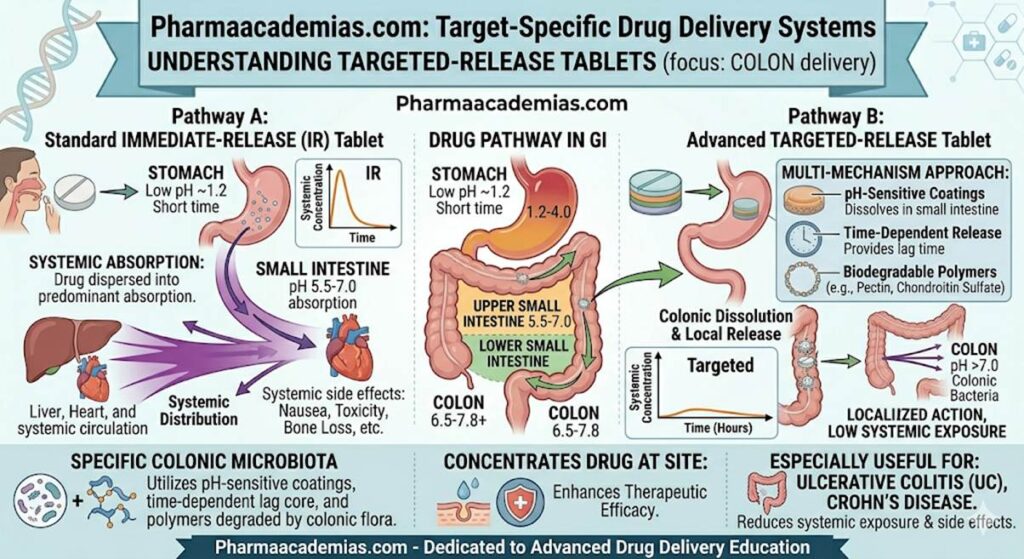
5. Targeted-Release Tablets
Targeted-release tablets are sophisticated drug delivery systems designed to deliver the drug to a specific site within the body, particularly within the gastrointestinal tract, such as the colon. These systems utilize a combination of pH-sensitive coatings, time-dependent release mechanisms, and biodegradable polymers to ensure that the drug is released precisely at the intended location. By concentrating the drug at the site of action, targeted-release tablets enhance therapeutic efficiency while significantly reducing systemic exposure and associated side effects. These formulations are especially useful in the treatment of localized diseases such as ulcerative colitis and Crohn’s disease.
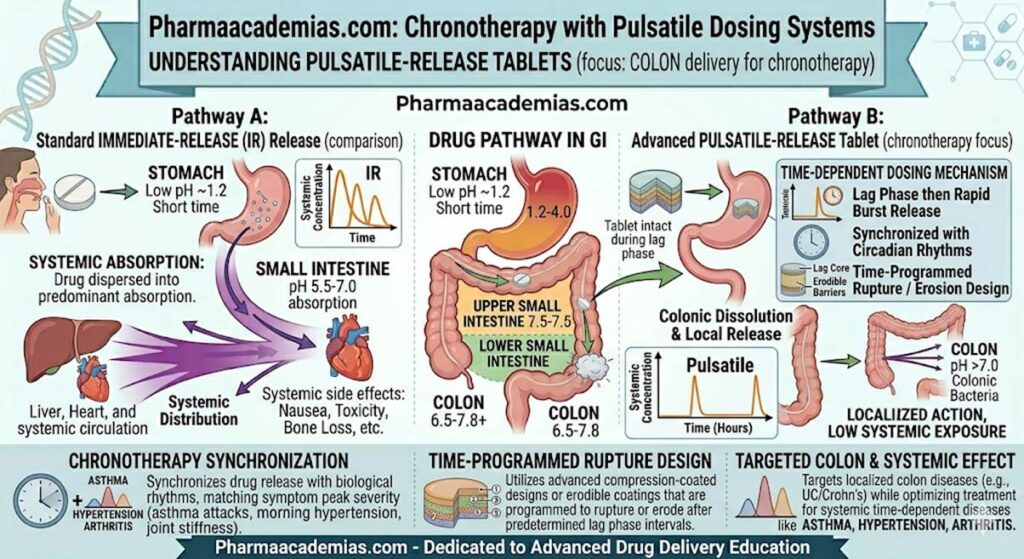
6. Pulsatile-Release Tablets
Pulsatile-release tablets are uniquely designed to release the drug in rapid bursts following a predetermined lag phase, rather than in a continuous manner. These systems are particularly valuable in chronotherapy, where drug release is synchronized with the body’s biological rhythms or circadian cycles. For example, certain diseases such as asthma, hypertension, and arthritis exhibit time-dependent symptom patterns, and pulsatile-release formulations ensure that the drug is released precisely when it is most needed. These systems often employ specialized coating techniques or compression-based designs that rupture or erode after a specific time interval.
Conclusion
In conclusion, modified-release tablets encompass a wide spectrum of technologically advanced drug delivery systems that are strategically designed to optimize therapeutic performance, enhance patient convenience, and improve overall treatment outcomes. By carefully selecting the appropriate type of modified-release system, pharmaceutical scientists can tailor drug delivery to meet specific clinical needs, thereby revolutionizing modern pharmacotherapy and significantly advancing the field of pharmaceutics.