
Nutraceuticals in Irritable Bowel Syndrome: Gastrointestinal (GI) disorders, including Irritable Bowel Syndrome (IBS), inflammatory bowel disease (IBD), peptic ulcers, and functional dyspepsia, represent a significant global health burden. These conditions are often chronic, multifactorial, and closely associated with disturbances in gut microbiota, intestinal motility, immune responses, and mucosal integrity. Conventional pharmacotherapy provides symptomatic relief; however, long-term use may be associated with adverse effects and limited efficacy in addressing underlying causes.
In this context, nutraceuticals have emerged as valuable preventive and therapeutic adjuncts, offering a holistic and multi-targeted approach. Their ability to modulate gut microbiota, reduce inflammation, and enhance intestinal barrier function makes them particularly effective in managing gastrointestinal disorders.
Pathophysiology of Nutraceuticals in Irritable Bowel Syndrome
Irritable Bowel Syndrome (IBS) is a functional gastrointestinal disorder characterized by abdominal pain, bloating, and altered bowel habits (diarrhea, constipation, or both). Unlike structural diseases, IBS involves disturbances in gut function without visible anatomical abnormalities.
The pathogenesis of IBS and other GI disorders involves multiple interconnected mechanisms:
- Dysbiosis (imbalance of gut microbiota)
- Altered gut motility and visceral hypersensitivity
- Low-grade inflammation
- Impaired intestinal barrier function
- Gut-brain axis dysregulation
Similarly, inflammatory bowel diseases such as Crohn’s disease and ulcerative colitis involve chronic inflammation and immune dysregulation, leading to mucosal damage.
Nutraceuticals target these underlying mechanisms, thereby providing comprehensive gastrointestinal support.
General Health Benefits of Nutraceuticals in Irritable Bowel Syndrome
Nutraceuticals contribute significantly to maintaining gastrointestinal homeostasis and improving digestive health. Their bioactive compounds exert beneficial effects on the intestinal environment and overall metabolism.
They are known to:
- Restore balance of gut microbiota
- Enhance digestion and nutrient absorption
- Strengthen intestinal barrier integrity
- Reduce inflammation and oxidative stress
- Regulate bowel movements and gut motility
These effects are particularly important in chronic GI disorders where multiple factors contribute to disease progression.
Mechanisms of Action in GI Disorders
Nutraceuticals exert their beneficial effects through diverse and interrelated mechanisms.
Modulation of Gut Microbiota
The gut microbiome plays a central role in digestive health. Nutraceuticals such as probiotics and prebiotics help restore microbial balance by promoting the growth of beneficial bacteria and suppressing pathogenic organisms.
This is especially important in IBS, where dysbiosis is a key contributing factor.
Enhancement of Intestinal Barrier Function
The intestinal epithelium acts as a barrier preventing the entry of harmful substances. Nutraceuticals strengthen this barrier by enhancing tight junction integrity and reducing intestinal permeability (“leaky gut”).
Anti-inflammatory Effects
Chronic inflammation is a hallmark of many GI disorders. Nutraceuticals reduce inflammation by inhibiting pro-inflammatory cytokines and signaling pathways.
Regulation of Gut Motility
Altered motility is a key feature of IBS. Certain nutraceuticals help normalize intestinal contractions, thereby alleviating symptoms such as diarrhea and constipation.
Antioxidant Activity
Oxidative stress contributes to mucosal damage in GI diseases. Nutraceuticals rich in antioxidants protect intestinal cells from oxidative injury.
Important Nutraceuticals in IBS and GI Disorders
A variety of nutraceuticals have demonstrated efficacy in improving gastrointestinal health.
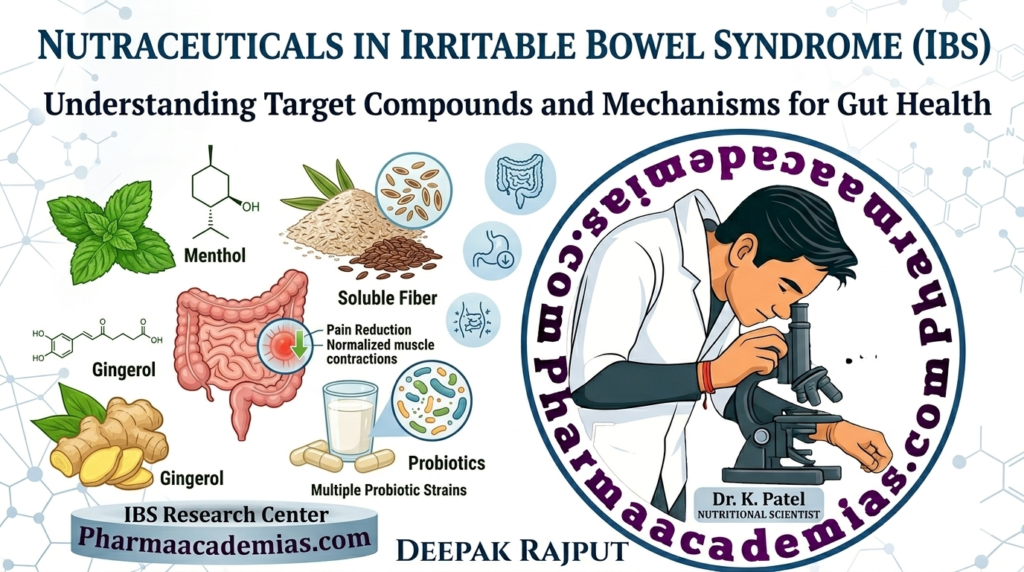
Probiotics
Probiotics are live beneficial microorganisms that play a crucial role in maintaining gut health.
Common probiotic strains include:
- Lactobacillus
- Bifidobacterium
They help in:
- Restoring microbial balance
- Reducing bloating and abdominal pain
- Improving bowel regularity
Prebiotics
Prebiotics are non-digestible fibers that promote the growth of beneficial bacteria. They enhance gut health by improving microbial composition and fermentation processes.
Dietary Fibers
Soluble fibers such as psyllium are particularly effective in IBS.
They:
- Improve stool consistency
- Regulate bowel movements
- Reduce symptoms of both constipation and diarrhea
Herbal Nutraceuticals
Several medicinal plants exhibit gastroprotective and anti-inflammatory properties.
Examples include:
- Mentha piperita – reduces abdominal pain and spasms
- Zingiber officinale – improves digestion and reduces nausea
- Aloe vera – soothes intestinal inflammation
Glutamine
Glutamine is an amino acid that plays a vital role in maintaining intestinal integrity and supporting mucosal healing.
Omega-3 Fatty Acids
Omega-3 fatty acids possess anti-inflammatory properties and may help in managing inflammatory bowel diseases.
Role in Specific Gastrointestinal Conditions
Nutraceuticals have demonstrated benefits across a range of GI disorders.
In IBS:
- Reduce bloating, pain, and irregular bowel movements
- Restore gut microbiota balance
In inflammatory bowel diseases:
- Decrease inflammation
- Promote mucosal healing
In peptic ulcers:
- Protect gastric mucosa
- Reduce acid-related damage
In functional dyspepsia:
- Improve digestion and gastric motility
Advantages of Nutraceuticals in GI Disorders
Nutraceuticals offer several advantages:
- Natural and well-tolerated
- Multi-targeted mechanisms
- Suitable for long-term use
- Minimal side effects
- Complementary to conventional therapies
Limitations and Challenges
Despite their benefits, certain challenges remain:
- Variability in formulation and quality
- Limited clinical evidence for some products
- Lack of standardization
- Possible interactions with medications
These issues highlight the need for rigorous research and quality control.
Future Perspectives
The future of nutraceuticals in gastrointestinal health is promising, with research focusing on:
- Personalized nutrition based on gut microbiome profiling
- Development of synbiotics (combination of probiotics and prebiotics)
- Advanced delivery systems for targeted intestinal action
- Integration with modern therapeutic approaches
Conclusion
Nutraceuticals play a crucial role in the management of Irritable Bowel Syndrome and other gastrointestinal disorders by addressing multiple underlying mechanisms such as dysbiosis, inflammation, and impaired intestinal function. Their holistic approach, combined with a favorable safety profile, makes them valuable tools in modern digestive healthcare. With ongoing research and improved standardization, nutraceuticals are expected to become an integral part of comprehensive gastrointestinal disease management.