

Nutraceuticals in Diabetes: Nutraceuticals have emerged as a significant component of modern preventive and therapeutic healthcare, particularly in the management of chronic metabolic disorders such as diabetes mellitus. With the global rise in diabetes prevalence, there is an increasing need for safe, effective, and long-term management strategies that complement conventional pharmacotherapy. Nutraceuticals, owing to their natural origin and multifaceted biological activities, provide a promising approach in this regard.
Diabetes mellitus is a complex metabolic disorder characterized by chronic hyperglycemia, resulting from defects in insulin secretion, insulin action, or both. Prolonged hyperglycemia leads to serious complications such as cardiovascular diseases, neuropathy, nephropathy, and retinopathy. Nutraceuticals play a crucial role in modulating glucose metabolism, improving insulin sensitivity, and reducing oxidative stress, thereby contributing to the overall management of diabetes.
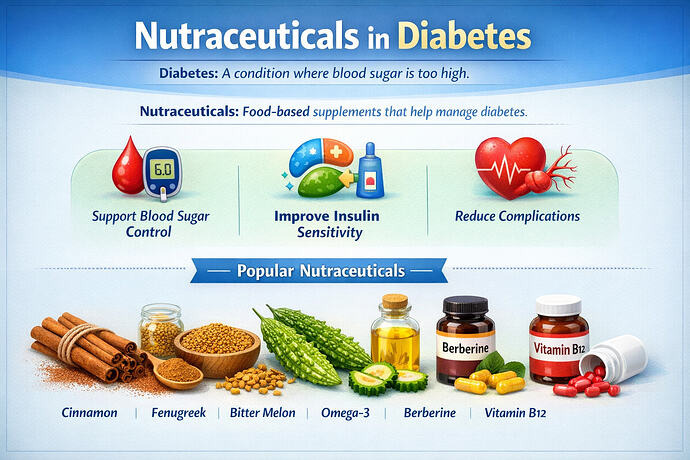
General Health Benefits of Nutraceuticals in Diabetes
Nutraceuticals offer a wide spectrum of health benefits that extend beyond basic nutrition. Their bioactive components interact with various physiological pathways, leading to improved health outcomes.
They are known to:
- Enhance metabolic efficiency and energy utilization
- Provide antioxidant protection against free radical damage
- Modulate immune responses
- Reduce inflammation
- Support cardiovascular and neurological health
These properties make nutraceuticals particularly valuable in the management of chronic diseases where multiple pathological mechanisms are involved.
Pathophysiological Basis of Diabetes and Need for Nutraceuticals in Diabetes
Diabetes is associated with several underlying mechanisms, including:
- Insulin resistance in peripheral tissues
- Impaired insulin secretion by pancreatic β-cells
- Increased hepatic glucose production
- Oxidative stress and chronic inflammation
Conventional antidiabetic drugs primarily target one or two of these pathways, whereas nutraceuticals often exert multi-targeted actions, making them highly beneficial as adjunct therapies.
Moreover, long-term use of synthetic drugs may be associated with side effects, whereas nutraceuticals offer a safer and more sustainable approach for chronic disease management.
Role of Nutraceuticals in Diabetes Management
Nutraceuticals contribute to diabetes management through multiple mechanisms, targeting different aspects of the disease process.
Regulation of Blood Glucose Levels
Certain nutraceuticals help in maintaining blood glucose levels by:
- Enhancing insulin secretion
- Improving insulin sensitivity
- Reducing intestinal glucose absorption
For instance, dietary fibers slow down glucose absorption, preventing sudden spikes in blood sugar levels.
Antioxidant Activity
Oxidative stress plays a key role in the progression of diabetes and its complications. Nutraceuticals rich in antioxidants, such as polyphenols and flavonoids, neutralize free radicals and protect pancreatic β-cells from damage.
Anti-inflammatory Effects
Chronic inflammation is closely linked with insulin resistance. Nutraceuticals with anti-inflammatory properties help reduce inflammatory markers, thereby improving insulin action.
Improvement of Lipid Profile
Diabetic patients often suffer from dyslipidemia. Nutraceuticals help in:
- Reducing LDL cholesterol
- Increasing HDL cholesterol
- Lowering triglyceride levels
This contributes to reduced risk of cardiovascular complications.
Protection Against Diabetic Complications
Nutraceuticals also play a protective role against long-term complications of diabetes by:
- Preventing oxidative damage to tissues
- Improving endothelial function
- Supporting nerve and kidney health
Important Nutraceuticals Used in Diabetes
Several nutraceuticals have been extensively studied for their antidiabetic properties.
Plant-Based Nutraceuticals
Medicinal plants and their bioactive compounds play a major role in diabetes management.
Examples include:
- Momordica charantia – improves glucose utilization and insulin sensitivity
- Trigonella foenum-graecum – delays carbohydrate absorption and enhances insulin secretion
- Gymnema sylvestre – promotes regeneration of pancreatic β-cells
- Curcuma longa – exhibits antioxidant and anti-inflammatory effects
Dietary Fibers
Soluble fibers such as psyllium and beta-glucan play an important role in glycemic control by slowing gastric emptying and glucose absorption.
Omega-3 Fatty Acids
Omega-3 fatty acids improve lipid metabolism and reduce inflammation, thereby lowering the risk of cardiovascular complications in diabetic patients.
Probiotics
Probiotics improve gut microbiota composition, which is increasingly recognized as a key factor in metabolic health and insulin sensitivity.
Vitamins and Minerals
Certain micronutrients are essential for glucose metabolism:
- Chromium enhances insulin action
- Magnesium improves insulin sensitivity
- Vitamin D plays a role in glucose homeostasis
Mechanistic Insights
The antidiabetic effects of nutraceuticals are mediated through various molecular mechanisms, including:
- Activation of insulin signaling pathways
- Modulation of glucose transporters (GLUT-4)
- Inhibition of carbohydrate-digesting enzymes such as α-amylase and α-glucosidase
- Reduction of oxidative stress via upregulation of antioxidant enzymes
- Regulation of gene expression related to metabolism
These mechanisms highlight the potential of nutraceuticals as multi-target therapeutic agents.
Advantages of Nutraceuticals in Diabetes
Nutraceuticals offer several advantages over conventional therapies:
- Natural origin and better patient acceptability
- Lower incidence of side effects
- Multi-targeted mode of action
- Suitable for long-term use
- Can be used as adjunct therapy with standard drugs
Limitations and Challenges
Despite their benefits, nutraceuticals also have certain limitations:
- Variability in composition and potency
- Lack of standardization in some products
- Limited clinical evidence for certain formulations
- Potential interactions with conventional drugs
These challenges highlight the need for rigorous research and quality control.
Future Perspectives
The future of nutraceuticals in diabetes management lies in the development of:
- Evidence-based formulations
- Personalized nutrition strategies
- Advanced delivery systems (nano-nutraceuticals)
- Integration with conventional therapies
Advances in nutrigenomics and biotechnology are expected to further enhance their therapeutic potential.
Conclusion
Nutraceuticals play a vital role in the prevention and management of diabetes by targeting multiple pathophysiological pathways. Their antioxidant, anti-inflammatory, and metabolic regulatory properties make them valuable adjuncts to conventional therapy. With increasing scientific validation and growing consumer acceptance, nutraceuticals are poised to become an integral component of comprehensive diabetes management strategies.