
Nutraceuticals in Cardiovascular Diseases: Cardiovascular diseases (CVDs) remain one of the leading causes of morbidity and mortality worldwide, encompassing a wide range of disorders such as coronary artery disease, hypertension, atherosclerosis, and stroke. These conditions are primarily associated with lifestyle factors, metabolic imbalances, oxidative stress, and chronic inflammation. In recent years, nutraceuticals have gained considerable attention as preventive and adjunct therapeutic agents in the management of cardiovascular diseases.
Nutraceuticals, owing to their natural origin and diverse bioactive constituents, provide a multifaceted approach in maintaining cardiovascular health. They not only help in reducing risk factors such as hyperlipidemia and hypertension but also exert protective effects at the molecular and cellular levels.
Pathophysiology of Nutraceuticals in Cardiovascular Diseases
Cardiovascular diseases are complex and multifactorial in nature. The major contributing factors include:
- Dyslipidemia (elevated LDL cholesterol and triglycerides)
- Hypertension
- Oxidative stress and endothelial dysfunction
- Chronic inflammation
- Platelet aggregation and thrombosis
These factors lead to the development of atherosclerosis, characterized by the deposition of lipids in arterial walls, ultimately resulting in reduced blood flow and increased risk of heart attack and stroke.
Conventional pharmacotherapy targets specific pathways; however, nutraceuticals provide broad-spectrum action, addressing multiple risk factors simultaneously with fewer adverse effects.
General Health Benefits of Nutraceuticals in Cardiovascular Health
Nutraceuticals contribute to cardiovascular health through various physiological and biochemical mechanisms. Their regular consumption supports overall heart function and reduces disease risk.
They are known to:
- Improve lipid profile by reducing LDL and increasing HDL cholesterol
- Enhance endothelial function and vascular integrity
- Reduce oxidative stress and inflammation
- Regulate blood pressure
- Prevent platelet aggregation and thrombosis
These combined effects make nutraceuticals highly effective in both prevention and management of cardiovascular disorders.
Mechanisms of Action in Cardiovascular Protection
Nutraceuticals exert cardioprotective effects through multiple interconnected mechanisms.
Lipid-Lowering Effects
One of the primary roles of nutraceuticals is the regulation of lipid metabolism. They help in reducing serum cholesterol levels by:
- Inhibiting cholesterol synthesis
- Enhancing bile acid excretion
- Reducing intestinal absorption of lipids
This helps prevent the formation of atherosclerotic plaques.
Antioxidant Activity
Oxidative stress plays a crucial role in the initiation and progression of cardiovascular diseases. Nutraceuticals rich in antioxidants neutralize reactive oxygen species (ROS), thereby protecting vascular tissues from damage.
Anti-inflammatory Effects
Chronic inflammation contributes to the progression of atherosclerosis. Nutraceuticals help in reducing inflammatory mediators, thereby slowing disease progression.
Blood Pressure Regulation
Certain nutraceuticals exhibit antihypertensive effects by:
- Promoting vasodilation
- Enhancing nitric oxide production
- Reducing vascular resistance
This helps in maintaining optimal blood pressure levels.
Antithrombotic Effects
Some nutraceuticals prevent abnormal blood clot formation by inhibiting platelet aggregation, thereby reducing the risk of heart attack and stroke.
Important Nutraceuticals in Cardiovascular Diseases
A wide range of nutraceuticals have demonstrated significant cardioprotective properties.
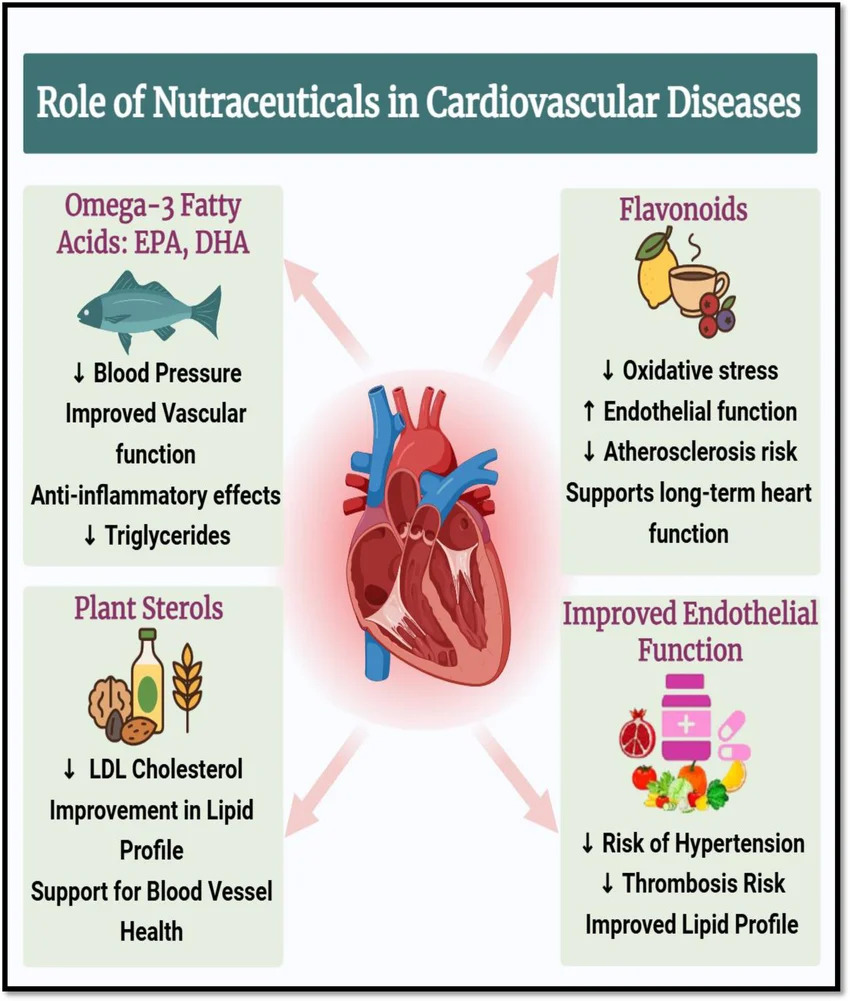
Omega-3 Fatty Acids
Omega-3 fatty acids, commonly found in fish oil, play a crucial role in cardiovascular health.
They:
- Reduce triglyceride levels
- Improve heart rhythm
- Decrease inflammation
- Lower risk of arrhythmias
Plant Sterols and Stanols
Plant sterols structurally resemble cholesterol and compete with it for absorption in the intestine, thereby reducing serum cholesterol levels.
Dietary Fibers
Soluble fibers such as beta-glucan and psyllium help in lowering cholesterol and improving glycemic control, which indirectly benefits cardiovascular health.
Antioxidant Nutraceuticals
Compounds such as flavonoids and polyphenols are widely recognized for their cardioprotective effects.
Examples include:
- Camellia sinensis – improves endothelial function and reduces oxidative stress
- Vitis vinifera (resveratrol) – exhibits antioxidant and anti-inflammatory effects
- Allium sativum – reduces cholesterol and blood pressure
Coenzyme Q10
Coenzyme Q10 plays an important role in mitochondrial energy production and acts as a powerful antioxidant. It is particularly beneficial in patients with heart failure and hypertension.
Vitamins and Minerals
Certain micronutrients are essential for maintaining cardiovascular health:
- Vitamin E and Vitamin C act as antioxidants
- Magnesium helps regulate blood pressure
- Potassium supports normal heart rhythm
Role in Prevention and Management of CVDs
Nutraceuticals are effective both in primary prevention (reducing risk in healthy individuals) and secondary prevention (managing existing disease).
They help in:
- Reducing progression of atherosclerosis
- Preventing complications such as myocardial infarction
- Supporting recovery and long-term management
Their integration with lifestyle modifications such as diet and exercise enhances overall therapeutic outcomes.
Advantages of Nutraceuticals in Cardiovascular Diseases
Nutraceuticals offer several advantages that make them suitable for long-term cardiovascular care:
- Natural and well-tolerated
- Multi-targeted action
- Minimal side effects
- Suitable for chronic use
- Can be combined with conventional therapies
Limitations and Challenges
Despite their benefits, certain limitations exist:
- Variability in product quality and composition
- Lack of standardization in some formulations
- Limited clinical evidence for certain claims
- Potential interactions with cardiovascular drugs
These challenges highlight the need for evidence-based research and regulatory control.
Future Perspectives
The future of nutraceuticals in cardiovascular health is promising, with ongoing research focusing on:
- Development of targeted and personalized nutraceuticals
- Nano-formulations for improved bioavailability
- Integration with genomic and metabolic profiling
- Clinical validation through large-scale trials
Conclusion
Nutraceuticals play a vital role in the prevention and management of cardiovascular diseases by addressing multiple risk factors such as dyslipidemia, oxidative stress, inflammation, and hypertension. Their ability to provide comprehensive cardioprotection with minimal side effects makes them an essential component of modern healthcare. With continued research and proper standardization, nutraceuticals are expected to significantly contribute to the global effort in reducing the burden of cardiovascular diseases.