
Nutraceuticals in Cancer: Cancer is a complex and multifactorial disease characterized by uncontrolled cell proliferation, evasion of apoptosis, sustained angiogenesis, and the ability to invade and metastasize. It remains one of the leading causes of mortality worldwide and poses a significant challenge to healthcare systems. Conventional cancer therapies such as chemotherapy, radiotherapy, and surgery, although effective, are often associated with serious side effects, toxicity, and drug resistance.
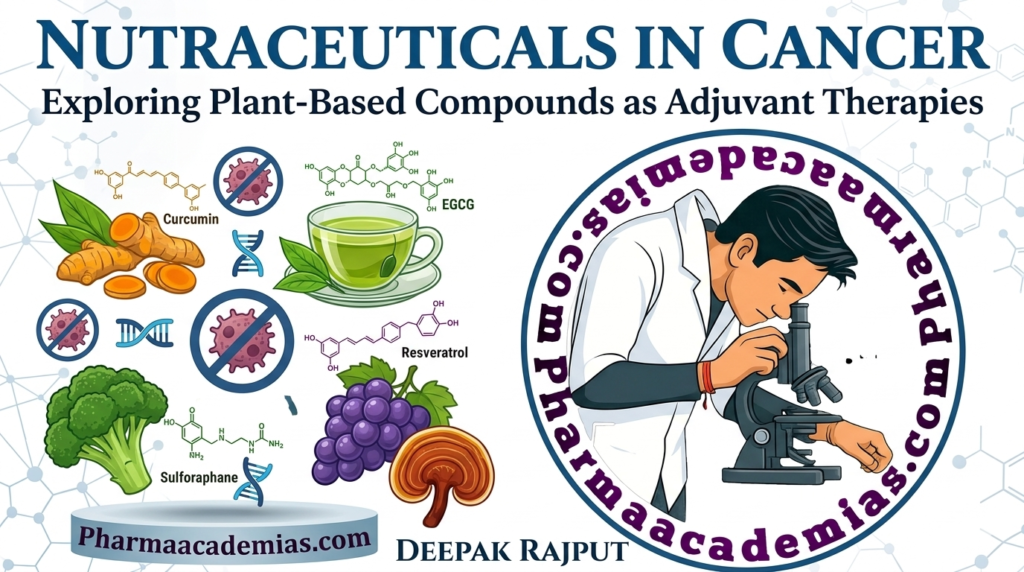
In this context, nutraceuticals have emerged as promising preventive and adjunct therapeutic agents due to their natural origin, safety profile, and diverse biological activities. Nutraceuticals are rich in bioactive compounds that exhibit anticancer properties, including antioxidant, anti-inflammatory, antiproliferative, and immunomodulatory effects.
Pathophysiology of Nutraceuticals in cancer
Cancer development involves multiple stages, including initiation, promotion, and progression, driven by genetic mutations and environmental factors. Key mechanisms involved in carcinogenesis include:
- Oxidative stress and DNA damage
- Chronic inflammation
- Dysregulation of cell signaling pathways
- Impaired apoptosis (programmed cell death)
- Enhanced angiogenesis and metastasis
Conventional therapies often target specific pathways, whereas nutraceuticals exert multi-targeted actions, making them highly effective in modulating various stages of cancer development.
Moreover, nutraceuticals can help reduce the side effects of chemotherapy and improve the overall quality of life in cancer patients.
General Health Benefits of Nutraceuticals in Cancer
Nutraceuticals provide a wide range of health benefits that contribute to cancer prevention and management. Their bioactive constituents interact with cellular and molecular pathways involved in tumor development.
They are known to:
- Protect cells from oxidative damage
- Enhance immune system function
- Suppress tumor growth and proliferation
- Induce apoptosis in cancer cells
- Inhibit angiogenesis and metastasis
These effects collectively contribute to reducing cancer risk and improving treatment outcomes.
Mechanisms of Anticancer Action
Nutraceuticals exert their anticancer effects through several well-defined mechanisms.
Antioxidant Activity
Oxidative stress plays a crucial role in DNA damage and cancer initiation. Nutraceuticals rich in antioxidants neutralize reactive oxygen species (ROS), thereby preventing genetic mutations and cellular damage.
Anti-inflammatory Effects
Chronic inflammation promotes tumor development by activating pro-inflammatory cytokines and signaling pathways. Nutraceuticals help reduce inflammation, thereby inhibiting tumor progression.
Induction of Apoptosis
One of the hallmarks of cancer is the ability of cells to evade apoptosis. Nutraceuticals can activate apoptotic pathways, leading to the selective death of cancer cells without affecting normal cells.
Inhibition of Cell Proliferation
Nutraceuticals interfere with cell cycle progression and inhibit uncontrolled cell division, thereby suppressing tumor growth.
Anti-angiogenic Effects
Tumor growth depends on the formation of new blood vessels (angiogenesis). Nutraceuticals inhibit angiogenesis, thereby limiting the supply of nutrients and oxygen to tumor cells.
Anti-metastatic Activity
Nutraceuticals prevent the spread of cancer cells to distant organs by inhibiting cell migration and invasion.
Important Nutraceuticals with Anticancer Properties
Several nutraceuticals have been extensively studied for their role in cancer prevention and therapy.
Polyphenols and Flavonoids
Polyphenols are powerful antioxidants with significant anticancer potential.
Examples include:
- Camellia sinensis (epigallocatechin gallate, EGCG) – inhibits tumor growth and angiogenesis
- Vitis vinifera (resveratrol) – induces apoptosis and inhibits metastasis
Curcumin
Curcumin, derived from Curcuma longa, is one of the most extensively studied nutraceuticals.
It exhibits:
- Anti-inflammatory effects
- Inhibition of cancer cell proliferation
- Modulation of multiple signaling pathways (e.g., NF-κB, MAPK)
Carotenoids
Carotenoids such as beta-carotene and lycopene act as antioxidants and help in reducing the risk of certain cancers.
Sulforaphane
Sulforaphane, found in cruciferous vegetables like broccoli, induces detoxification enzymes and inhibits carcinogen activation.
Omega-3 Fatty Acids
Omega-3 fatty acids possess anti-inflammatory properties and may help in reducing tumor growth and improving patient outcomes.
Probiotics
Probiotics contribute to gut health and may reduce the risk of colorectal cancer by modulating intestinal microbiota and immune responses.
Role in Cancer Prevention and Adjunct Therapy
Nutraceuticals are highly effective in both cancer prevention and adjunct therapy.
In prevention, they help:
- Neutralize carcinogens
- Enhance DNA repair mechanisms
- Strengthen immune surveillance
As adjuncts to conventional therapy, they:
- Reduce chemotherapy-induced toxicity
- Improve patient tolerance to treatment
- Enhance therapeutic efficacy
Advantages of Nutraceuticals in Cancer Management
Nutraceuticals offer several advantages:
- Natural origin with better safety profile
- Multi-targeted mechanisms of action
- Reduced side effects compared to chemotherapy
- Suitable for long-term use
- Potential to enhance conventional therapies
Limitations and Challenges
Despite their promising potential, certain limitations exist:
- Poor bioavailability of some compounds (e.g., curcumin)
- Lack of large-scale clinical trials
- Variability in product quality
- Regulatory challenges
Addressing these issues is essential for their effective clinical application.
Future Perspectives
The future of nutraceuticals in oncology is promising, with ongoing research focusing on:
- Development of nano-formulations to improve bioavailability
- Identification of novel bioactive compounds
- Personalized nutraceutical therapies based on genetic profiling
- Integration with conventional cancer treatments
Conclusion
Nutraceuticals play a significant role in the prevention and management of cancer by targeting multiple molecular pathways involved in carcinogenesis. Their antioxidant, anti-inflammatory, and antiproliferative properties make them valuable adjuncts to conventional therapies. With continued research and scientific validation, nutraceuticals hold great potential in advancing cancer care and improving patient outcomes.