A patient medication history interview is a structured and systematic process of collecting detailed information about all medications a patient has used or is currently using. This includes prescription drugs, over-the-counter (OTC) medications, herbal products, nutraceuticals, and any alternative therapies. The primary goal is to obtain an accurate and complete medication profile that supports safe, effective, and rational pharmacotherapy.
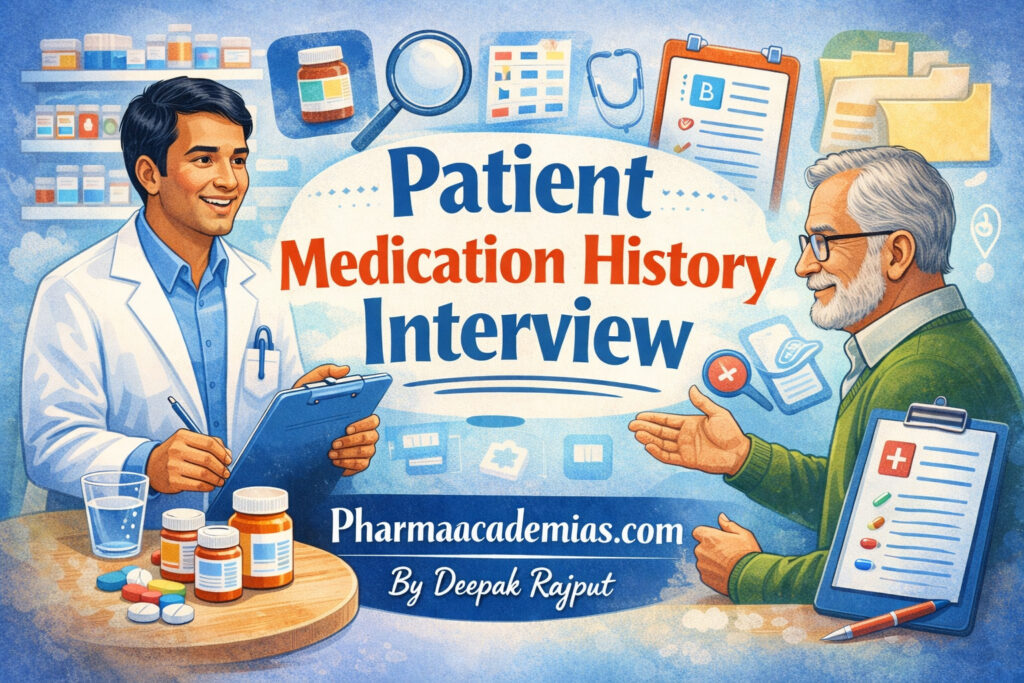
In clinical practice, this process is an essential component of pharmacovigilance, medication therapy management (MTM), and patient safety initiatives. An accurate medication history minimizes medication errors, prevents adverse drug reactions, and ensures continuity of care, especially during transitions such as hospital admission, transfer, and discharge.
Need for Patient Medication History Interview
The need for conducting a patient medication history interview arises from the increasing complexity of drug therapy, polypharmacy, and the growing use of self-medication practices. Patients often consult multiple healthcare providers, which may result in fragmented medication records and increased risk of drug-related problems.
One of the most important reasons for conducting this interview is the prevention of medication errors. Inaccurate or incomplete medication histories can lead to duplication of therapy, drug interactions, incorrect dosing, or omission of essential medications. This becomes particularly critical in elderly patients and those with chronic diseases such as diabetes, hypertension, or cancer.
Another significant need is the identification and prevention of adverse drug reactions (ADRs). Many ADRs are directly linked to drug history, including allergies, previous intolerances, and drug misuse. A well-conducted interview helps in recognizing patterns of adverse effects and improves patient safety.
The interview is also essential for ensuring therapeutic effectiveness. By understanding a patient’s adherence patterns, lifestyle, and beliefs about medications, healthcare professionals can optimize treatment regimens. Non-adherence is a major cause of therapeutic failure, and it can only be identified through effective patient communication.
Furthermore, medication history interviews play a vital role in clinical decision-making. Physicians and pharmacists rely on this information to adjust drug therapy, avoid contraindications, and personalize treatment plans. It is also a crucial component of medication reconciliation, especially during hospital admissions and discharges.
Objectives of Patient Medication History Interview
The objectives of a patient medication history interview extend beyond simple data collection. The process aims to build a comprehensive understanding of the patient’s medication use and related behaviors.
The primary objective is to obtain a complete and accurate list of all medications, including drug name, dose, frequency, route of administration, and duration of use. In addition, it seeks to identify drug allergies, hypersensitivity reactions, and previous adverse drug events.
Another important objective is to assess patient adherence and identify barriers such as forgetfulness, cost issues, or lack of understanding. The interview also helps in identifying the use of herbal medicines, dietary supplements, and alternative therapies that may interact with prescribed medications.
It further aims to evaluate the patient’s knowledge and perception of their medications, which is critical for improving compliance and therapeutic outcomes. Ultimately, the objective is to ensure safe, effective, and rational drug use.
Components of a Patient Medication History
A complete medication history consists of several key components that must be carefully explored during the interview.
Patient identification details such as name, age, gender, weight, and diagnosis provide the clinical context. This is followed by a detailed record of all current medications, including prescription drugs, OTC drugs, herbal products, and supplements.
Past medication history is equally important, as it provides insight into previously used therapies, treatment failures, and adverse reactions. Drug allergies and intolerances must be clearly documented, along with the type and severity of reactions.
The interview should also include information about medication adherence, lifestyle factors such as smoking and alcohol consumption, and dietary habits that may influence drug therapy. Special attention should be given to high-risk populations such as pediatric, geriatric, pregnant, and lactating patients.
Steps in Conducting a Medication History Interview
The process of conducting a medication history interview requires both clinical knowledge and communication skills. It begins with proper preparation, where the interviewer reviews available patient records and plans the interview approach.
The introduction phase involves establishing rapport with the patient, explaining the purpose of the interview, and ensuring confidentiality. This helps in gaining the patient’s trust and cooperation.
During the data collection phase, open-ended questions are used to encourage patients to provide detailed information. The interviewer should avoid medical jargon and use simple language to ensure clarity. Probing questions may be used to clarify specific details such as dosage, frequency, and duration.
Verification of information is a crucial step, which may involve cross-checking with prescription records, medication containers, or caregiver inputs. This ensures the accuracy and reliability of the collected data.
The final step involves documentation and summarization of the medication history. The interviewer should confirm the information with the patient and provide an opportunity for corrections or additional inputs.
Medication Interview Forms
Medication interview forms are structured tools used to standardize the process of collecting medication history. These forms ensure that no critical information is missed and improve the efficiency and accuracy of the interview.
General Structure of a Medication Interview Form
A typical medication interview form includes several sections designed to capture comprehensive information.
The first section contains patient demographic details such as name, age, gender, hospital ID, and diagnosis. This is followed by a section for current medications, where details such as drug name, dosage form, strength, route, frequency, and indication are recorded.
Another section is dedicated to past medication history, including previously used drugs and reasons for discontinuation. Drug allergies and adverse reactions are recorded in a separate section, along with detailed descriptions of the reactions.
The form also includes a section for OTC medications, herbal products, and dietary supplements. This is particularly important as patients often do not consider these as medications unless specifically asked.
Adherence assessment is another key component, where information about missed doses, reasons for non-adherence, and patient understanding of therapy is documented.
Finally, the form may include sections for lifestyle factors, clinical notes, and pharmacist or clinician remarks.
Importance of Medication Interview Forms
Medication interview forms play a crucial role in clinical practice by providing a systematic approach to data collection. They reduce variability between different healthcare professionals and ensure consistency in patient care.
These forms also enhance documentation and legal accountability, as they provide a written record of the patient’s medication history. In addition, they facilitate communication between healthcare providers, improving coordination and continuity of care.
From a pharmacovigilance perspective, these forms are essential for detecting and reporting adverse drug reactions. They also support research and quality improvement initiatives by providing structured data for analysis.
Challenges in Medication History Interview
Despite its importance, the medication history interview process faces several challenges. Patients may have poor recall, especially in cases of polypharmacy or long-term therapy. Illiteracy, language barriers, and lack of awareness further complicate the process.
In some cases, patients may intentionally or unintentionally omit information about certain medications, particularly herbal or alternative therapies. Time constraints in busy clinical settings also limit the depth of interviews.
To overcome these challenges, healthcare professionals must use effective communication techniques, verify information from multiple sources, and adopt patient-centered approaches.
Role of Pharmacist in Medication History Interview
The pharmacist plays a pivotal role in conducting medication history interviews. With specialized knowledge of drugs and their effects, pharmacists are uniquely positioned to identify drug-related problems and optimize therapy.
They contribute to medication reconciliation, patient counseling, and pharmacovigilance activities. Pharmacists also educate patients about proper medication use, potential side effects, and the importance of adherence.
In modern healthcare systems, pharmacists are increasingly involved in interdisciplinary teams, where their expertise enhances patient safety and therapeutic outcomes.
Conclusion
The patient medication history interview is a fundamental aspect of clinical pharmacy practice and patient care. It serves as the foundation for safe and effective drug therapy by providing accurate and comprehensive information about a patient’s medication use.
With the increasing complexity of healthcare, the importance of structured medication interviews and standardized forms continues to grow. By improving communication, reducing medication errors, and supporting clinical decision-making, medication history interviews play a critical role in enhancing patient outcomes and ensuring rational pharmacotherapy.