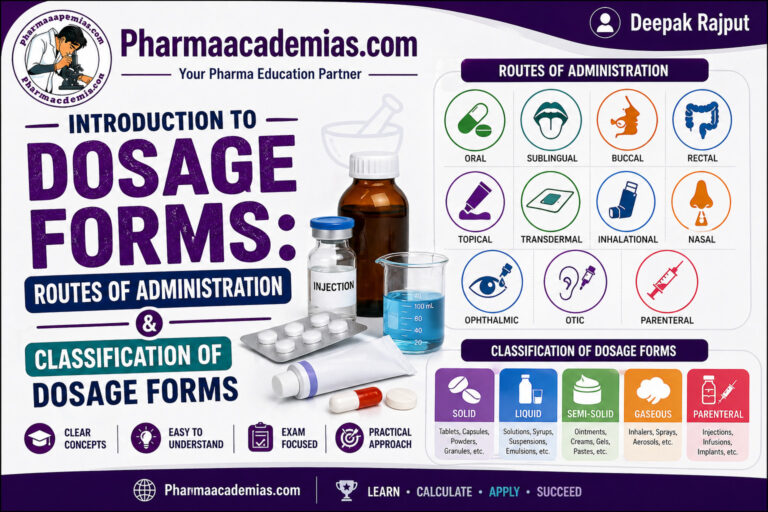
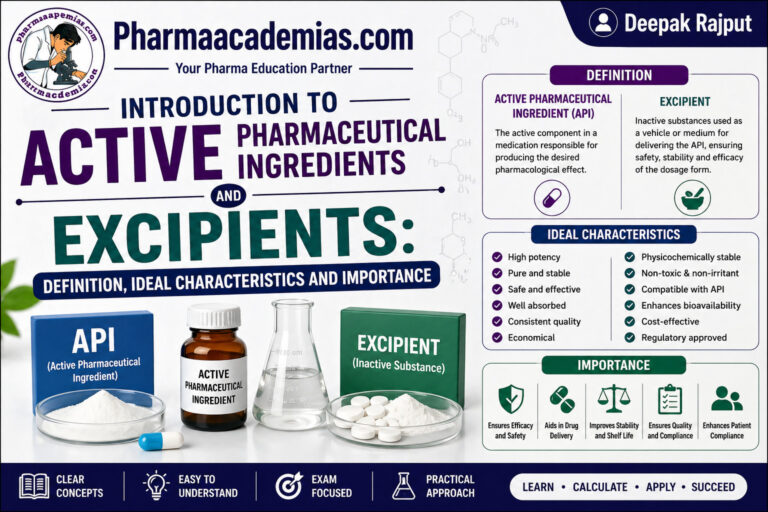
Powders play a significant role in pharmaceutical formulation because they can be administered directly, filled into capsules, compressed into tablets, or reconstituted into liquids before use. Due to their versatility, powders are used in hospitals, community pharmacies, and industrial pharmaceutical manufacturing. They are especially useful when rapid drug action is required, as finely divided particles dissolve faster than tablets or capsules.
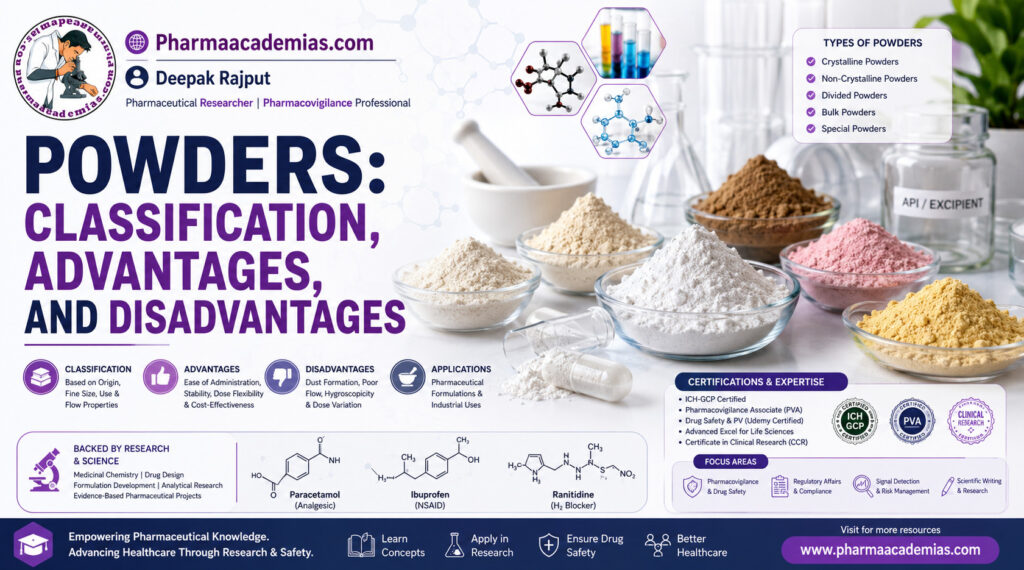
The effectiveness of powders depends on particle size, flow properties, homogeneity, moisture content, and method of preparation. Pharmaceutical powders are prepared using techniques such as comminution, trituration, pulverization, and sieving to achieve uniformity and stability.
What are Powders
Powders are intimate mixtures of dry, finely divided drugs and chemicals that may be intended for internal or external administration. They can exist as single-dose or multidose preparations and may be supplied in bulk or divided form.
According to pharmaceutics, powders are preparations consisting of solid substances in a finely divided state with or without added excipients.
Characteristics of Pharmaceutical Powders
An ideal pharmaceutical powder should possess the following characteristics:
- Uniform particle size distribution
- Good flow properties
- Chemical and physical stability
- Ease of handling and packaging
- Uniform drug content
- Non-irritating nature
- Acceptable taste and odor for oral use
- Proper moisture resistance
Classification of Powders
Powders are classified in different ways based on composition, method of dispensing, use, and route of administration.
1. Classification Based on Composition
A. Simple Powders
Simple powders contain only one medicinal substance in a finely divided form.
Examples
- Oral rehydration salt powder
- Zinc oxide powder
- Talc powder
Features
- Easy to prepare
- Uniform composition
- Less risk of incompatibility
Uses
Simple powders are mainly used when only one active ingredient is needed for therapy.
B. Compound Powders
Compound powders contain two or more active ingredients mixed uniformly.
Examples
- Antacid powder mixtures
- Effervescent powders
- Dusting powders containing antifungal and antibacterial agents
Features
- Multiple therapeutic effects
- Require proper mixing techniques
- Greater risk of incompatibility
Uses
They are used when combination therapy is required to improve therapeutic action.
2. Classification Based on Dispensing Method
A. Bulk Powders
Bulk powders are supplied in large containers from which the patient measures the required dose using a spoon or measuring device.
Examples
- Antacids
- Laxative powders
- Oral electrolyte powders
- Dusting powders
Advantages
- Economical
- Convenient for non-potent drugs
- Suitable for large-dose medications
Disadvantages
- Inaccurate dosing by patients
- Risk of contamination
- Less suitable for potent drugs
B. Divided Powders
Divided powders are individually packed in papers, sachets, or envelopes, each containing a single dose.
Examples
- Antibiotic sachets
- Pediatric powder packets
- Analgesic powders
Advantages
- Accurate dosing
- Improved patient compliance
- Reduced contamination risk
Disadvantages
- More expensive packaging
- Time-consuming preparation
3. Classification Based on Route of Administration
A. Internal Powders
These powders are intended for oral administration.
Types
- Bulk oral powders
- Divided oral powders
- Effervescent powders
Examples
- ORS powder
- Protein supplements
- Digestive powders
Characteristics
They should possess good taste, uniformity, and rapid dissolution properties.
B. External Powders
These powders are applied to the skin, mucous membranes, or body cavities.
Examples
- Dusting powders
- Dentifrices
- Douche powders
- Snuffs
Characteristics
- Fine particle size
- Non-irritating
- Free from grittiness
4. Classification Based on Pharmaceutical Use
A. Dusting Powders
Dusting powders are applied externally to protect the skin or deliver medication locally.
Types
- Medical dusting powders
- Surgical dusting powders
Characteristics
- Sterile for surgical use
- Very fine particles
- Good absorbent property
Uses
- Antifungal therapy
- Skin protection
- Prevention of friction
B. Dentifrices
Dentifrices are powders used for cleaning and polishing teeth.
Ingredients
- Abrasives
- Detergents
- Flavoring agents
- Antimicrobial agents
Uses
- Oral hygiene
- Removal of stains
- Prevention of dental caries
C. Douche Powders
Douche powders are dissolved in water before application to body cavities.
Uses
- Vaginal cleansing
- Antiseptic purposes
Characteristics
- Water soluble
- Non-irritating
D. Insufflations
Insufflations are medicated powders introduced into body cavities such as the nose, ear, throat, or vagina using an insufflator.
Characteristics
- Very fine particle size
- Sterile if necessary
Uses
- Local treatment of infections
- Nasal drug delivery
E. Snuffs
Snuffs are powders intended for inhalation through the nostrils.
Uses
- Nasal decongestion
- Systemic absorption in some cases
F. Effervescent Powders
Effervescent powders contain acids and carbonates/bicarbonates that release carbon dioxide when dissolved in water.
Common Ingredients
- Citric acid
- Tartaric acid
- Sodium bicarbonate
Advantages
- Improved taste
- Faster absorption
- Easy administration
Disadvantages
- Sensitive to moisture
- Require special packaging
Advantages of Powders
Powders offer several pharmaceutical and therapeutic advantages, making them an important dosage form.
1. Faster Drug Absorption
Powders have a large surface area because of their fine particle size. This increases the rate of dissolution and enhances drug absorption, leading to a quicker onset of action compared to tablets and capsules.
2. Flexibility of Dosing
The dose of powders can be easily adjusted according to patient requirements. This is especially useful in pediatric and geriatric patients where individualized dosing is necessary.
3. Ease of Swallowing
Many patients experience difficulty swallowing tablets or capsules. Powders can be mixed with water, milk, or food, making administration easier.
4. Suitable for Large Doses
Large quantities of drugs can be administered conveniently in powder form, whereas large tablets or capsules may become difficult to swallow.
5. Greater Stability than Liquid Dosage Forms
Powders are generally more stable than liquid formulations because the absence of water reduces hydrolysis and microbial growth.
6. Simple and Economical Preparation
Powders require less sophisticated manufacturing equipment compared to tablets and capsules, making production easier and cost-effective.
7. Versatility
Powders can be used internally or externally and can also serve as intermediate products in the preparation of tablets, capsules, suspensions, and ointments.
8. Rapid Therapeutic Action
Because powders dissolve quickly, they may produce faster pharmacological effects.
9. Improved Uniform Distribution
Topical powders spread easily over large areas of skin and provide uniform application.
Disadvantages of Powders
Despite their advantages, powders also possess certain limitations.
1. Unpleasant Taste
Many drugs have bitter or unpleasant tastes that cannot be effectively masked in powder form, reducing patient acceptability.
2. Inaccuracy of Dose in Bulk Powders
Patients may not measure bulk powders accurately, leading to underdosing or overdosing.
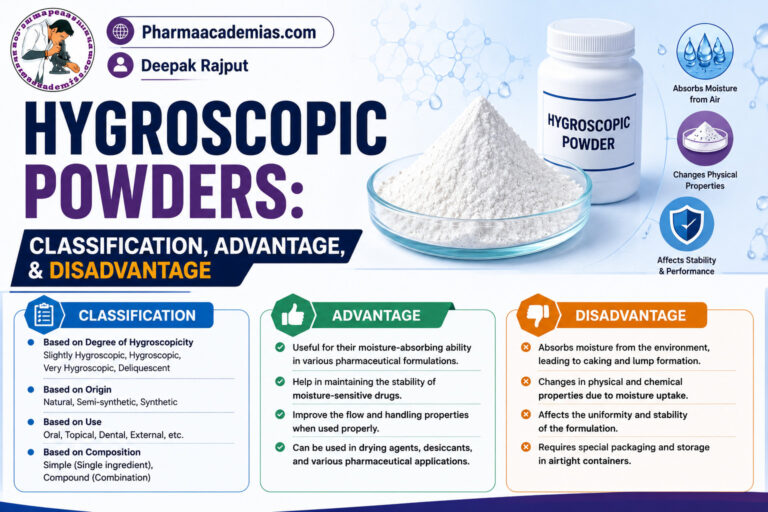
3. Unsuitability for Hygroscopic Drugs
Hygroscopic and deliquescent substances absorb moisture from the atmosphere, causing clumping and instability.
Examples
- Sodium chloride
- Potassium citrate
4. Difficulty in Handling Volatile Drugs
Volatile substances may evaporate during storage and reduce potency.
Examples
- Camphor
- Menthol
5. Segregation of Powder Mixtures
Particles of different sizes and densities may separate during storage or transportation, leading to non-uniform drug distribution.
6. Poor Portability
Powders packed in sachets or containers may be less convenient to carry compared to tablets and capsules.
7. Risk of Contamination
Bulk powders are repeatedly opened during use, increasing the possibility of contamination.
8. Unsuitable for Drugs Destroyed by Gastric Secretions
Some drugs require protection from stomach acid and therefore cannot be administered effectively as simple powders.
9. Difficulty in Protecting from Environmental Factors
Powders are more exposed to moisture, light, and air, which may affect stability.
Applications of Powders in Pharmacy
Powders are extensively used in:
- Oral medications
- Topical preparations
- Antibiotic sachets
- Nutritional supplements
- Cosmetic products
- Surgical preparations
- Reconstitution products
Conclusion
Powders are one of the oldest and most versatile solid dosage forms used in pharmaceutical science. They provide rapid drug action, flexible dosing, ease of administration, and economical manufacturing. Powders may be administered internally or externally and can exist in bulk or divided forms depending on therapeutic needs. Their classification includes simple powders, compound powders, dusting powders, effervescent powders, dentifrices, insufflations, and many more.
Despite numerous advantages, powders also present challenges such as unpleasant taste, instability due to moisture, inaccurate dosing in bulk preparations, and segregation problems. Therefore, proper formulation, packaging, and storage are essential to maintain their quality and therapeutic effectiveness.
Overall, powders continue to hold an important place in modern pharmaceutics because of their simplicity, versatility, and broad range of pharmaceutical applications.