A eutectic mixtures is a combination of two or more solid substances that, when mixed together in a particular proportion, liquefy or melt at a temperature lower than the melting point of either individual component. In pharmaceutical compounding, eutectic formation is an important phenomenon because it may affect the stability, appearance, and handling properties of powder formulations.
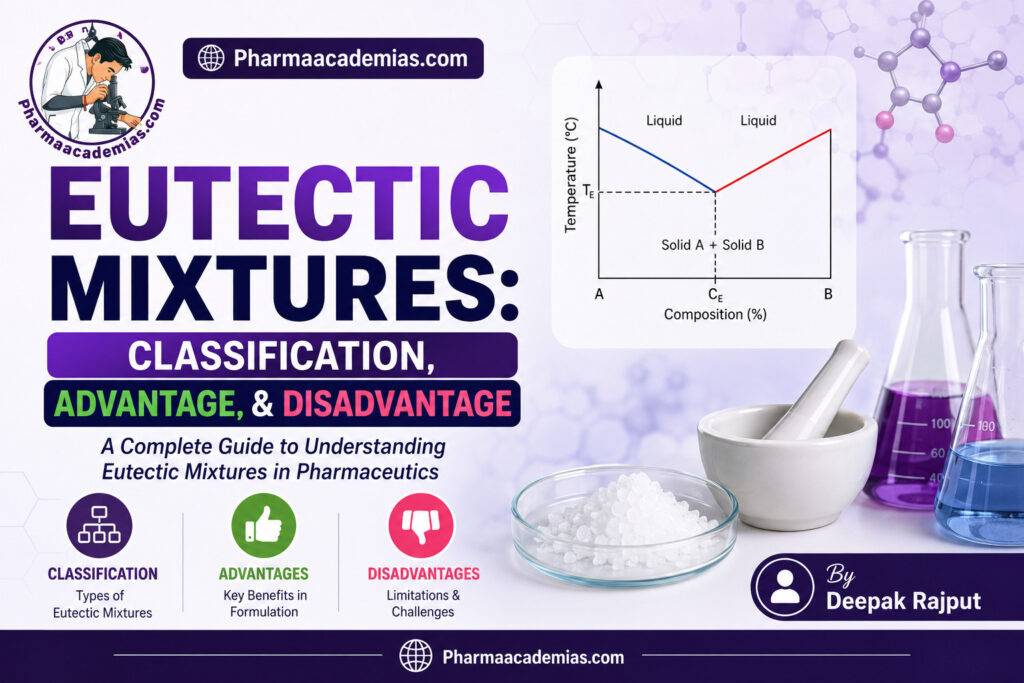
Certain drugs, when mixed together, interact physically and produce a liquid or semi-liquid mass at room temperature. This occurs because the combined substances depress each other’s melting point, forming a eutectic system. The resulting liquefaction creates difficulties during powder preparation and dispensing.
Eutectic mixtures are commonly encountered in pharmaceutical compounding involving substances such as camphor, menthol, thymol, chloral hydrate, and phenol. Pharmacists must take special precautions to prevent liquefaction and maintain powder stability.
Understanding eutectic mixtures is very important in pharmaceutics because improper handling may lead to poor powder flow, inaccurate dosing, instability, and unacceptable product appearance.
Definition of Eutectic Mixtures
A eutectic mixture is a mixture of two or more substances that melts or liquefies at a temperature lower than the melting point of the individual components.
The lowest temperature at which the mixture melts is known as the eutectic point.
Mechanism of Eutectic Formation
When two compatible crystalline substances are mixed:
- One substance interferes with the crystal lattice of the other
- Melting points are depressed
- The mixture liquefies at room temperature or lower temperature
This phenomenon is called eutectic liquefaction.
Characteristics of Eutectic Mixtures
1. Lower Melting Point: The mixture melts at a lower temperature than individual components.
2. Liquefaction: Powders may become sticky, damp, or liquid.
3. Physical Instability: Flow properties and handling characteristics are affected.
4. Difficulty in Dispensing:Liquefied masses are difficult to weigh and package.
Examples of Eutectic Mixtures
| Substance Combination | Result |
| Camphor + Menthol | Liquefaction |
| Camphor + Thymol | Eutectic formation |
| Chloral hydrate + Menthol | Liquefaction |
| Phenol + Camphor | Eutectic mixture |
| Aspirin + Phenacetin | Eutectic behavior |
Causes of Eutectic Formatio
1. Molecular Interaction: Components interfere with each other’s crystal arrangement.
2. Reduction in Melting Point:The mixed system possesses lower melting temperature.
3. Fine Particle Contact: Close contact between finely powdered particles promotes eutectic formation.
Problems Associated with Eutectic Mixtures
1. Liquefaction of Powder: Powder becomes sticky or semi-solid.
2. Difficulty in Packaging:The preparation cannot be packed easily.
3. Poor Flow Properties: Liquefied mixtures lose free-flowing characteristics.
4. Stability Problems: Physical instability reduces product quality.
5. Inaccurate Dosage: Non-uniform distribution may occur
Prevention of Eutectic Formation
Several pharmaceutical methods are used to prevent eutectic liquefaction
1. Addition of Absorbent Powders
Absorbents separate particles and absorb liquid formed.
Common Absorbents
- Kaolin
- Light magnesium oxide
- Starch
- Talc
2. Separate Powdering of Ingredients: Ingredients are powdered separately before mixing.
3. Double Wrapping Technique: Individual components may be wrapped separately.
4. Granulation:Granules reduce direct contact between particles.
5. Storage at Low Temperature:Cool storage reduces melting tendency.
Role of Absorbent Materials
Absorbents are essential in preventing liquefaction.
Functions
- Separate eutectic substances
- Absorb liquid formed
- Improve powder flow
- Maintain dry consistenc
Packaging of Eutectic Mixtures
Suitable Containers
- Waxed paper
- Double-wrapped powders
- Airtight containers
Requirements
- Moisture protection
- Minimal heat exposure
- Tight sealin
Advantages of Eutectic Mixtures
In some cases, eutectic systems may offer benefits.
1. Improved Drug Absorption: Lower melting point may enhance dissolution.
2. Enhanced Drug Release: Liquefaction may improve availability of active ingredients.
3. Better Topical Penetration:Eutectic systems are sometimes useful in topical formulations
Disadvantages of Eutectic Mixture
1. Liquefaction Problems: Powder stability is reduced.
2. Difficult Handling:Sticky masses complicate dispensing.
3. Poor Appearance: Liquefied powders appear unacceptable.
4. Reduced Shelf Life: Physical instability affects storage stability.
Pharmaceutical Importance of Eutectic Mixtures
Knowledge of eutectic mixtures is essential in:
- Pharmaceutical compounding
- Stability studies
- Packaging design
- Powder formulation
- Industrial manufacturing
Conclusion
Eutectic mixtures are combinations of substances that melt or liquefy at temperatures lower than the melting points of their individual components. This phenomenon occurs due to depression of melting points caused by molecular interactions between the mixed substances. Common eutectic combinations include camphor, menthol, thymol, chloral hydrate, and phenol.
Eutectic formation creates several pharmaceutical challenges such as liquefaction, poor flow properties, handling difficulties, and instability. Pharmacists use various preventive methods including absorbent materials, separate powdering, granulation, and proper packaging to maintain powder stability and quality.
A clear understanding of eutectic mixtures is essential in pharmaceutics to ensure accurate dispensing, product elegance, stability, and therapeutic effectiveness.