Effervescent powders are pharmaceutical preparations that contain a mixture of acids and carbonates or bicarbonates which react rapidly in the presence of water to release carbon dioxide gas. This liberation of carbon dioxide produces effervescence, resulting in a sparkling solution that improves the palatability and administration of medications. Effervescent powders are widely used for oral administration because they provide rapid dissolution, enhanced absorption, and improved patient compliance.
These powders are especially useful for patients who experience difficulty swallowing tablets or capsules, such as pediatric, geriatric, and critically ill patients. The pleasant taste and fizzy nature of effervescent preparations make them highly acceptable among patients. Effervescent powders are commonly used for antacids, analgesics, vitamin supplements, and electrolyte preparations.
The effectiveness of effervescent powders depends greatly on proper formulation, moisture protection, and accurate balance between acidic and alkaline components. Since the ingredients are highly sensitive to moisture, special precautions are required during manufacturing, packaging, and storage.
Definition
Effervescent powders are dry powder preparations containing acids and carbonates or bicarbonates that react in the presence of water to release carbon dioxide gas, producing an effervescent solution intended mainly for oral administration.
Principle of Effervescence
The effervescence occurs due to a chemical reaction between acidic substances and carbonates/bicarbonates in the presence of water.
The reaction produces:
- Carbon dioxide gas
- Water
- Salt
The release of carbon dioxide causes bubbling and fizzing action.
A common reaction is:
3NaHCO3 + C6H8O7 → Na3C6H5O7 + 3CO2 + 3H2O
In this reaction:
- Sodium bicarbonate acts as the alkaline component
- Citric acid acts as the acidic component
- Carbon dioxide gas produces effervescence
Composition of Effervescent Powders
Effervescent powders contain several important ingredients that contribute to the reaction, taste, stability, and therapeutic effect.
1. Acidic Components
These substances react with carbonates or bicarbonates to release carbon dioxide.
Common Acids Used
A. Citric Acid
- Most commonly used acid
- Provides pleasant taste
- Highly water soluble
B. Tartaric Acid
- Improves powder consistency
- Prevents stickiness caused by citric acid alone
C. Malic Acid
- Sometimes used for flavor enhancement
2. Alkaline Components
These compounds react with acids to generate carbon dioxide.
Common Alkaline Agents
A. Sodium Bicarbonate
- Most widely used alkaline substance
- Produces rapid effervescence
B. Potassium Bicarbonate
- Used in low-sodium preparations
3. Active Medicinal Agents
These provide therapeutic action.
Examples
- Aspirin
- Paracetamol
- Vitamin C
- Antacids
- Electrolytes
4. Sweetening Agents
Added to improve palatability.
Examples
- Saccharin sodium
- Aspartame
- Sucrose
5. Flavoring Agents
Improve taste and patient acceptability.
Examples
- Orange flavor
- Lemon flavor
- Peppermint flavor
6. Coloring Agents
Provide attractive appearance.
Mechanism of Action
When effervescent powders are added to water:
- Water dissolves the acidic and alkaline ingredients.
- The acid reacts with bicarbonate.
- Carbon dioxide gas is released.
- The powder dissolves rapidly, producing a sparkling solution.
The generated carbon dioxide:
- Enhances dissolution
- Improves taste masking
- Promotes rapid gastric emptying
- Increases patient acceptability
Classification of Effervescent Powders
Effervescent powders may be classified based on therapeutic use.
1. Antacid Effervescent Powders
Used to neutralize gastric acid.
Examples
- Sodium bicarbonate preparations
- Antacid salts
Uses
- Hyperacidity
- Indigestion
- Heartburn
2. Analgesic Effervescent Powders
Contain pain-relieving drugs.
Examples
- Aspirin effervescent powder
- Paracetamol effervescent formulations
Uses
- Headache
- Fever
- Body pain
3. Vitamin Effervescent Powders
Contain vitamins and nutritional supplements.
Examples
- Vitamin C powder
- Multivitamin preparations
4. Electrolyte Effervescent Powders
Used for rehydration and electrolyte replacement.
Examples
- Electrolyte replenishment preparations
- Sports hydration powders
Ideal Characteristics of Effervescent Powders
An ideal effervescent powder should possess the following properties:
- Rapid and complete effervescence
- Pleasant taste
- Good stability
- Uniform particle size
- Rapid dissolution in water
- Accurate dosage
- Low moisture content
- Free-flowing nature
Advantages of Effervescent Powders
Effervescent powders provide numerous pharmaceutical and therapeutic advantages.
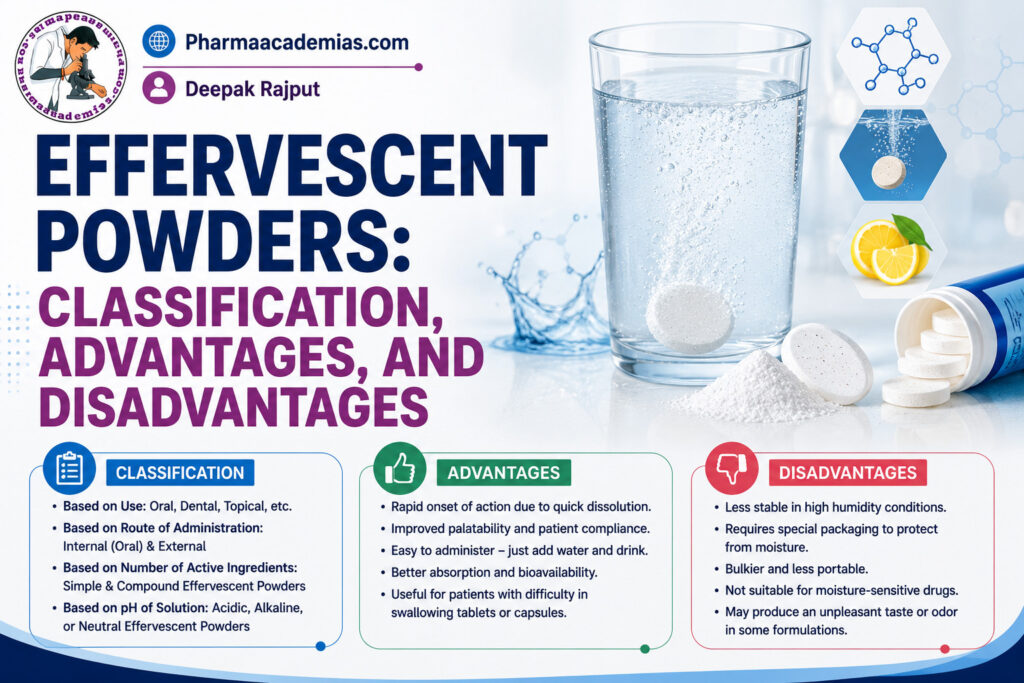
1. Rapid Drug Absorption: The drug is already dissolved before administration, leading to faster absorption and quicker onset of action.
2. Improved Patient Compliance: The pleasant taste and sparkling nature improve patient acceptability, especially in children and elderly patients.
3. Easy Administration: Effervescent solutions are easier to swallow than tablets or capsules.
4. Accurate Dosing: Each sachet or packet contains a precise quantity of medication.
5. Enhanced Drug Dissolution:The carbon dioxide released promotes rapid dissolution of the drug.
6. Reduced Gastric Irritation: The drug is diluted in water before administration, which may reduce local irritation in the stomach.
7. Suitable for Large Doses: Large doses of drugs can be administered conveniently in dissolved form.
8. Better Taste Masking: Effervescence and flavoring agents help mask unpleasant drug tastes.
Disadvantages of Effervescent Powders
Despite their benefits, effervescent powders also possess certain limitations.
1. Moisture Sensitivity
Effervescent powders are highly hygroscopic and react readily with moisture from the atmosphere.
This may lead to:
- Premature effervescence
- Loss of potency
- Caking
2. Special Packaging Requirement
Moisture-resistant and airtight packaging is essential, increasing manufacturing cost.
3. Stability Problems
Exposure to humidity may reduce shelf life and effectiveness.
4. Bulky Packaging
Effervescent preparations often require larger containers or sachets.
5. Unpleasant Taste if Improperly Formulated
Incorrect acid-base balance may produce salty or sour taste.
6. Handling Difficulties
Manufacturing requires controlled humidity conditions.
Uses of Effervescent Powders
Effervescent powders are widely used in pharmaceutical and nutritional preparations.
Therapeutic Uses
- Antacid therapy
- Pain relief
- Fever management
- Vitamin supplementation
- Electrolyte replacement
Nutritional Uses
- Sports drinks
- Energy supplements
- Rehydration therapy
Examples of Effervescent Powders
| Preparation | Use |
| Effervescent Vitamin C Powder | Nutritional supplement |
| Aspirin Effervescent Powder | Analgesic |
| ENO Powder | Antacid |
| Oral Electrolyte Powder | Rehydration |
| Calcium Effervescent Powder | Calcium supplementation |
Precautions in Manufacturing
Several precautions are necessary during manufacturing.
- Avoid exposure to moisture
- Use dry equipment
- Maintain low humidity environment
- Use airtight packaging immediately after preparation
- Store raw materials properly
Conclusion
Effervescent powders are important pharmaceutical preparations that provide rapid dissolution, enhanced absorption, pleasant taste, and improved patient compliance. They contain a combination of acids and carbonates or bicarbonates that release carbon dioxide when dissolved in water, producing a sparkling and palatable solution.
These powders are widely used as antacids, analgesics, vitamin supplements, and electrolyte preparations. Their major advantages include rapid onset of action, ease of administration, improved taste masking, and suitability for patients who have difficulty swallowing solid dosage forms.
However, effervescent powders are highly sensitive to moisture and require careful formulation, manufacturing, packaging, and storage to maintain stability and effectiveness. Despite these challenges, effervescent powders remain a valuable and widely used dosage form in modern pharmaceutics because of their convenience, therapeutic efficiency, and patient acceptability.