The cultivation of medicinal plants has evolved significantly with the growing demand for high-quality herbal raw materials. Modern pharmaceutical requirements demand not only therapeutic efficacy but also consistency, safety, and environmental sustainability. In this context, approaches such as biodynamic agriculture, Good Agricultural Practices (GAP), and organic farming have become essential. These systems integrate traditional knowledge with scientific principles to ensure that medicinal plants retain their phytochemical integrity while being cultivated in an environmentally responsible manner.
Biodynamic Agriculture
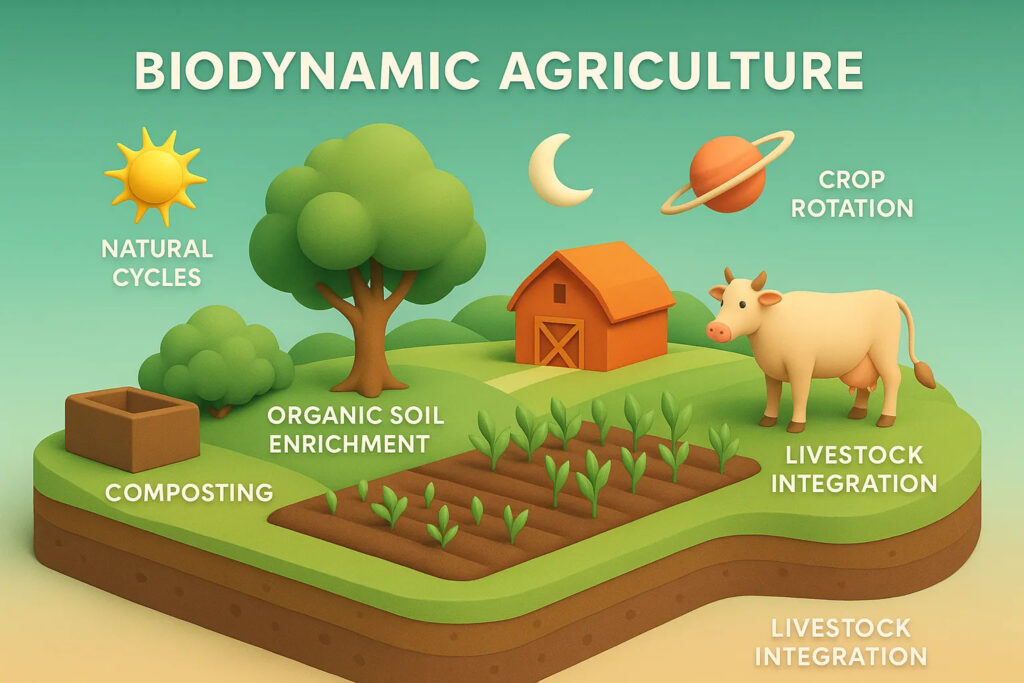
Biodynamic agriculture is a holistic farming system that considers the farm as a living, self-regulating organism. It was developed by Rudolf Steiner and is based on the idea that plant growth is influenced not only by soil and climate but also by cosmic and lunar rhythms.
In this system, special emphasis is placed on maintaining soil vitality through natural composts and biodynamic preparations. These preparations, often derived from plant and animal sources, enhance microbial activity and improve nutrient cycling within the soil. As a result, plants grown under biodynamic conditions tend to be more resilient and chemically rich.
A unique feature of biodynamic agriculture is the timing of agricultural operations according to lunar cycles. Activities such as sowing, irrigation, and harvesting are carried out based on these cycles, which are believed to influence plant metabolism and growth patterns.
Key features of biodynamic agriculture include:
- Use of natural compost and biodynamic preparations
- Emphasis on soil health and ecological balance
- Consideration of lunar and cosmic rhythms
- Minimal reliance on external inputs
This method is particularly suitable for medicinal plants because it enhances the concentration of bioactive compounds, thereby improving therapeutic quality. However, it requires skilled management and may initially produce lower yields compared to conventional farming.
Good Agricultural Practices (GAP) in Medicinal Plants
Good Agricultural Practices (GAP) are a set of scientifically validated guidelines that ensure the quality, safety, and traceability of medicinal plant materials from cultivation to harvesting. These practices are widely recommended by international organizations such as the World Health Organization.
GAP begins with the careful selection of cultivation sites. The soil must be free from contaminants such as heavy metals and industrial pollutants, as these can directly affect the safety of the herbal material. Similarly, the use of authenticated planting material is crucial to ensure correct botanical identity.
During cultivation, proper irrigation, nutrient management, and pest control strategies are implemented. GAP promotes the use of environmentally safe practices, reducing dependence on synthetic chemicals. Harvesting is carried out at the stage when the active constituents are at their maximum concentration, and post-harvest handling is carefully managed to prevent contamination and degradation.
Important components of GAP include:
- Proper site and soil selection
- Use of authenticated seeds or planting material
- Controlled use of fertilizers and pesticides
- Hygienic harvesting and post-harvest handling
- Documentation and traceability of all processes
The implementation of GAP ensures uniformity in herbal raw materials, which is essential for pharmaceutical standardization and regulatory approval.
Organic Farming of Medicinal Plants
Organic farming is a natural method of cultivation that avoids the use of synthetic fertilizers, pesticides, and genetically modified organisms. Instead, it relies on biological processes and natural inputs to maintain soil fertility and plant health.
In organic systems, soil fertility is maintained through the use of compost, farmyard manure, and green manure. These not only supply nutrients but also improve soil structure and microbial activity. Pest control is achieved through biological methods such as crop rotation, use of resistant varieties, and botanical pesticides.
For medicinal plants, organic farming is highly advantageous because it ensures that the final product is free from chemical residues. This is particularly important in herbal medicine, where purity and safety are critical.
Major practices in organic farming include:
- Use of natural fertilizers like compost and vermicompost
- Biological pest control methods
- Crop rotation and diversification
- Avoidance of synthetic chemicals and GMOs
Despite its benefits, organic farming may involve lower yields and requires certification for commercial acceptance. It is also more labor-intensive compared to conventional farming systems.
Integrated Importance in Medicinal Plant Cultivation
Biodynamic agriculture, GAP, and organic farming collectively contribute to the sustainable cultivation of medicinal plants. While biodynamic agriculture enhances ecological harmony and phytochemical richness, GAP ensures standardization and traceability, and organic farming guarantees chemical-free production.
Together, these approaches help in achieving:
- High-quality herbal raw materials
- Environmental sustainability
- Improved safety and efficacy of herbal medicines
Conclusion
The adoption of biodynamic agriculture, Good Agricultural Practices, and organic farming represents a progressive shift towards sustainable and quality-driven cultivation of medicinal plants. These approaches not only ensure the production of safe and effective herbal materials but also support environmental conservation and long-term agricultural sustainability. Their integration is essential for meeting the growing global demand for standardized and reliable herbal medicines.