
Formulation of Injections: Injections, also known as parenteral dosage forms, are sterile pharmaceutical preparations intended for administration into the body by routes other than the gastrointestinal tract. The word parenteral is derived from the Greek terms para meaning “beside” and enteron meaning “intestine,” indicating that these preparations bypass the digestive system and are delivered directly into body tissues or the bloodstream.
Parenteral drug delivery is widely used in modern medical practice because it provides rapid therapeutic effects and allows precise control of drug dosage. Injections are particularly useful when the drug is unstable in the gastrointestinal tract, poorly absorbed after oral administration, or when a rapid onset of action is required. Additionally, injections are essential in situations where patients cannot take medications orally, such as during unconsciousness, severe vomiting, or surgical procedures.
Importance of Injectable Formulations
Injectable dosage forms play a crucial role in healthcare because they provide several therapeutic advantages over other routes of administration. One of the most significant advantages is the rapid onset of action, especially in intravenous administration where the drug enters the bloodstream immediately.
Another important benefit is complete bioavailability. Oral drugs often undergo degradation in the gastrointestinal tract or metabolism in the liver before reaching systemic circulation. In contrast, injectable drugs bypass these barriers and ensure that the entire administered dose becomes available for therapeutic action.
Injections are also particularly useful for drugs that are poorly absorbed orally, such as certain antibiotics, peptides, hormones, and vaccines. In addition, injectable formulations allow the administration of controlled or sustained-release preparations, which provide prolonged therapeutic effects and reduce dosing frequency.
Because of these advantages, injections are widely used in emergency medicine, anesthesia, vaccination programs, hormone therapy, chemotherapy, and the treatment of chronic diseases.
Routes of Administration for Injections
Injectable drugs may be administered through several routes depending on the desired therapeutic effect and the nature of the drug.
Intravenous (IV) Injection: The intravenous route involves the direct administration of a drug into a vein. This route provides the fastest onset of action because the drug immediately enters systemic circulation.
Intravenous administration allows precise control over drug levels in the blood and can accommodate large volumes of fluids through intravenous infusion. However, because the drug enters the bloodstream instantly, there is a higher risk of toxicity if incorrect doses are administered.
Intramuscular (IM) Injection: Intramuscular injections are administered into skeletal muscle tissue. The drug is absorbed gradually through the network of blood vessels present in the muscle. Common sites for intramuscular injections include the deltoid muscle, gluteal muscle, and vastus lateralis muscle.
Subcutaneous (SC) Injection: Subcutaneous injections are administered beneath the skin into the fatty tissue. This route provides slower absorption compared to intramuscular injections but is suitable for drugs that require prolonged action.
Examples of drugs commonly administered by this route include insulin and heparin. The volume administered subcutaneously is usually limited to small amounts.
Intradermal (ID) Injection: Intradermal injections are administered into the dermal layer of the skin. This route is mainly used for diagnostic purposes, such as allergy tests and the tuberculin test for tuberculosis.
Types of Injectable Formulations
Injectable preparations may be classified according to their physical form.
Injectable Solutions:Injectable solutions are clear and homogeneous liquid preparations in which the drug is completely dissolved in a suitable solvent. These formulations provide rapid and predictable drug absorption because the drug is already in solution form.
Injectable Suspensions: Injectable suspensions contain finely divided drug particles dispersed in a liquid medium. These formulations are used when the drug is poorly soluble in water or when prolonged drug action is desired.
Injectable Emulsions: Injectable emulsions consist of two immiscible liquids, usually oil and water, where one liquid is dispersed as small droplets within the other. Emulsions are stabilized using emulsifying agents.
Dry Powder for Injection: Some drugs are unstable in aqueous solution and are therefore supplied as dry powders that must be reconstituted with sterile solvent before administration. This approach increases the shelf life and stability of the drug product.
Many antibiotics and vaccines are marketed as dry powders for injection.
Components Used in the Formulation of Injections
The formulation of injectable preparations involves several components besides the active drug substance.
Active Pharmaceutical Ingredient: The active pharmaceutical ingredient (API) is the drug responsible for producing the therapeutic effect. It must be highly pure and stable under the conditions of sterilization and storage.
Vehicles or Solvents: Vehicles are liquids used to dissolve or disperse the drug. The most common vehicle is Water for Injection (WFI), which is highly purified water free from microorganisms and pyrogens.
Buffers: Buffers are used to maintain the pH of injectable solutions within a range that ensures drug stability and minimizes irritation at the injection site. Common buffer systems include phosphate, citrate, and acetate buffers.
Preservatives: Preservatives are added to multi-dose injectable formulations to prevent microbial contamination during repeated use. Examples include benzyl alcohol, phenol, and parabens. Preservatives are generally not used in large-volume parenterals.
Antioxidants: Some drugs are susceptible to oxidation when exposed to oxygen. Antioxidants such as sodium metabisulfite and ascorbic acid are added to prevent oxidative degradation.
Chelating Agents: Chelating agents such as EDTA bind trace metal ions that may catalyze oxidation reactions. By removing these metal ions, chelating agents help improve the stability of the formulation.
Isotonicity Adjusting Agents: Injectable solutions should have osmotic pressure similar to that of blood plasma to avoid tissue irritation or cell damage. Sodium chloride, dextrose, and mannitol are commonly used to adjust isotonicity.
Manufacturing of Injectable Preparations
The manufacturing of injections is carried out under strict aseptic conditions in specialized pharmaceutical facilities. Clean rooms with controlled temperature, humidity, and air filtration are used to minimize microbial contamination.
The manufacturing process generally involves several steps. First, the drug and excipients are dissolved or dispersed in the selected vehicle. The solution is then filtered to remove particulate matter and microorganisms using membrane filters.
After filtration, the sterile solution is filled into containers such as ampoules or vials. These containers are then sealed to maintain sterility. In many cases, the final product undergoes sterilization using methods such as autoclaving or dry heat treatment.
Containers Used for Injectable Products
Injectable preparations are typically packaged in containers designed to maintain sterility and protect the formulation.
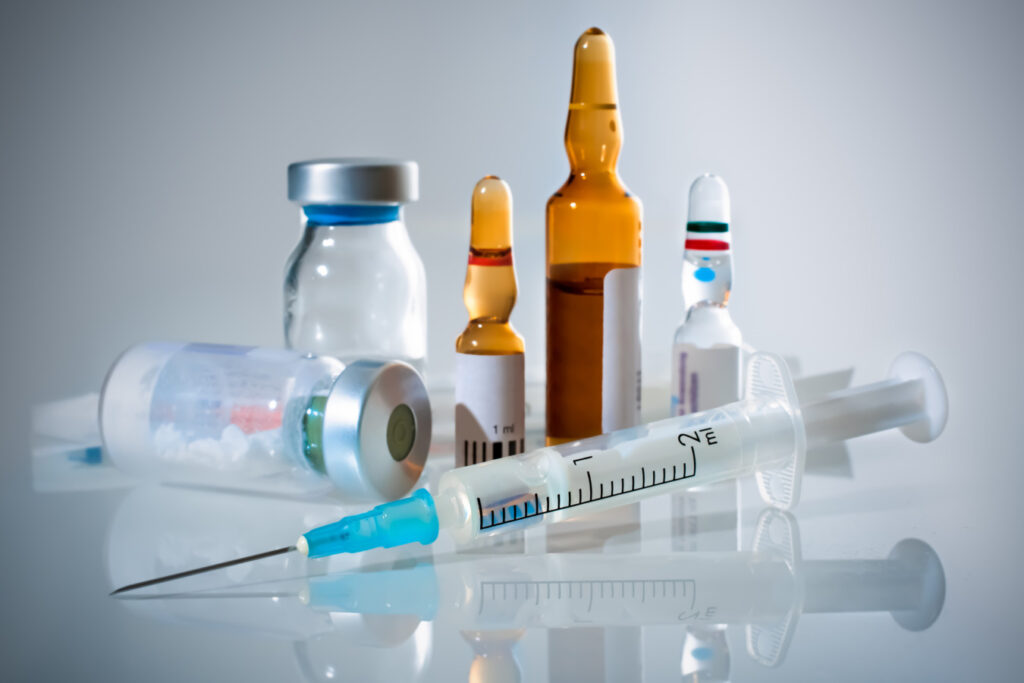
Ampoules: Ampoules are sealed glass containers that contain a single dose of the injectable preparation. They are hermetically sealed to prevent contamination.
Vials: Vials are glass containers closed with rubber stoppers and metal caps. They may be used for single-dose or multi-dose formulations.
Prefilled Syringes: Prefilled syringes are modern drug delivery systems in which the injectable formulation is preloaded into a sterile syringe. These systems improve dosing accuracy and reduce the risk of contamination.
Quality Control Tests for Injections
Before injectable products are released for clinical use, they must undergo several quality control tests to ensure safety and efficacy.
Important tests include sterility testing, which confirms the absence of microorganisms, and pyrogen testing, which detects fever-producing substances such as bacterial endotoxins. Additional tests include particulate matter analysis, pH measurement, and assay of the active drug content.
Advantages of Injectable Dosage Forms
Injectable dosage forms offer several advantages in pharmaceutical therapy. They provide rapid onset of action, accurate dosing, and complete bioavailability. They are particularly useful for drugs that are unstable in the gastrointestinal tract or poorly absorbed after oral administration.
Injections are also essential in emergency medical situations and for the administration of biological products such as vaccines and monoclonal antibodies.
Disadvantages of Injectable Dosage Forms
Despite their advantages, injections also have certain limitations. The administration of injections requires trained healthcare professionals and sterile equipment. Improper injection technique may cause pain, tissue damage, or infection.
In addition, once a drug has been administered by injection, it is difficult to reverse its effects. The manufacturing of injectable formulations is also more complex and expensive compared to oral dosage forms.
Conclusion
The formulation of injections is an important area of pharmaceutical science that requires careful attention to sterility, stability, and patient safety. Because injectable drugs are delivered directly into the body, they must be prepared under strict quality control conditions and must meet rigorous pharmacopeial standards.
Injectable dosage forms continue to play a vital role in modern medicine, particularly in emergency care, vaccination, and the treatment of serious diseases. Advances in pharmaceutical technology are further improving injectable drug delivery systems, making them safer, more effective, and more convenient for both healthcare professionals and patients.