
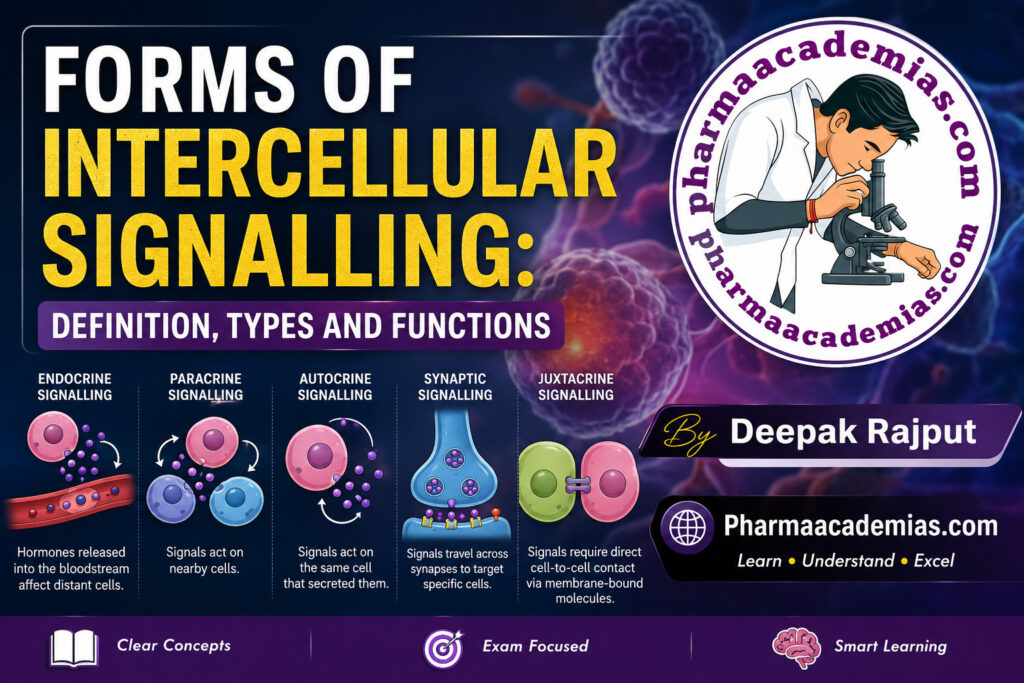
Forms of Intercellular Signalling: Intercellular signalling is the process through which cells communicate with each other to regulate various functions of the body. In multicellular organisms, cells must exchange information continuously for proper growth, metabolism, immunity, development, and maintenance of homeostasis. This communication occurs through signalling molecules such as hormones, neurotransmitters, cytokines, and growth factors. These molecules bind to specific receptors on target cells and produce a response. Depending on the distance between the signalling cell and the target cell, intercellular signalling is mainly classified into contact-dependent, paracrine, synaptic, and endocrine signalling.
Forms of Intercellular Signalling
a) Contact-Dependent Signalling
Contact dependent signalling, also known as juxtacrine signalling, occurs when two cells communicate through direct physical contact. In this type of signalling, the signalling molecules remain attached to the surface of the signalling cell and interact directly with receptors present on the neighboring target cell. Therefore, the cells must remain very close to each other for communication to occur.
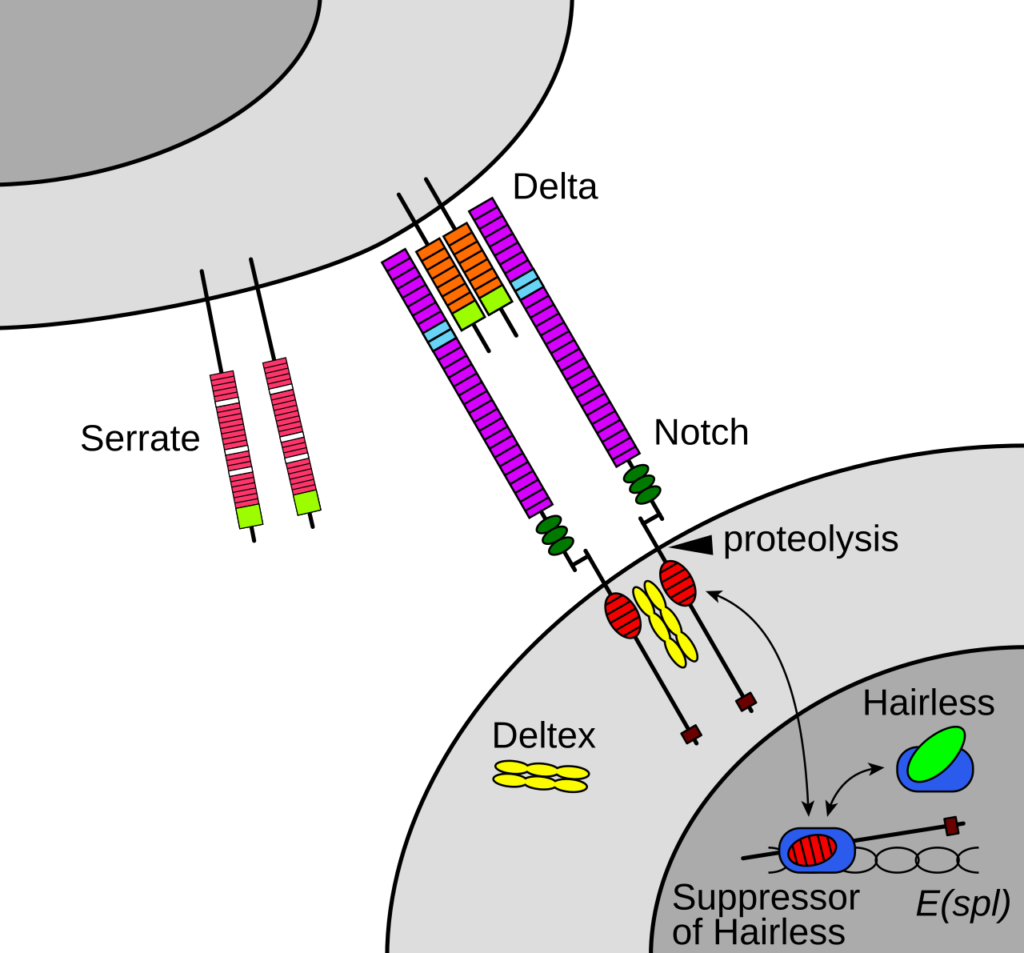
This type of signalling is highly important during embryonic development and tissue organization. It helps cells determine their fate, position, and function during growth and differentiation. One of the best examples is the Notch signalling pathway, which controls cell differentiation in developing tissues.
Contact-dependent signalling also plays a major role in the immune system. T-lymphocytes recognize infected or abnormal cells only after direct contact with antigen-presenting cells. Cell adhesion molecules such as cadherins and integrins also help neighboring cells remain connected and communicate properly.
Important Features
- Requires direct cell-to-cell contact
- Signal remains localized
- Highly specific communication
- Important in development and immunity
Thus, contact-dependent signalling helps maintain proper tissue structure, cellular coordination, and immune defense.
b) Paracrine Signalling
Paracrine signalling is a form of local communication in which a cell releases signalling molecules that act on nearby cells. These signalling molecules diffuse through the extracellular fluid and affect neighboring target cells within the same tissue. Unlike endocrine signalling, the signals do not travel through the bloodstream.
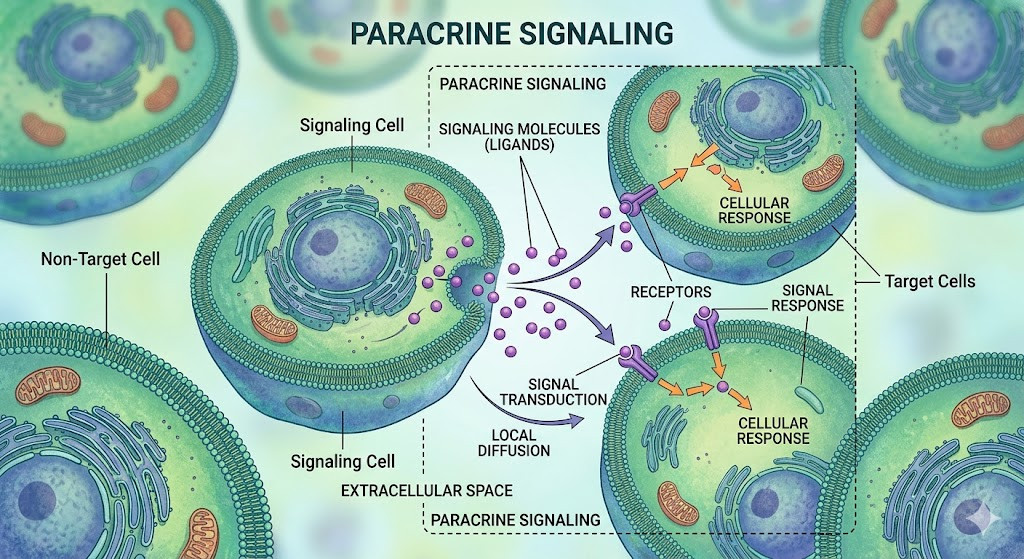
The signalling molecules involved in paracrine communication include growth factors, cytokines, histamine, prostaglandins, and nitric oxide. These molecules usually act for a short duration because they are rapidly broken down or absorbed by nearby cells.
Paracrine signalling is very important in inflammation, wound healing, tissue repair, and immune responses. For example, during injury or infection, mast cells release histamine, which acts on nearby blood vessels and increases blood flow to the affected area. Similarly, growth factors released from damaged tissues stimulate nearby cells to divide and repair the tissue.
Nitric oxide is another important example. It is released from endothelial cells of blood vessels and diffuses into nearby smooth muscle cells, causing relaxation of blood vessels and helping regulate blood pressure.
Important Features
- Acts on nearby cells only
- Fast and localized response
- Signal molecules diffuse through tissue fluid
- Important in inflammation and tissue repair
Therefore, paracrine signalling allows neighboring cells to coordinate their activities effectively without affecting distant organs.
c) Synaptic Signalling
Synaptic signalling is a specialized and rapid form of communication that occurs between nerve cells and their target cells. This signalling takes place at specialized junctions called synapses and is essential for proper functioning of the nervous system.
In synaptic signalling, an electrical impulse called an action potential travels through the neuron and reaches the synaptic terminal. This stimulates the release of neurotransmitters into the synaptic cleft. The neurotransmitters then bind to receptors on the target cell and generate a response.
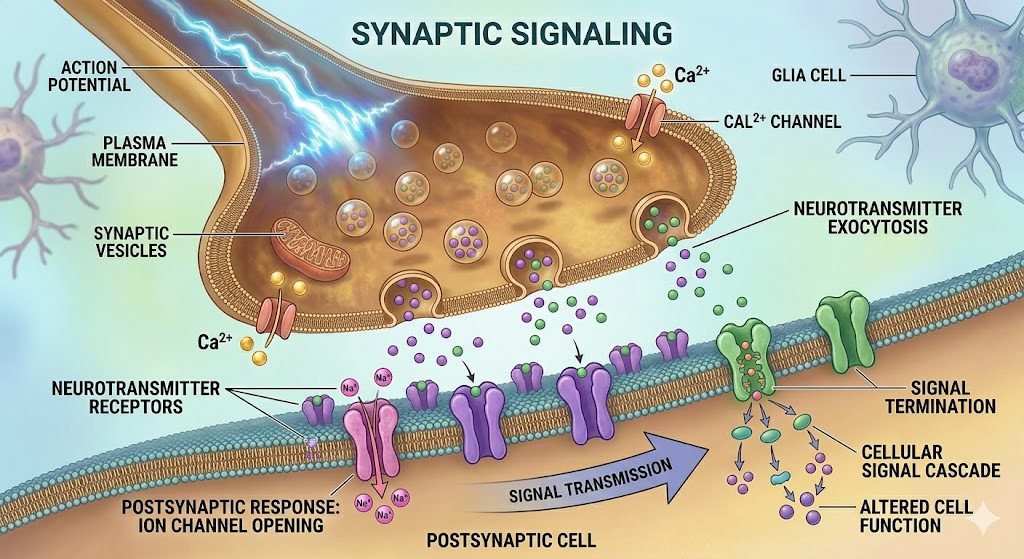
Common neurotransmitters include:
- Acetylcholine
- Dopamine
- Serotonin
- Glutamate
- GABA
For example, acetylcholine helps transmit signals from nerves to muscles and causes muscle contraction. Dopamine and serotonin are involved in mood, emotions, and behavior.
Synaptic signalling is extremely rapid and occurs within milliseconds. It controls movement, sensation, reflexes, memory, learning, and many brain functions. After signal transmission, neurotransmitters are quickly removed from the synapse through enzymatic breakdown or reuptake.
Important Features
- Very fast communication
- Occurs between neurons and target cells
- Uses neurotransmitters as signalling molecules
- Highly precise and specific
Disorders in synaptic signalling may result in diseases such as Parkinson’s disease, Alzheimer’s disease, depression, and epilepsy.
d) Endocrine Signalling
Endocrine signalling is a long-distance communication system in which endocrine glands release hormones directly into the bloodstream. These hormones travel through blood and act on distant target organs or tissues that possess specific receptors.
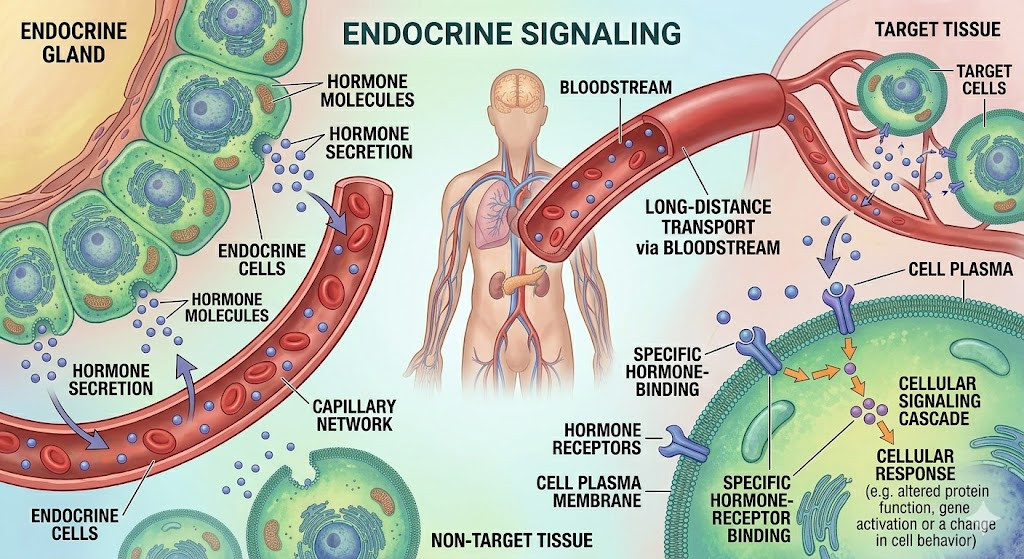
The endocrine system includes glands such as:
- Pituitary gland
- Thyroid gland
- Adrenal gland
- Pancreas
- Ovaries and testes
Hormones regulate many important body functions including growth, metabolism, reproduction, stress response, and maintenance of internal balance.
One important example is insulin secreted by the pancreas. Insulin travels through the bloodstream and regulates blood glucose levels in muscles, liver, and adipose tissues. Another example is thyroid hormone, which controls the metabolic rate of the body.
Endocrine signalling is slower compared to synaptic signalling because hormones must travel through blood circulation. However, the effects are usually long-lasting and may influence several organs simultaneously.
Important Features
- Hormones travel through bloodstream
- Acts on distant target organs
- Slower but long-lasting effects
- Maintains body homeostasis
Disorders in endocrine signalling can lead to diseases such as diabetes mellitus, hypothyroidism, and growth disorders.
Conclusion
Intercellular signalling is essential for coordination and communication between cells. Different forms of signalling work according to the distance and type of response required. Contact-dependent signalling requires direct contact between cells and is important for development and immunity. Paracrine signalling acts locally on nearby cells and plays a major role in inflammation and tissue repair. Synaptic signalling provides rapid communication in the nervous system through neurotransmitters, while endocrine signalling uses hormones to regulate distant organs through the bloodstream. Together, these signalling mechanisms help maintain proper functioning, coordination, and balance within the body.
Editorial Note
This article has been carefully researched and written by Deepak Rajput with a focus on accuracy, clarity, and evidence-based healthcare information. Pharmaacademias.com