

Definition of Microcapsules
Microcapsules are small, spherical particles that consist of a core material (typically an active ingredient like a drug, nutrient, or bioactive compound) surrounded by a protective shell or coating. The core material can be liquid, solid, or gas, and the shell is typically made from biocompatible materials, such as polymers, lipids, or proteins. The size of microcapsules usually ranges from 1 to 1000 microns, and they are widely used in pharmaceutical, food, cosmetic, and agricultural industries for controlled release, protection, and targeted delivery of active substances.
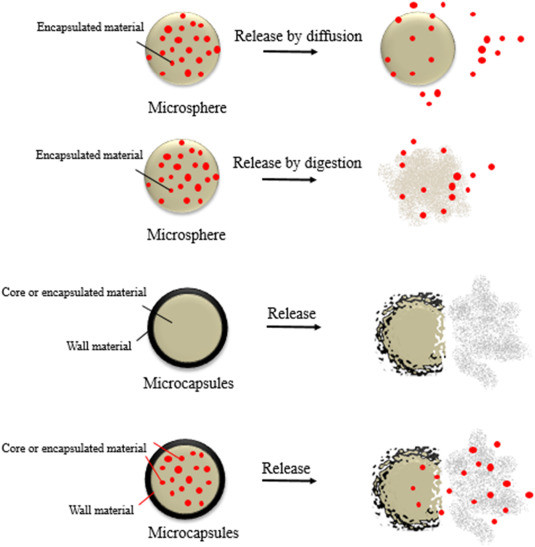
The process of creating microcapsules is called microencapsulation, and it can be accomplished using various methods, such as:
Spray Drying
Coacervation
Solvent Evaporation
Interfacial Polymerization
Pan Coating
Fluidized Bed Coating
Microcapsules are designed to control the release of the active ingredient, protect it from degradation, and improve its stability, bioavailability, and target specificity.
Advantages of Microcapsules
1. Controlled and Sustained Release: Microcapsules allow for controlled, sustained, or delayed release of the encapsulated active substance, minimizing fluctuations in drug concentration in the body. This helps in providing a continuous therapeutic effect and reduces the frequency of dosing.
2. Protection of Active Ingredients: Microcapsules provide a protective barrier around the core material, shielding it from environmental factors such as light, heat, moisture, and oxygen, which could otherwise degrade or destabilize the substance. This is particularly useful for sensitive compounds like enzymes, proteins, or vitamins.
3. Improved Bioavailability: Microencapsulation can improve the bioavailability of poorly water-soluble or unstable compounds. By encapsulating these substances, microcapsules can enhance their absorption and effectiveness in the body.
4. Targeted Drug Delivery: Microcapsules can be engineered to release their contents at specific sites in the body (e.g., the gastrointestinal tract, liver, or targeted tissues), improving the efficiency of drug delivery while minimizing side effects and damage to healthy tissues.
5. Taste Masking: In the pharmaceutical and food industries, microcapsules can mask the unpleasant taste or odor of certain drugs or ingredients, making them more palatable to patients or consumers.
6. Improved Stability and Shelf Life: The encapsulation process can enhance the stability and shelf life of the active ingredient by protecting it from environmental degradation. This is particularly important for formulations containing unstable drugs or bioactive compounds.
7. Reduced Irritation and Side Effects: By controlling the release and targeting the delivery of the active substance, microcapsules can reduce irritation to sensitive tissues (e.g., the gastrointestinal tract) and lower the risk of systemic side effects.
8. Versatility in Applications: Microcapsules can be used in a wide range of applications, including pharmaceuticals, nutraceuticals, cosmetics, food, and agriculture. This versatility makes microencapsulation a valuable technology in various industries.
9. Minimization of Drug Waste: Microencapsulation can improve drug efficacy by ensuring that the drug is delivered only to where it is needed, minimizing waste and optimizing the use of the active substance.
Disadvantages of Microcapsules
1. High Production Costs: The production of microcapsules can be expensive due to the complex processes involved (e.g., specialized equipment and materials). The cost of encapsulating materials and the need for precise control over particle size and release rates can make microcapsule formulations more expensive compared to traditional drug delivery systems.
2. Encapsulation Efficiency: Achieving high encapsulation efficiency, where the maximum amount of the active ingredient is successfully incorporated into the microcapsule, can be challenging. Poor encapsulation efficiency leads to wasted material and reduced therapeutic effect.
3. Release Profile Variability: The release rate of the encapsulated substance can be difficult to control precisely, especially for certain types of drugs. Variability in the release profile can result from factors such as the type of material used, the encapsulation method, and external environmental conditions (e.g., pH, temperature).
4. Potential Toxicity of Coating Materials: Some of the materials used in the microencapsulation process (such as certain polymers or surfactants) may not be fully biocompatible or biodegradable, raising concerns about potential toxicity or adverse reactions when used in vivo.
5. Complexity in Formulation: Designing microcapsules with specific release profiles, size ranges, and other desired properties can be technically complex. The formulation must consider the chemical nature of both the core material and the coating, making the development process time-consuming and challenging.
6. Stability and Shelf Life Issues: Although microcapsules can improve the stability of encapsulated substances, some materials may still be sensitive to factors such as humidity, temperature, or light, which could affect their performance or shelf life. In some cases, prolonged storage may result in the release of the active ingredient before it reaches its intended site of action.
7. Limited Control over High-Dose Delivery: Microencapsulation is most effective for substances that require low to moderate doses. For high-dose active ingredients, achieving uniform encapsulation and a controlled release profile can be difficult, which may limit the application of microcapsules for certain drugs.
8. Challenges in Scale-up Production: While microcapsules may be easily produced in the laboratory, scaling up the production process for commercial manufacturing can present challenges. Maintaining consistency in size, encapsulation efficiency, and release characteristics can be difficult at large production scales.
9. Possible Immune Response: If the microcapsules are made from non-biodegradable or non-biocompatible materials, they could potentially trigger an immune response or cause inflammation in the body, especially with long-term use.
Applications of Microcapsules
Microcapsules are small particles in which an active ingredient (core) is surrounded by a coating or shell material, typically ranging from 1 to 1000 μm. In pharmaceuticals, microcapsules are widely used to improve drug stability, control release, and target delivery.
1. Controlled and Sustained Drug Release
Microcapsules allow gradual release of drugs over time, improving therapeutic efficacy and patient compliance.
Examples:
- Theophylline microcapsules for sustained asthma therapy.
- Verapamil microcapsules for controlled cardiovascular treatment.
Mechanism: The drug diffuses slowly through the polymer shell or is released as the shell erodes.
2. Targeted Drug Delivery
Microcapsules can deliver drugs specifically to certain organs, tissues, or cells, reducing systemic side effects.
Examples:
- Doxorubicin microcapsules targeted to tumors.
- Mesalamine microcapsules for colon-specific drug release.
3. Protection of Drugs
Microcapsules protect sensitive drugs from light, moisture, oxygen, or gastric acids, enhancing stability.
Examples:
- Insulin microcapsules for oral delivery (protect from stomach acid).
- Probiotics encapsulated to survive gastric passage.
4. Taste Masking
Bitter or unpleasant-tasting drugs are microencapsulated to mask their taste without altering efficacy.
Examples: Quinine, ranitidine, or chloroquine microcapsules in pediatric formulations.
5. Enhancement of Bioavailability
Microcapsules improve solubility and absorption of poorly water-soluble drugs.
Examples:
- Curcumin microcapsules for enhanced oral bioavailability.
- Fat-soluble vitamins (A, D, E, K) in microcapsules.
6. Reduction of Side Effects
By controlling drug release and targeting delivery, microcapsules minimize adverse effects.
Example: NSAID microcapsules reduce gastrointestinal irritation.
7. Combination Therapy
Different drugs can be encapsulated together or in layers for synergistic therapy.
Example: Anti-hypertensive combinations (nifedipine + atenolol) in a single microcapsule system.
8. Vaccine and Immunotherapy Applications
Microcapsules can deliver antigens safely and enhance immune response.
Examples:
- Hepatitis B antigen microcapsules.
- Experimental cancer vaccine microcapsules.
9. Pulmonary or Injectable Delivery
Microcapsules can be formulated for inhalation therapy or injectable depot systems.
Examples:
- Pulmonary insulin microcapsules.
- Long-acting risperidone microcapsules for injections.
10. Stabilization in Liquid Formulations
Drugs unstable in aqueous solutions can be stabilized via microencapsulation.
Examples: Vitamins, antioxidants, or probiotics in syrups or beverages.
Common Materials for Microcapsules
- Natural polymers: Gelatin, alginate, chitosan
- Synthetic polymers: PLGA (poly(lactic-co-glycolic acid)), Eudragit, ethylcellulose
- Lipids: Phospholipids for lipid-based microcapsules
Summary Table
| Application | Examples | Benefits |
| Controlled/sustained release | Theophylline, Verapamil | Reduced dosing frequency |
| Targeted delivery | Doxorubicin, Mesalamine | Minimizes systemic side effects |
| Protection of drugs | Insulin, Probiotics | Enhances stability |
| Taste masking | Quinine, Ranitidine | Patient-friendly formulations |
| Enhancement of bioavailability | Curcumin, Fat-soluble vitamins | Improves absorption |
| Reduction of side effects | NSAIDs | Reduces GI irritation |
| Combination therapy | Nifedipine + Atenolol | Synergistic effect |
| Vaccine delivery | Hepatitis B antigen | Enhanced immune response |
| Pulmonary/injectable delivery | Insulin inhalation, Risperidone | Targeted and long-acting therapy |
| Stabilization in liquids | Vitamins, antioxidants | Maintains drug activity in formulations |
Conclusion
Microcapsules provide significant advantages in drug delivery, including controlled release, protection of sensitive compounds, and targeted therapy. However, the challenges related to manufacturing complexity, cost, and encapsulation efficiency must be carefully addressed to maximize their potential. By selecting the appropriate materials and optimizing the encapsulation process, microcapsules can offer a valuable solution in various applications, from pharmaceuticals to food and agriculture.