
Introduction to Geometrical Isomerism
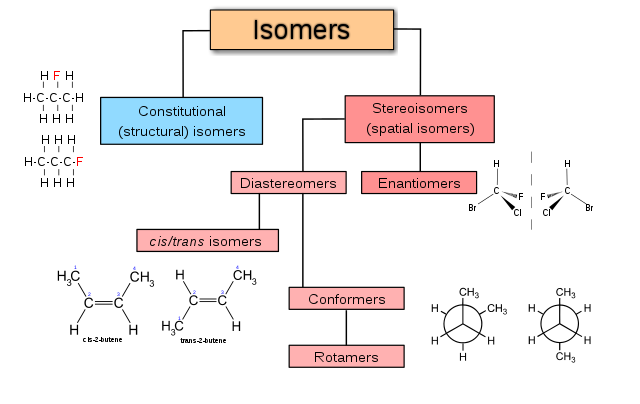
Geometrical isomerism is a type of stereoisomerism that arises due to the restricted rotation around a double bond or within a cyclic structure. In these compounds, atoms or groups attached to the carbon atoms cannot freely rotate, leading to different spatial arrangements.
Although the molecular formula and connectivity of atoms remain the same, the arrangement of substituent groups in space differs, resulting in different compounds called geometrical isomers.
These isomers often show different physical properties (melting point, boiling point, polarity) and sometimes different biological or pharmacological activities, which is important in pharmaceutical chemistry.
Conditions Required for Geometrical Isomerism
For geometrical isomerism to occur, the following conditions must be satisfied:
1. Restricted Rotation
There must be restricted rotation around a bond, usually due to:
- Carbon–carbon double bond (C=C)
- Ring structures (cycloalkanes)
Double bonds prevent free rotation because breaking the π bond requires significant energy.
2. Different Substituents
Each carbon atom involved in the double bond must have two different substituents.
Example:
CH₃–CH = CH–CH₃
(But-2-ene)
Each carbon of the double bond is attached to:
- H
- CH₃
Hence geometrical isomerism is possible.
3. Types of Geometrical Isomerism
Geometrical isomers are mainly described using:
- Cis–Trans Nomenclature
- E–Z Nomenclature (Cahn–Ingold–Prelog system)
Cis–Trans Nomenclature
This is the simplest and oldest system for naming geometrical isomers.
Cis Isomer
If similar groups are present on the same side of the double bond, the compound is called cis.
Example: cis-but-2-ene
Structure:
CH₃ CH₃
\ /
C = C
/ \
H H
Both CH₃ groups are on the same side.
Trans Isomer
If similar groups are on opposite sides of the double bond, the compound is called trans.
Example: trans-but-2-ene
Structure:
CH₃ H
\ /
C = C
/ \
H CH₃
The CH₃ groups are opposite each other.
Example 1: But-2-ene
- cis-but-2-ene
- trans-but-2-ene
These two molecules have the same molecular formula (C₄H₈) but different spatial arrangements.
Physical Differences
| Property | Cis Isomer | Trans Isomer |
| Polarity | Higher | Lower |
| Boiling point | Higher | Lower |
| Melting point | Lower | Higher |
| Stability | Less stable | More stable |
Reason: Steric repulsion between groups on the same side.
Limitations of Cis–Trans System
The cis–trans system cannot be used when:
- All four substituents are different.
- More than two substituents exist.
Example:
CHCl = CBrF
Here we cannot decide cis or trans easily.
To solve this problem, the E–Z system is used.
E–Z Nomenclature System
The E–Z nomenclature is based on the Cahn–Ingold–Prelog priority rules.
- E = Entgegen (German word meaning opposite)
- Z = Zusammen (German word meaning together)
Priority Rules (Cahn–Ingold–Prelog Rules)
To determine E or Z configuration:
Step 1: Assign Priority to Substituents
Priority depends on atomic number.
Higher atomic number = higher priority.
Example priority:
I > Br > Cl > S > O > N > C > H
Step 2: Determine Highest Priority Groups
On each carbon of the double bond, identify the higher priority group.
Step 3: Determine Orientation
Z Configuration
If the highest priority groups are on the same side, it is Z.
Example:
Z-but-2-ene
CH₃ CH₃
\ /
C = C
/ \
H H
High priority groups on the same side.
E Configuration
If the highest priority groups are on opposite sides, it is E.
Example:
E-but-2-ene
CH₃ H
\ /
C = C
/ \
H CH₃
High priority groups on opposite sides.
Example of E–Z Nomenclature
Example: 1-Bromo-1-chloro-2-fluoro-2-iodoethene
Step 1: Assign priorities.
Carbon 1:
- Br (priority 1)
- Cl (priority 2)
Carbon 2:
- I (priority 1)
- F (priority 2)
Step 2: Compare high-priority groups (Br and I).
If they are:
- Same side → Z isomer
- Opposite side → E isomer
Geometrical Isomerism in Cyclic Compounds
Geometrical isomerism also occurs in cyclic compounds due to restricted rotation.
Example: 1,2-dimethylcyclohexane
Cis form
Both CH₃ groups are on the same side of the ring.
Trans form
CH₃ groups are on opposite sides of the ring.
Importance of Geometrical Isomerism
Geometrical isomerism is very important in pharmaceutical chemistry because different isomers may show different biological activities.
Examples include:
1. Drug Activity
Some drugs exist as geometrical isomers with different pharmacological effects.
Example:
- Cisplatin – anticancer drug
- Transplatin – inactive
2. Biological Recognition
Enzymes and receptors are stereospecific, so only one isomer may bind effectively.
3. Differences in Physical Properties
Geometrical isomers differ in:
- Melting point
- Boiling point
- Solubility
- Dipole moment
Summary
Geometrical isomerism is a type of stereoisomerism resulting from restricted rotation around double bonds or cyclic structures. It leads to compounds having the same molecular formula but different spatial arrangements. These isomers are named using two systems:
- Cis–Trans system – used when identical groups are present.
- E–Z system – based on priority rules and used for complex molecules.
Understanding geometrical isomerism is essential in organic chemistry and pharmaceutical sciences because it influences drug activity, stability, and biological interactions.