
Apparent Volume of Distribution
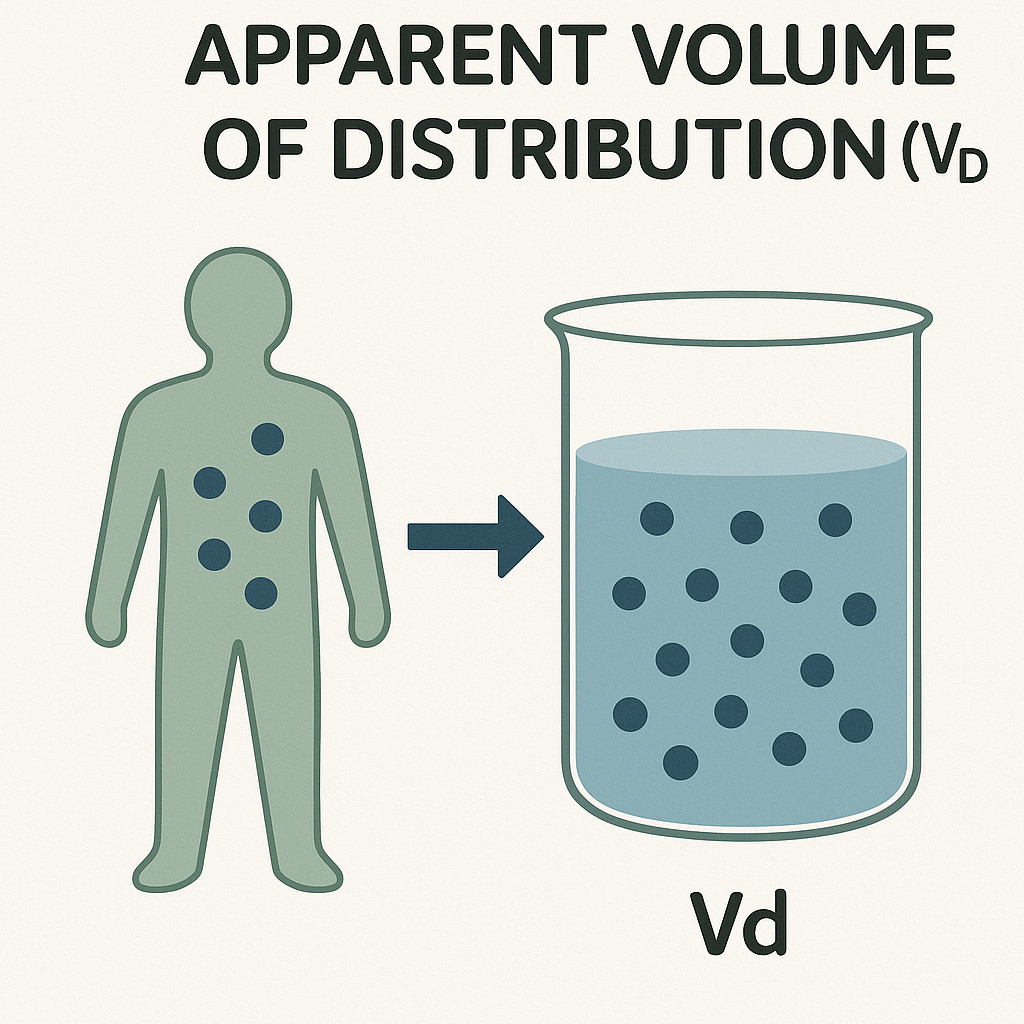
The apparent volume of distribution (Vd) is a fundamental pharmacokinetic parameter that describes how a drug is distributed throughout the body relative to the concentration of the drug in the plasma. It is termed “apparent” because it does not necessarily refer to a real physiological volume, but rather represents the theoretical volume that would be required to contain the total amount of the drug in the body at the same concentration as in the plasma. This value helps in understanding how extensively a drug distributes into body tissues and fluids and plays a major role in determining loading doses and interpreting plasma drug concentrations.
Definition and Formula
The apparent volume of distribution is defined mathematically as the ratio of the total amount of drug in the body (dose) to the plasma drug concentration at equilibrium. It is expressed using the formula:
Vd = Amount of drug in the body / Plasma drug concentration
The unit of Vd is typically in liters (L) or liters per kilogram of body weight (L/kg). This parameter provides insight into the drug’s distribution pattern—whether it remains in the blood, spreads to extracellular fluid, or penetrates deeply into tissues.
Interpretation of Vd Values
The value of Vd can vary significantly among different drugs. Drugs with a small volume of distribution (e.g., less than 5 L) are usually confined primarily to the plasma compartment, suggesting that the drug does not extensively leave the bloodstream. Such drugs are often large or highly bound to plasma proteins, which limits their ability to cross cell membranes.
Moderate Vd values (e.g., 10–20 L) indicate that the drug is distributed within extracellular fluids but not extensively into cells. Drugs with large volumes of distribution (e.g., greater than 40 L) suggest that the drug has widely distributed into body tissues, including fat, muscle, or specific organs. Lipophilic drugs, or those that strongly bind to tissue proteins, tend to exhibit large Vd values, indicating that a significant portion of the drug resides outside the vascular compartment.
Factors Affecting Volume of Distribution (Vd)
- Lipophilicity vs. Hydrophilicity of the Drug: One of the most influential factors affecting a drug’s volume of distribution is its solubility characteristics. Lipophilic (fat-soluble) drugs easily cross biological membranes and tend to accumulate in fatty tissues and organs, leading to a larger apparent volume of distribution. In contrast, hydrophilic (water-soluble) drugs are primarily confined to the aqueous compartments of the body such as plasma and interstitial fluid, resulting in a comparatively lower Vd.
- Plasma Protein Binding: The extent to which a drug binds to plasma proteins like albumin (for acidic drugs) or α1-acid glycoprotein (for basic drugs) directly influences its distribution. Drugs that are highly protein-bound remain largely within the vascular compartment, as only the free (unbound) fraction of the drug is able to cross membranes and distribute into tissues. Therefore, a higher degree of protein binding is typically associated with a smaller volume of distribution.
- Tissue Binding and Affinity: Drugs with high affinity for tissue proteins, lipids, or other intracellular components can become sequestered in tissues, effectively increasing their volume of distribution. For example, certain basic drugs tend to accumulate in acidic cellular compartments like lysosomes, while others may bind specifically to mitochondrial or nuclear proteins. This tissue-specific binding can lead to prolonged retention and an increased apparent Vd.
- Body Composition and Physiological Factors: Individual variations in body composition significantly impact drug distribution. Obese individuals have a higher proportion of adipose tissue, which provides a larger reservoir for lipophilic drugs, thereby increasing the Vd. Conversely, lean body mass affects the distribution of hydrophilic drugs. Changes in total body water, as seen in neonates or the elderly, can also influence Vd. Additionally, sex, age, and genetic differences can contribute to variations in tissue permeability and binding.
- Pathophysiological Conditions: Various disease states can alter fluid balance and tissue characteristics, subsequently affecting the volume of distribution. For example:
- Edema or congestive heart failure may expand the extracellular fluid volume, influencing hydrophilic drug distribution.
- Dehydration reduces fluid compartments, potentially lowering Vd.
- Liver or renal diseases can alter plasma protein levels and tissue perfusion, thereby modifying both plasma and tissue drug binding.
These conditions necessitate careful dose adjustments and clinical monitoring.
Clinical Significance of Vd
Understanding the volume of distribution is clinically important for multiple reasons. First, it is used to calculate the appropriate loading dose of a drug, which is the initial dose required to rapidly achieve a desired plasma concentration. The formula for calculating a loading dose is:
Loading Dose = Target concentration × Volume of Distribution / Bioavailability
Secondly, Vd provides valuable information about a drug’s localization. A low Vd suggests that the drug is mainly confined to the plasma and may be more suitable for treating conditions within the vascular system. Conversely, a high Vd indicates extensive tissue distribution, which may be ideal for drugs intended to act on intracellular targets or deep-seated tissues.
In cases of overdose or poisoning, knowledge of the Vd can guide treatment strategies. For instance, drugs with a low Vd may be more easily removed by dialysis because they are mainly present in the bloodstream. In contrast, drugs with a high Vd are sequestered in tissues, making them less accessible for removal by extracorporeal techniques.
Examples of Drugs with Varying Vd
Certain drugs serve as classic examples when illustrating volume of distribution. For instance, aminoglycosides such as gentamicin have a relatively low Vd (about 0.25 L/kg) and distribute primarily in extracellular fluids. In contrast, digoxin has a large Vd (up to 7 L/kg), indicating significant binding to muscle tissue. Chloroquine, a lipophilic antimalarial drug, has an extremely high Vd, sometimes exceeding 100 L/kg, due to its strong affinity for melanin and intracellular binding in various tissues.
Conclusion
The apparent volume of distribution is a key pharmacokinetic parameter that reflects how a drug disperses throughout the body’s compartments. Although it is a theoretical construct, it provides practical insight into the localization and behavior of drugs in the body. Influenced by properties such as lipophilicity, plasma protein binding, and tissue affinity, Vd determines how much of a drug is needed to achieve therapeutic plasma concentrations. Its relevance spans across clinical dosing, drug development, and emergency management of drug toxicity, making it an essential concept in the study of pharmacology.