

Introduction
The Indian Pharmacopoeia (IP) is the official compendium of standards for drugs manufactured and marketed in India. It contains a collection of authoritative standards and specifications for pharmaceutical substances, dosage forms, and pharmaceutical aids used in medical practice. These standards ensure the quality, purity, strength, and consistency of drugs available to the public.
The Indian Pharmacopoeia serves as a legal and scientific document that provides detailed guidelines for the identification, purity testing, assay, storage, and labeling of pharmaceutical products. It plays a vital role in maintaining the quality and safety of medicines used in healthcare.
The standards described in the Indian Pharmacopoeia are recognized by the Drugs and Cosmetics Act, 1940, which makes it mandatory for pharmaceutical manufacturers to comply with these standards during the production and quality control of drugs.
Definition of Pharmacopoeia
A pharmacopoeia is an official publication that contains a list of drugs along with their standards, tests, and specifications. It provides detailed information regarding the preparation, identification, purity, and strength of pharmaceutical substances and dosage forms.
Pharmacopoeias are published by government authorities or recognized scientific bodies to ensure that medicines available in the market meet established quality standards.
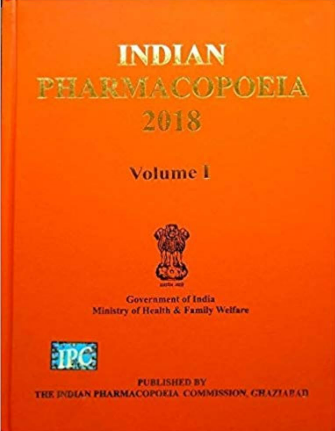
History of the Indian Pharmacopoeia
Before independence, India relied mainly on the British Pharmacopoeia for drug standards. However, after independence, the Government of India recognized the need to establish its own pharmacopoeial standards suited to the country’s pharmaceutical requirements.
In 1948, the Government of India formed the Indian Pharmacopoeia Committee under the chairmanship of Dr. B. N. Ghosh. The committee was responsible for preparing the first edition of the Indian Pharmacopoeia.
The first edition of the Indian Pharmacopoeia was published in 1955. Since then, several editions and addenda have been released to update drug standards and incorporate new medicines and analytical methods.
The Indian Pharmacopoeia continues to evolve to keep pace with advancements in pharmaceutical science and technology.
Indian Pharmacopoeia Commission
The Indian Pharmacopoeia Commission (IPC) is the organization responsible for publishing and updating the Indian Pharmacopoeia. It was established by the Government of India under the Ministry of Health and Family Welfare.
The IPC is located in Ghaziabad, Uttar Pradesh, and is responsible for setting drug standards for medicines produced and marketed in India.
The major responsibilities of the Indian Pharmacopoeia Commission include:
- Publishing the Indian Pharmacopoeia
- Revising and updating pharmacopoeial standards
- Developing analytical methods for drug testing
- Promoting quality assurance in pharmaceuticals
- Providing reference standards for drug analysis
Objectives of the Indian Pharmacopoeia
The Indian Pharmacopoeia has several important objectives in the pharmaceutical sector.
One of its primary objectives is to establish official standards for drugs and pharmaceutical substances. These standards ensure that medicines meet specific requirements for quality and safety.
Another objective is to provide reliable analytical methods for drug testing. These methods help quality control laboratories determine whether pharmaceutical products comply with established standards.
The Indian Pharmacopoeia also aims to protect public health by ensuring that only safe and effective medicines are available in the market.
Additionally, it helps maintain uniformity and consistency in pharmaceutical manufacturing and quality control practices across the country.
Contents of the Indian Pharmacopoeia
The Indian Pharmacopoeia contains a wide range of information related to pharmaceutical substances and dosage forms. It generally includes the following sections:
General Notices
General notices provide important information regarding the interpretation and application of pharmacopoeial standards.
Monographs
Monographs are detailed descriptions of individual drugs or pharmaceutical substances. Each monograph contains information about:
- Description of the drug
- Identification tests
- Purity tests
- Assay methods
- Storage conditions
- Labeling requirements
General Chapters
General chapters provide information about analytical techniques and testing procedures used in pharmaceutical quality control.
Examples include:
- Sterility testing
- Dissolution testing
- Chromatographic methods
Appendices
Appendices contain additional information such as reagents, reference standards, and preparation of solutions used in pharmacopoeial tests.
Importance of the Indian Pharmacopoeia
The Indian Pharmacopoeia plays a vital role in maintaining the quality and safety of medicines in India. It provides scientifically validated methods for testing pharmaceutical substances and ensures that drugs meet established standards before reaching patients.
Pharmaceutical manufacturers, quality control laboratories, regulatory authorities, and healthcare professionals rely on the Indian Pharmacopoeia as an authoritative reference for drug standards.
The pharmacopoeia also supports the regulatory framework of the pharmaceutical industry by providing legally enforceable standards for drug quality.
Advantages of the Indian Pharmacopoeia
The Indian Pharmacopoeia offers several advantages to the pharmaceutical industry and healthcare system.
It ensures uniform quality standards for drugs across the country. It also provides standardized testing procedures that enable accurate evaluation of pharmaceutical products.
By establishing strict quality standards, the Indian Pharmacopoeia helps protect patients from substandard or adulterated medicines.
Furthermore, it promotes scientific research and development in the pharmaceutical field by providing validated analytical methods and reference materials.
Conclusion
The Indian Pharmacopoeia is an essential document in the pharmaceutical sector that establishes official standards for drugs used in India. It ensures that medicines meet strict requirements for quality, safety, and effectiveness before they reach patients.
Through the efforts of the Indian Pharmacopoeia Commission, the pharmacopoeia continues to be updated to incorporate new drugs, modern analytical techniques, and improved quality standards. As a result, the Indian Pharmacopoeia plays a crucial role in safeguarding public health and supporting the growth of the pharmaceutical industry in India.