
The gonads are specialized reproductive organs that serve as the cornerstone of the human reproductive system. They play a pivotal role in both the production of gametes—the reproductive cells necessary for sexual reproduction—and the secretion of sex hormones, which regulate sexual development, secondary sexual characteristics, and reproductive functions. In males, the gonads are known as the testes, while in females, they are called the ovaries. Both organs are essential for maintaining fertility and ensuring the continuity of genetic material from one generation to the next.
Hormones Produced by the Gonads
1. Male Gonads (Testes):
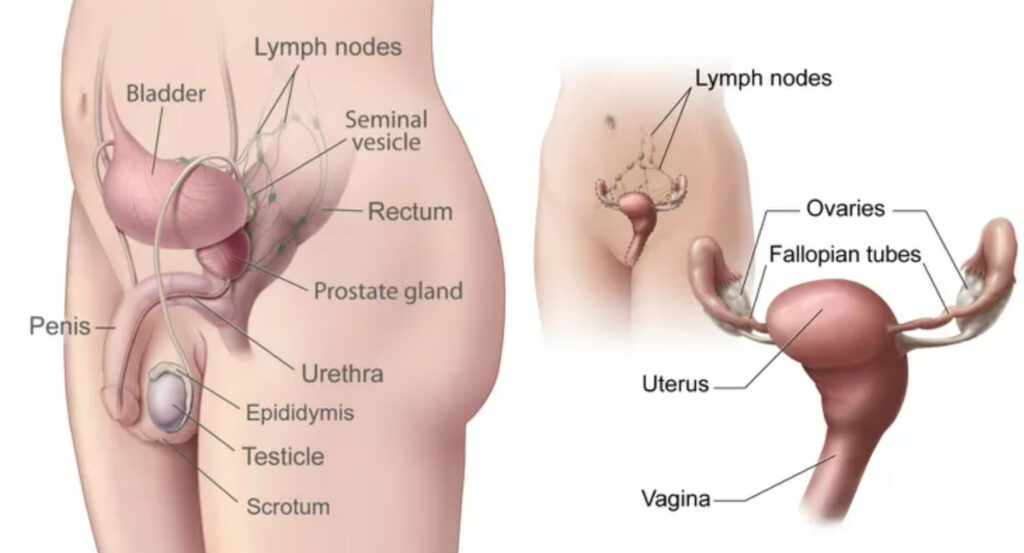
The testes are paired oval organs located in the scrotal sac outside the body cavity, which provides an optimal temperature for sperm production. Their endocrine portion consists of Leydig cells (interstitial cells) that secrete hormones critical for male physiology.
Testosterone:
Testosterone is the principal male sex hormone, synthesized by the Leydig cells. It is primarily responsible for the development of male reproductive organs such as the penis, scrotum, and prostate gland. Additionally, testosterone stimulates the process of spermatogenesis (sperm production) within the seminiferous tubules.
Beyond reproduction, testosterone exerts widespread effects on the body, including the development of secondary sexual characteristics such as deepening of the voice, growth of facial and body hair, increased muscle mass, and the maintenance of bone density and libido. It also influences mood, energy levels, and overall male vitality.
2. Female Gonads (Ovaries):
The ovaries are two almond-shaped organs located on either side of the uterus within the pelvic cavity. They function both as exocrine glands (by releasing ova) and endocrine glands (by secreting hormones).
Estrogen:
Estrogen refers to a group of hormones—estradiol, estrone, and estriol—that are primarily produced by the developing follicles within the ovaries. These hormones are vital for the growth, maturation, and maintenance of the female reproductive tract, including the uterus, fallopian tubes, and vagina. Estrogen also plays a crucial role in the development of secondary sexual characteristics, such as breast development, widening of the hips, and the regulation of the menstrual cycle. Furthermore, estrogen contributes to the maintenance of healthy skin, bone metabolism, and emotional well-being.
- Progesterone:
Progesterone is mainly secreted by the corpus luteum, a temporary endocrine structure formed in the ovary after ovulation. This hormone plays a critical role in preparing the uterus for implantation of a fertilized egg by thickening the endometrial lining. If pregnancy occurs, progesterone helps maintain the uterine environment necessary for fetal development. In the absence of fertilization, a decline in progesterone levels leads to the shedding of the uterine lining, resulting in menstruation.
Functions of the Gonads
1. Male Gonads (Testes):
Sperm Production (Spermatogenesis): Within the seminiferous tubules of the testes, sperm cells are continuously produced from spermatogonia under the influence of follicle-stimulating hormone (FSH) and testosterone. This process ensures the male’s ability to fertilize the female ovum, enabling sexual reproduction.
Development of Male Sexual Characteristics: Testosterone orchestrates the development of primary sexual traits (such as reproductive organ formation) and secondary sexual traits (such as voice deepening, body hair growth, and muscular development) that distinguish males during puberty and adulthood.
2. Female Gonads (Ovaries):
Egg (Ovum) Production (Oogenesis): Oogenesis is the process by which the ovaries produce mature egg cells. Each month, under the influence of FSH and luteinizing hormone (LH), a follicle matures and releases an ovum through ovulation. This ovum may then be fertilized by a sperm, leading to conception.
Development of Female Sexual Characteristics: Estrogen regulates the formation and maintenance of female reproductive organs and controls the menstrual cycle, while also contributing to secondary sexual characteristics such as breast enlargement, fat distribution in hips and thighs, and smooth skin texture. Together, estrogen and progesterone maintain the hormonal balance necessary for fertility and reproductive health.
Conclusion
In summary, the gonads are integral components of the reproductive and endocrine systems. They not only produce the gametes essential for reproduction but also secrete hormones that shape sexual identity, influence physical development, and regulate reproductive cycles. The harmonious function of these organs ensures both reproductive capability and the expression of male and female physiological traits.