Anti-tussive agents, commonly referred to as cough suppressants, are pharmaceutical substances used to reduce or suppress the cough reflex. Coughing is a protective reflex that helps clear the airways of mucus, irritants, foreign particles, and microbes. However, persistent or non-productive coughing can be distressing and may indicate an underlying pathology, making the use of anti-tussive agents necessary in such cases.
These agents are primarily utilized in conditions where cough serves no useful purpose and becomes debilitating, such as in dry, hacking coughs, or in specific respiratory infections or allergic conditions.
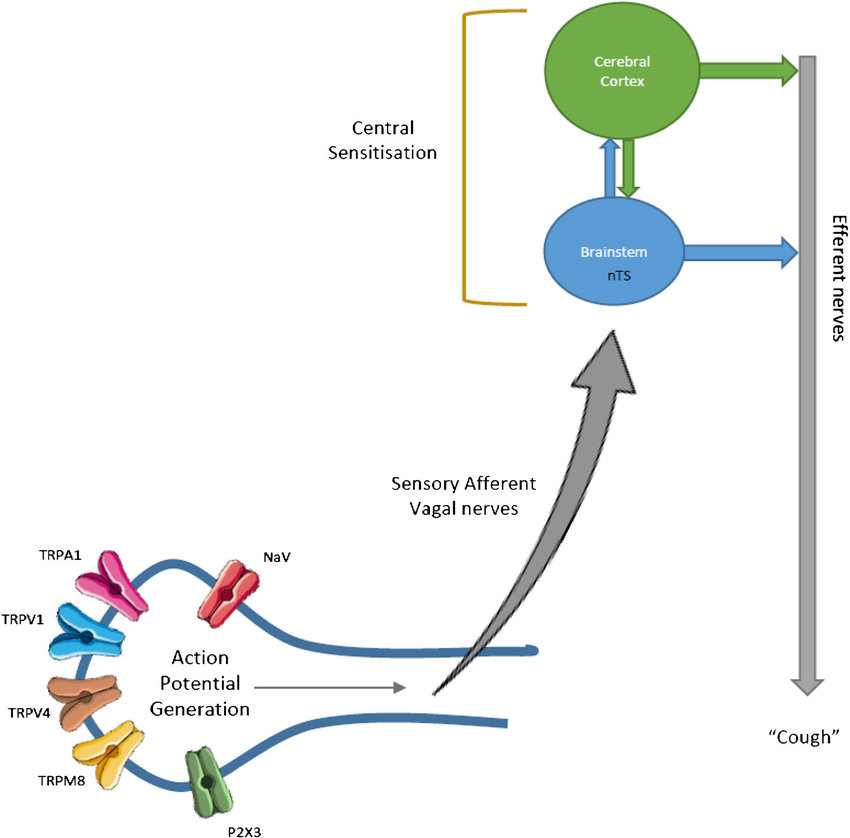
Classification of Anti-Tussive Agents
Anti-tussive agents can be classified into different categories based on their primary mechanisms of action:
1. Opioid-Based (Narcotic) Anti-Tussives:
These agents exert their effect centrally, acting on the cough center in the medulla oblongata of the brain. By stimulating opioid receptors, they suppress the cough reflex. While effective, they carry the risk of sedation, respiratory depression, dependence, and constipation, and thus are prescribed with caution.
Examples:
- Codeine: A commonly used mild opioid; often combined with other agents like guaifenesin or antihistamines.
- Hydrocodone: More potent than codeine; often reserved for severe cough.
Mechanism:
Depresses the cough center, reducing the frequency and intensity of coughing.
Binds to mu-opioid receptors in the CNS.
2. Non-Opioid Anti-Tussives:
These agents also suppress cough but lack the addictive potential and adverse opioid effects. They are safer for broader use, especially in children and elderly patients.
Sub-classified as:
a. Centrally Acting Non-Opioid Agents
These act on the brainstem to inhibit the cough reflex without engaging opioid receptors.
Example: Dextromethorphan
- Structurally related to opioids but lacks analgesic and addictive properties.
- Mechanism: Acts as a NMDA receptor antagonist, interfering with neurotransmission related to cough reflex.
b. Peripherally Acting (Locally Acting) Non-Opioid Agents
These act on the respiratory tract’s local sensory receptors, particularly the stretch receptors, reducing the cough impulse.
Example: Benzonatate
- An anesthetic-like drug that numbs the stretch receptors in the bronchi, lungs, and pleura.
- Mechanism: Suppresses afferent signals to the CNS by anesthetizing vagal nerve endings.
Pharmacological Actions of Anti-Tussive Agents
1. Opioid-Based Anti-Tussives:
Act on the central nervous system (CNS) to suppress the cough reflex.
It also exerts analgesic (pain-relieving) effects.
2. Non-Opioid Anti-Tussives:
Centrally Acting (Dextromethorphan):
Suppress the cough reflex by affecting the CNS.
NMDA receptor antagonist properties may contribute to its anti-tussive effects.
Locally Acting (Benzonatate):
Anesthetizes and numbs the stretch receptors in the respiratory passages, reducing the urge to cough.
Dose of Anti-Tussive Agents
Dosages should always be individualized based on patient age, weight, comorbidities, and formulation strength.
| Drug | Adult Dose | Pediatric Dose |
|---|---|---|
| Codeine | 10–20 mg every 4–6 hours (max 120 mg/day) | Use with extreme caution; not recommended <12 years |
| Dextromethorphan | 10–20 mg every 4 hours, or 30 mg every 6–8h | 5–10 mg every 4 hours (not for children <4 years) |
| Benzonatate | 100–200 mg TID (maximum 600 mg/day) | Not recommended under 10 years due to choking risk |
Indications of Anti-Tussive Agents
Indicate anti-tussive agents for providing symptomatic relief from coughing associated with various conditions, including:
1. Respiratory Infections:
Alleviate coughing from viral or bacterial infections, such as the common cold or bronchitis.
2. Allergies:
Provide relief from coughing associated with allergic reactions.
3. Chronic Respiratory Conditions:
Used to manage persistent coughing in chronic conditions like chronic obstructive pulmonary disease (COPD).
4. Postnasal Drip:
Reduce coughing caused by postnasal drip.
Contraindications of Anti-Tussive Agents
While generally safe, anti-tussive agents have certain contraindications:
1. Opioid Allergy:
Contraindicated in individuals with known hypersensitivity to opioids.
2. Respiratory Depression:
Avoid using opioid-based anti-tussives in cases of respiratory depression or severe respiratory conditions, as they are contraindicated for individuals with such conditions.
3. Children Under Two Years:
Some formulations, especially those containing opioids, are contraindicated in young children.
4. Interaction with Monoamine Oxidase Inhibitors (MAOIs):
Certain anti-tussive agents, particularly dextromethorphan, may interact adversely with MAOIs.
5. Pregnancy and Lactation:
Pregnant or lactating individuals should consult healthcare providers before using anti-tussive agents.
Anti-tussive agents are crucial in relieving coughing associated with various respiratory conditions. Understanding their classification, pharmacological actions, appropriate dosage, indications, and contraindications is essential for safe and effective use in individuals experiencing cough-related symptoms.