Socio Cultural Factors Related to Health: Health is not merely the absence of disease, but a state of complete physical, mental, and social well-being, as defined by the World Health Organization. To understand health in its fullest essence, we must look beyond biology and clinical conditions and delve into the complex interplay of social, cultural, economic, and psychological forces that shape individual and community health. These forces are collectively referred to as socio-cultural factors, and they profoundly influence how health is perceived, experienced, treated, and maintained in every society.
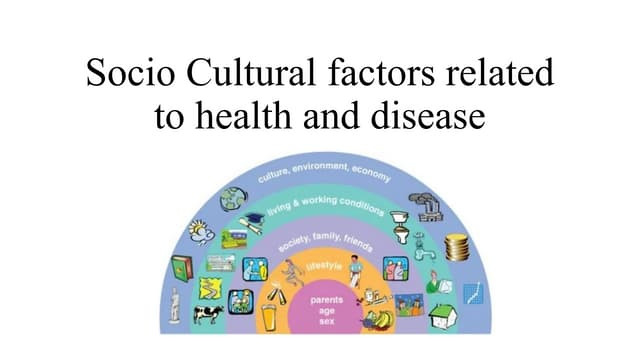
Health and disease do not exist in a vacuum—they are socially constructed phenomena, embedded in the values, beliefs, traditions, and structures of the society in which individuals live. The human body may be universal, but the way societies interpret illness and promote well-being varies enormously across cultures.
Socio Cultural Factors Related to Health
1. Social Class and Socioeconomic Status (SES)
One of the most significant socio-cultural determinants of health is socioeconomic status—a measure that includes income, education, occupation, and living conditions. Socioeconomic status affects:
- Access to healthcare: Poorer individuals often lack access to preventive services, timely medical attention, and quality healthcare facilities.
- Nutritional status: Low-income families may be unable to afford balanced meals, leading to undernutrition or overconsumption of unhealthy, cheap processed foods.
- Living conditions: Crowded, unhygienic environments lead to the spread of infectious diseases.
- Educational attainment: A higher level of education is strongly linked to better health awareness, self-care, and utilization of health services.
Thus, poverty becomes a breeding ground for disease, while affluence often promotes better health outcomes. Yet paradoxically, modern sedentary lifestyles and overconsumption among the affluent may lead to non-communicable diseases such as obesity, diabetes, and cardiovascular illnesses.
2. Cultural Beliefs and Practices
Culture shapes how individuals understand health, interpret symptoms, and seek treatment. In many traditional societies, illness may be attributed not to germs or physiology but to supernatural forces, evil spirits, or the violation of taboos. As a result:
- People may seek help from faith healers or traditional practitioners rather than qualified medical professionals.
- Cultural taboos may restrict the intake of certain nutritious foods during pregnancy or illness.
- Beliefs around cleanliness, menstruation, childbirth, or death may influence health behavior.
Moreover, culture affects the acceptance of modern medicine. Vaccination, contraception, blood transfusion, and organ donation may be welcomed in one community and resisted in another due to religious or cultural prohibitions.
3. Gender Roles and Discrimination
In many parts of the world, gender inequality continues to exert a powerful negative influence on health. Women, in particular, are vulnerable to health problems because of:
- Social discrimination: Preference for sons may lead to neglect of girls’ nutrition and healthcare.
- Restricted autonomy: Women may not be allowed to visit health centers without permission or accompaniment.
- Reproductive burden: Repeated pregnancies, unsafe abortions, and lack of family planning compromise women’s health.
- Violence and abuse: Domestic violence, sexual exploitation, and societal stigma take a significant toll on women’s physical and mental health.
On the other hand, toxic masculinity in some cultures discourages men from expressing emotional distress or seeking help, leading to untreated mental illness, substance abuse, or suicide.
4. Religion and Spirituality
Religion can be a source of both healing and harm. On one hand, it offers comfort, hope, and community support, encouraging healthy lifestyles (e.g., avoiding alcohol or tobacco). On the other hand:
- Certain religious beliefs may discourage blood transfusion, vaccination, or surgical procedures.
- During epidemics, some groups may rely solely on prayer or rituals instead of following medical guidelines.
- Dietary restrictions (such as fasting or avoiding certain food groups) may complicate treatment in diabetic or malnourished patients.
Therefore, healthcare providers must be sensitive to religious values, working with spiritual leaders when appropriate, to bridge the gap between faith and medicine.
5. Family Structure and Social Support
In traditional cultures, the family is the primary unit of caregiving. Joint or extended families provide emotional support, physical care, and decision-making assistance during illness. A strong family system:
- Improves recovery rates,
- Reduces psychological stress,
- Encourages adherence to treatment.
However, modern urbanization and migration have led to nuclear families and social isolation, especially among the elderly. Loneliness, neglect, and lack of caregiving contribute to poor health outcomes, particularly mental health problems like depression and anxiety.
6. Education and Health Literacy
Education—especially health education—is one of the strongest weapons against disease. It empowers individuals to:
- Understand symptoms and seek timely help,
- Follow treatment regimens correctly,
- Practice hygiene, sanitation, and preventive health behaviors.
Lack of health literacy often leads to delayed diagnosis, misuse of medication, poor treatment compliance, and vulnerability to misinformation and quackery.
7. Occupational and Environmental Conditions
An individual’s occupation plays a significant role in shaping their health. For example:
- Factory workers may be exposed to harmful chemicals, dust, and noise.
- Agricultural laborers face physical strain, exposure to pesticides, and infections.
- Informal sector workers may lack insurance or medical benefits.
Inadequate occupational safety standards, poor ventilation, or overwork can lead to both physical and mental illness.
8. Social Stigma and Discrimination
Certain diseases—like HIV/AIDS, tuberculosis, leprosy, and mental disorders—carry a strong social stigma in many cultures. As a result:
- Patients may hide their illness, delay seeking treatment, or suffer in silence.
- Social ostracization leads to psychological trauma, low self-esteem, and economic hardship.
- Women, minorities, and the LGBTQ+ community may face intersectional discrimination, amplifying their health vulnerabilities.
Health systems must therefore address not only the clinical but also the social wounds of illness.
Conclusion
Health is not just a medical or biological condition—it is a mirror of the society in which we live. The socio-cultural environment shapes every stage of life, from birth to death, influencing how we live, fall ill, and seek healing. Disease is not simply the malfunctioning of a body part; it is the consequence of social structures, cultural beliefs, and economic realities.
To improve public health, it is imperative to address social injustice, promote cultural competence among health professionals, and design inclusive policies that reflect the values, needs, and beliefs of diverse communities.
In essence, no health intervention can succeed without understanding the human story behind the illness—a story written in the language of culture, society, and collective memory.