1. Concept of Disease Prevention
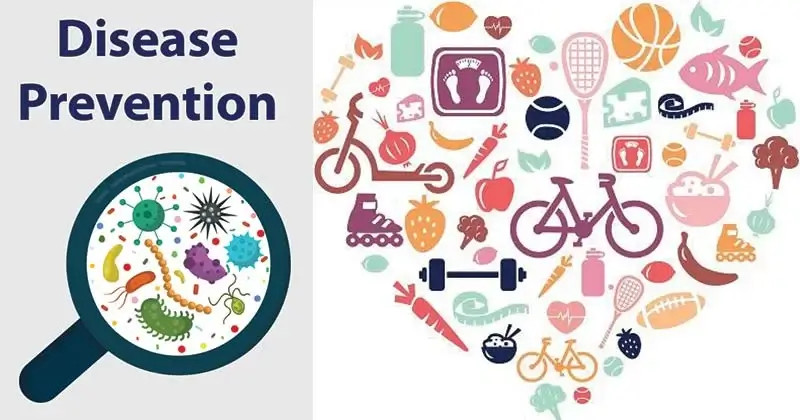
Disease prevention refers to strategies and measures that aim to reduce the occurrence of disease, stop its progression, or minimize its consequences. These actions are taken before, during, or after the onset of disease to ensure better health outcomes.
1.1 Objectives of Disease Prevention
- To reduce the risk of acquiring a disease
- To detect diseases early and start prompt treatment
- To halt or slow the progression of disease
- To minimize complications and disabilities
- To improve quality of life and increase life expectancy
2. Levels of Prevention
The concept of disease prevention is broadly divided into five levels, each with a specific focus:
2.1 Primordial Prevention
This is the earliest level of prevention. It aims to prevent the emergence of risk factors themselves.
Example:
- Promoting healthy lifestyle habits among children (e.g., good nutrition, physical activity, avoiding smoking and alcohol).
- Regulating marketing of junk food to prevent obesity and diabetes.
Key Interventions:
- Health education
- Legislation (e.g., anti-tobacco laws)
- Environmental sanitation
2.2 Primary Prevention
This level is aimed at preventing the onset of disease in individuals who are currently healthy but at risk.
Example:
- Immunization to prevent infectious diseases like measles or hepatitis B
- Using mosquito nets to prevent malaria
Key Interventions:
- Vaccination programs
- Use of prophylactic drugs (e.g., iron supplements for anemia)
- Vector control (e.g., anti-larval measures)
- Health promotion (diet, exercise, stress management)
2.3 Secondary Prevention
This level involves early detection and prompt treatment of diseases before they cause significant harm.
Example:
- Screening for high blood pressure or breast cancer
- Diagnosing and treating tuberculosis at an early stage
Key Interventions:
- Screening programs (e.g., Pap smear, mammography)
- Periodic medical checkups
- Prompt treatment and follow-up
2.4 Tertiary Prevention
This level focuses on limiting disability, restoring function, and preventing complications after a disease has set in.
Example:
- Rehabilitation of stroke patients
- Physical therapy after orthopedic surgery
Key Interventions:
- Long-term treatment and rehabilitation
- Occupational therapy
- Use of assistive devices (e.g., crutches, hearing aids)
2.5 Quaternary Prevention (Emerging Concept)
This refers to preventing over-medicalization and protecting patients from unnecessary or harmful medical interventions.
Example:
- Avoiding overuse of antibiotics
- Stopping non-essential investigations
Key Interventions:
- Evidence-based practice
- Clinical audits
- Ethical prescription behavior
3. Concept of Disease Control
While disease prevention focuses on avoiding the occurrence of diseases, disease control aims to reduce the incidence, prevalence, and impact of diseases in the community. Control measures may be temporary or sustained depending on the nature of the disease.
3.1 Definition of Disease Control
“Disease control refers to the reduction of disease incidence, prevalence, morbidity, or mortality to a locally acceptable level due to deliberate efforts. Continued intervention measures are required to maintain the reduction.” — WHO
4. Methods of Disease Control
Disease control involves various public health strategies which may differ depending on whether the disease is infectious or non-communicable.
4.1 Control of Infectious Diseases
Key strategies include:
- Isolation and quarantine of cases
- Vaccination and mass immunization
- Vector control (e.g., for malaria, dengue)
- Safe water and sanitation
- Personal hygiene promotion
- Surveillance and outbreak response
- Prophylactic drug administration
4.2 Control of Non-Communicable Diseases (NCDs)
NCDs like diabetes, hypertension, cancer, and mental health disorders are now leading causes of death globally.
Key strategies include:
- Health education and lifestyle modification
- Regular screening and early diagnosis
- Chronic disease management (e.g., adherence to anti-hypertensives)
- Reduction of risk factors (tobacco, alcohol, sedentary life)
- Policy interventions (e.g., sugar tax, anti-smoking legislation)
5. Measures of Effectiveness in Disease Control
- Reduction in disease incidence and prevalence
- Decrease in hospital admissions
- Improved quality of life scores
- Increased treatment adherence
- Reduced disability-adjusted life years (DALYs)
6. Role of Pharmacists in Prevention and Control
Pharmacists are uniquely positioned to contribute significantly to disease prevention and control.
Roles include:
- Educating the public about risk factors, vaccines, and preventive behaviors
- Participating in immunization drives
- Identifying drug interactions and adverse drug reactions
- Encouraging adherence to long-term therapies
- Monitoring chronic diseases through patient counseling
- Promoting rational use of medicines to avoid resistance
- Contributing to pharmacovigilance and health surveillance
Conclusion
The concepts of disease prevention and control are essential pillars of public health and healthcare practice. They aim to enhance the quality of life, reduce healthcare costs, and improve population health outcomes. Pharmacists, as accessible healthcare professionals, play a crucial role in all levels of prevention and in supporting the control of both communicable and non-communicable diseases. For M.Pharm students, understanding and applying these concepts is not only an academic requirement but a professional responsibility.