

Tirzepatide is one of the most innovative and advanced pharmacological therapies currently available for the management of Type 2 Diabetes Mellitus and obesity. Over the past few years, it has attracted significant attention in both clinical practice and research due to its unprecedented efficacy in improving glycemic control while simultaneously promoting substantial and sustained weight loss.
Traditionally, the treatment of type 2 diabetes has relied on medications that primarily target a single pathway, such as insulin secretion, insulin sensitivity, or glucose absorption. However, the pathophysiology of diabetes is multifactorial, involving impaired insulin secretion, insulin resistance, dysregulated incretin hormones, and altered appetite signaling. Tirzepatide addresses these complexities through a novel dual-incretin mechanism, making it a breakthrough in modern diabetology and metabolic therapy.


Tirzepatide is the first-in-class dual agonist of two key incretin hormones:
These hormones play crucial roles in regulating postprandial insulin secretion, glucagon suppression, gastric emptying, and appetite control. By simultaneously activating both receptors, Tirzepatide enhances insulin release in a glucose-dependent manner, reduces hepatic glucose production, delays gastric emptying, and significantly decreases food intake. This synergistic action results in improved glycemic control and marked weight reduction, often exceeding that seen with traditional GLP-1 receptor agonists alone.
Developed as a once-weekly subcutaneous injectable therapy, Tirzepatide offers improved patient compliance compared to daily regimens. Its long half-life and sustained receptor activation allow for consistent metabolic control with fewer injections, making it particularly convenient for long-term disease management.
Clinical trials, particularly the SURPASS (for diabetes) and SURMOUNT (for obesity) programs, have demonstrated that Tirzepatide not only reduces HbA1c levels more effectively than many existing therapies but also leads to weight loss comparable to, or even greater than, some bariatric interventions in certain populations. These findings have positioned Tirzepatide as a potential “game-changer” in both endocrinology and obesity medicine.
Another important aspect of Tirzepatide is its potential to address cardiometabolic risk factors, including:
- Reduction in body weight and visceral fat
- Improvement in lipid profiles
- Lowering of blood pressure
- Enhanced insulin sensitivity
These effects collectively contribute to a reduced risk of complications such as cardiovascular disease, which is a leading cause of morbidity and mortality in patients with type 2 diabetes.
Despite its remarkable benefits, Tirzepatide is not without limitations. Like other incretin-based therapies, it may cause gastrointestinal side effects such as nausea, vomiting, and diarrhea, especially during the initial dose-escalation phase. Additionally, long-term safety data and cost considerations remain important factors influencing its widespread use.
In this detailed guide, we will comprehensively explore Tirzepatide, covering its mechanism of action, pharmacokinetics, clinical uses, dosage regimens, therapeutic benefits, adverse effects, and comparison with other antidiabetic agents, providing a complete understanding suitable for both academic and clinical perspectives.
What is Tirzepatide?

Tirzepatide is a novel injectable medication used primarily for managing type 2 diabetes and promoting weight loss. It belongs to a new class of drugs known as:
Dual GIP and GLP-1 receptor agonists
Unlike traditional diabetes medications that target a single pathway, Tirzepatide works on two incretin hormones:
- GLP-1 (Glucagon-like peptide-1)
- GIP (Glucose-dependent insulinotropic polypeptide)
These hormones play a crucial role in:
- Regulating blood sugar levels
- Enhancing insulin secretion
- Reducing appetite
This dual action makes Tirzepatide significantly more effective than many older treatments.
Mechanism of Action
Tirzepatide works through multiple pathways, making it a highly efficient metabolic regulator.
1. Increased Insulin Secretion
It stimulates the pancreas to release insulin in response to elevated blood glucose levels.
2. Reduced Glucagon Levels
It suppresses glucagon secretion, which helps prevent excess glucose production by the liver.
3. Delayed Gastric Emptying
Food stays longer in the stomach, leading to:
- Reduced hunger
- Improved satiety
4. Appetite Suppression
By acting on brain receptors, it reduces cravings and calorie intake.
5. Enhanced Insulin Sensitivity
It improves how the body responds to insulin, especially in obese individuals.

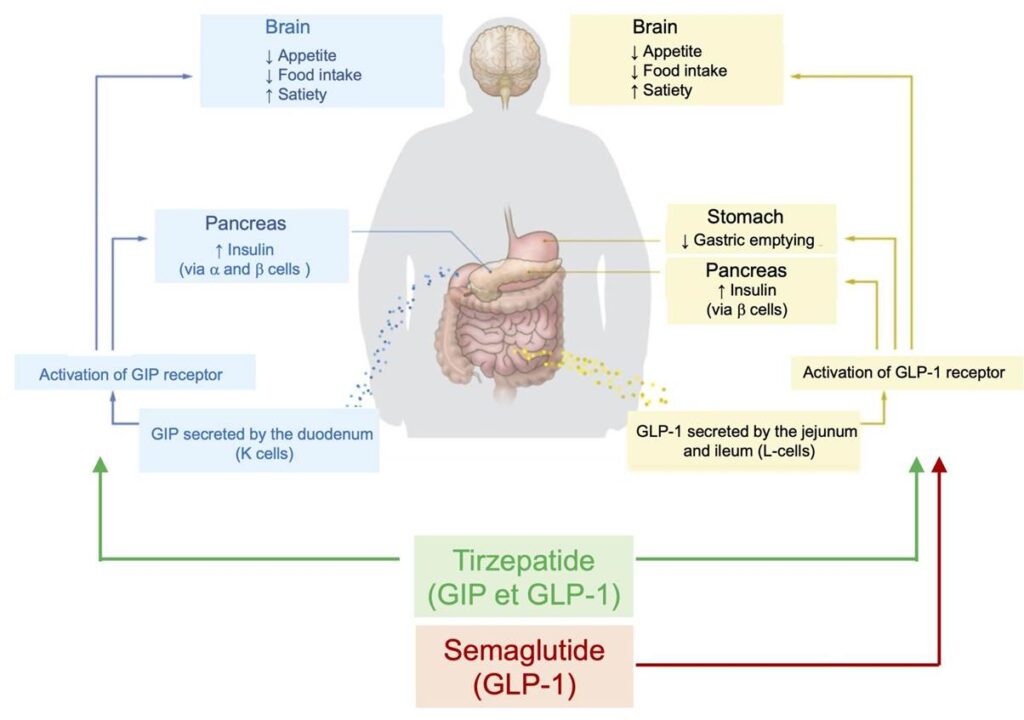
Result:
- Better glycemic control
- Significant weight reduction
Uses of Tirzepatide
Tirzepatide is approved and widely used for multiple metabolic conditions.
Primary Uses:
1. Type 2 Diabetes Mellitus
- Helps lower HbA1c levels
- Improves fasting and postprandial glucose
2. Weight Loss / Obesity Management
- Reduces body weight significantly
- Helps control appetite
3. Insulin Resistance
- Improves metabolic health
- Reduces risk of complications
Off-Label Uses (in some cases):
- Metabolic syndrome
- Pre-diabetes management
- Polycystic Ovary Syndrome (PCOS) (under medical supervision)
Tirzepatide vs Other Diabetes Medications
| Drug | Mechanism | Weight Effect | Frequency | Effectiveness |
| Tirzepatide | GLP-1 + GIP | High weight loss | Weekly | Very High |
| Metformin | Insulin sensitivity | Neutral | Daily | Moderate |
| Insulin | Direct glucose control | Weight gain | Daily | High |
| Semaglutide | GLP-1 only | High | Weekly | High |
Key Insight:
Tirzepatide often shows better weight loss and glycemic control compared to GLP-1 agonists alone.
Dosage and Administration
Starting Dose: 2.5 mg once weekly
Dose Escalation:
- Increased gradually every 4 weeks
- Common doses: 5 mg, 10 mg, 15 mg
How to Use:
- Subcutaneous injection
- Sites: abdomen, thigh, or upper arm
Important Tips:
- Use on the same day each week
- Rotate injection sites
- Follow doctor’s instructions strictly
Side Effects of Tirzepatide
Like all medications, Tirzepatide may cause side effects.
Common Side Effects:
These are the most frequently reported adverse effects and are primarily related to the gastrointestinal system:
Nausea
Vomiting
Diarrhea
Constipation
Reduced appetite
These effects are largely due to the drug’s action on incretin pathways, which slow gastric emptying and influence appetite regulation. In most cases, these symptoms are transient and improve as the body adapts to the medication over time.
Serious Side Effects (Rare but Important):
Although uncommon, some adverse effects may be severe and require immediate medical attention:
Pancreatitis: Patients may experience severe abdominal pain radiating to the back, often accompanied by nausea and vomiting.
Gallbladder Disease (e.g., gallstones, cholecystitis): Rapid weight loss associated with Tirzepatide may increase the risk of gallbladder-related complications.
Severe Gastrointestinal Issues: Persistent vomiting, dehydration, or severe abdominal discomfort may indicate a more serious condition.
When to Seek Immediate Medical Attention
Patients should be advised to seek urgent care if they experience:
- Severe or persistent abdominal pain
- Signs of dehydration (e.g., dizziness, reduced urination)
- Continuous vomiting or inability to tolerate fluids
- Symptoms suggestive of pancreatitis or gallbladder disease
Clinical Insight
The side effect profile of Tirzepatide is generally consistent with other incretin-based therapies but may be slightly more pronounced due to its dual mechanism. However, these adverse effects are often manageable with gradual dose titration, dietary modifications, and proper patient education.
Overall, while side effects exist, the benefit–risk profile of Tirzepatide remains highly favorable, particularly in patients with type 2 diabetes and obesity who require both glycemic control and weight reduction.
Benefits of Tirzepatide
1. Significant Weight Loss
Patients may lose 10–20% of body weight
2. Better Blood Sugar Control
- Reduces HbA1c effectively
3. Cardiovascular Benefits
- May reduce risk of heart disease
4. Appetite Control
- Helps in long-term weight management
5. Improved Quality of Life
- Increased energy
- Better metabolic health
Diet and Lifestyle with Tirzepatide
For best results, combine Tirzepatide with:
Healthy Diet:
- Low sugar intake
- High fiber foods
- Balanced protein
Exercise:
- 30–45 minutes daily
- Cardio + strength training
Lifestyle Changes:
- Adequate sleep
- Stress management
Who Should Use Tirzepatide?
Suitable for:
- Adults with type 2 diabetes
- Overweight or obese individuals
- Patients not responding to other treatments
Avoid if:
- Type 1 diabetes
- History of pancreatitis
- Severe gastrointestinal disorders
- Pregnancy (consult doctor)
Frequently Asked Questions (FAQs)
Q1. Is Tirzepatide safe for long-term use?
Yes, under medical supervision, it is considered safe for long-term use.
Q2. How quickly does Tirzepatide work?
You may see results within 4–8 weeks, with continued improvement over time.
Q3. Can Tirzepatide replace insulin?
In some cases, yes — but only under doctor guidance.
Q4. Does Tirzepatide help in weight loss?
Yes, it is one of the most effective medications for weight reduction.
Q5. Can non-diabetics use Tirzepatide?
It may be used for obesity management under medical supervision.
Conclusion
Tirzepatide is a groundbreaking medication that offers a dual benefit of blood sugar control and weight loss. Its unique mechanism targeting both GLP-1 and GIP receptors makes it more effective than many traditional treatments.
For patients struggling with type 2 diabetes and obesity, Tirzepatide provides a powerful and promising solution. However, it should always be used under proper medical guidance to ensure safety and effectiveness.