


Preparation of Ayurvedic Formulations: Ayurvedic pharmaceutics (Bhaishajya Kalpana) represents a highly evolved system of drug formulation in which natural substances are processed into specific dosage forms to enhance therapeutic efficacy, stability, bioavailability, and patient compliance. The preparation of these formulations follows classical methods described in Ayurvedic texts, while their standardization in modern times involves both traditional evaluation methods and advanced analytical techniques.

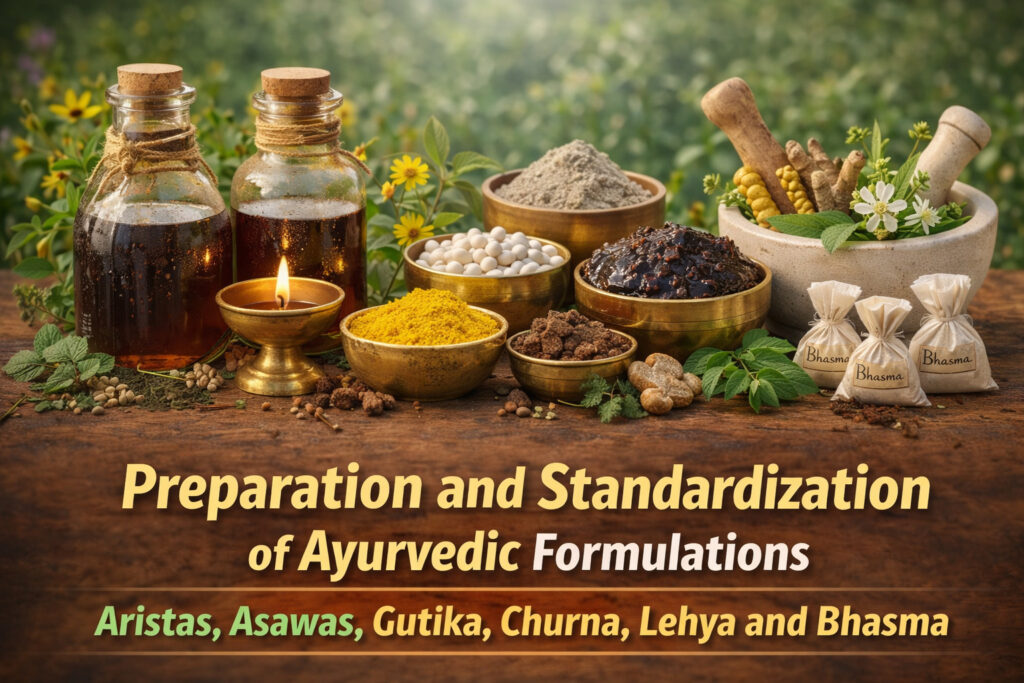
Each formulation type is designed based on the nature of the drug, route of administration, and desired pharmacological action, ensuring optimal delivery of active constituents.
Preparation of Ayurvedic Formulations
Aristas and Asawas
Aristas and Asawas are fermented liquid dosage forms that are unique to Ayurveda and are considered self-preserving due to the presence of naturally generated alcohol.

Conceptual Basis
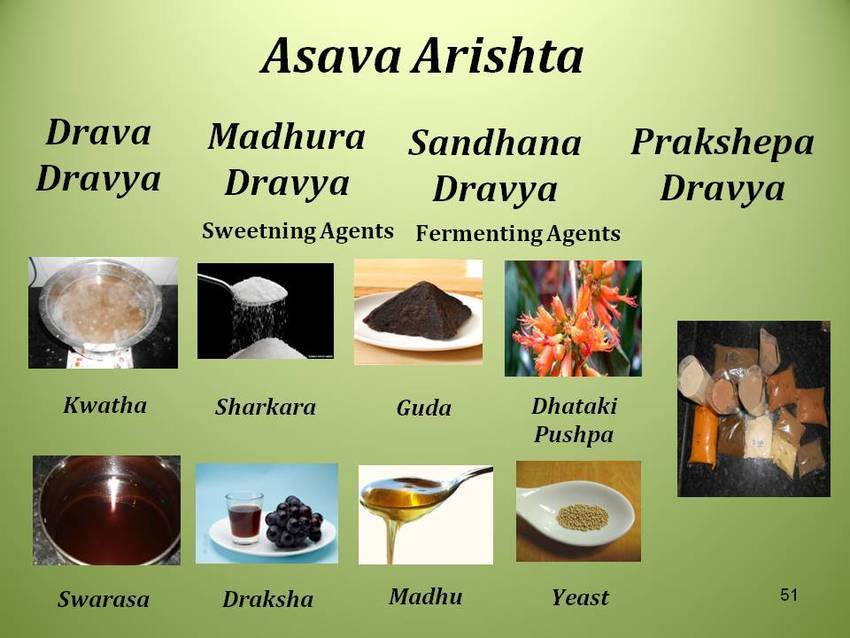
These formulations are based on the principle of Sandhana Kalpana (fermentation process), where sugars are converted into alcohol by microbial activity. The alcohol formed acts as a solvent that extracts both water-soluble and alcohol-soluble phytoconstituents, thereby increasing the therapeutic potency.
The distinction between Aristas and Asawas lies in the initial processing:
- Aristas involve decoction (heat-based extraction)
- Asawas involve cold infusion or fresh juice without heating
Detailed Method of Preparation
The preparation begins with extraction of active constituents either by boiling (Arista) or maceration (Asawa). To this, a fermentable substrate such as jaggery, sugar, or honey is added. Fermentation is initiated using natural inoculants such as Dhataki flowers, which contain yeast-like microorganisms.
The mixture is then stored in airtight containers, traditionally earthen pots, for a specific duration under controlled conditions. During this period, fermentation leads to the formation of alcohol, typically ranging between 5–10%.
Pharmaceutical Significance
The presence of alcohol enhances:
- Extraction efficiency of active constituents
- Preservation of the formulation
- Rapid absorption in the body
These formulations are particularly useful in chronic diseases where sustained drug action is required.
Standardization Aspects
Standardization of Aristas and Asawas involves both traditional and modern parameters.
Key aspects include:
- Determination of alcohol content using distillation methods
- Measurement of pH and specific gravity
- Chromatographic fingerprinting (TLC/HPTLC/HPLC)
- Estimation of marker compounds
- Microbial and stability testing
Consistency in fermentation is a major challenge, requiring strict control of environmental conditions.
Gutika (Vati)
Gutika or Vati represents solid dosage forms analogous to modern tablets or pills. These are prepared to ensure accurate dosing, convenience, and stability.

Pharmaceutical Concept
The formulation is based on the principle of converting powdered drugs into compact units using suitable binding agents. This ensures uniform distribution of active ingredients and ease of administration.
Detailed Method of Preparation
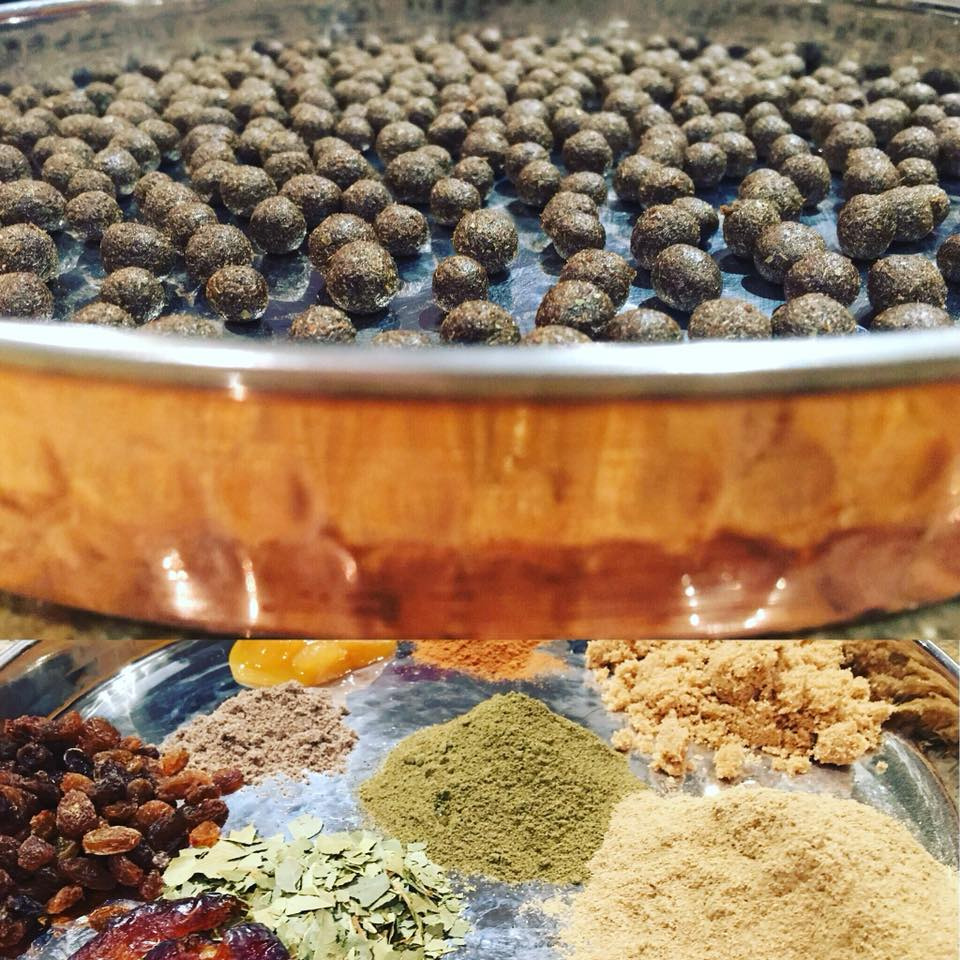
The raw herbal materials are first dried and finely powdered. The powders are then mixed thoroughly to achieve homogeneity. Binding agents such as honey, ghee, or herbal extracts are added to form a cohesive mass.
This mass is rolled into small units of uniform size and shape and then dried under controlled conditions to remove excess moisture.
Critical Processing Considerations
Uniform mixing is essential to ensure dose accuracy. Drying must be carefully controlled to prevent microbial growth and degradation of active constituents.
Standardization
Modern standardization aligns Gutika with tablet evaluation parameters:
- Weight variation and content uniformity
- Hardness and friability
- Disintegration time
- Moisture content
- Stability studies
Advanced techniques such as dissolution testing and chromatographic profiling may also be applied.
Churna
Churna is one of the simplest and most widely used Ayurvedic dosage forms, consisting of finely powdered plant materials.
Conceptual Importance
Churna offers rapid therapeutic action due to its large surface area, which facilitates quick dissolution and absorption. It is particularly suitable for digestive and metabolic disorders.
Method of Preparation
The preparation involves drying of crude drugs under appropriate conditions to preserve active constituents. The dried materials are then pulverized using mechanical grinders and passed through sieves to obtain uniform particle size.
Mixing is performed carefully to ensure homogeneity, especially in polyherbal formulations.
Critical Quality Factors
The quality of Churna depends on:
- Proper drying to prevent microbial growth
- Uniform particle size for consistent dosing
- Protection from moisture during storage
Standardization
Evaluation includes:
- Particle size analysis
- Determination of ash values and extractive values
- Moisture content estimation
- Phytochemical screening
- Microbial load testing
Churna is highly prone to contamination and degradation, making proper storage essential.
Lehya (Avaleha)
Lehya or Avaleha is a semi-solid preparation that combines therapeutic and nutritional benefits.

Conceptual Basis
Lehya is designed to improve palatability and provide sustained release of active constituents. The presence of sugar and ghee enhances both taste and stability.
Method of Preparation
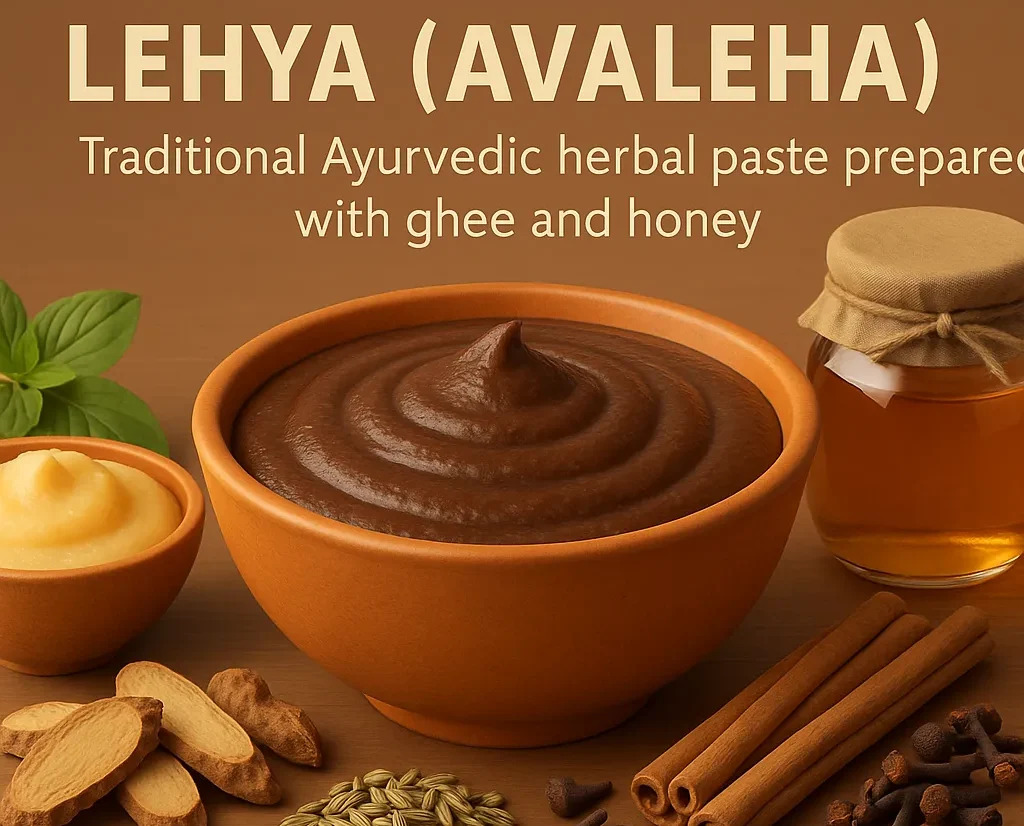
The process begins with preparation of a decoction of herbal drugs. This is then concentrated by heating until a thick consistency is achieved. Sweetening agents such as jaggery or sugar are added, followed by incorporation of ghee, honey, and fine powders of herbs.
The final product is a homogeneous semi-solid mass with a characteristic taste and aroma.
Pharmaceutical Importance
Lehya is particularly useful for:
- Pediatric and geriatric patients
- Nutritional supplementation
- Chronic conditions requiring prolonged therapy
Standardization
Evaluation includes:
- Consistency and viscosity measurement
- Determination of sugar content
- pH and microbial analysis
- Stability and shelf-life studies
Proper control of heating is crucial to avoid degradation of heat-sensitive constituents.
Bhasma
Bhasma represents one of the most sophisticated dosage forms in Ayurveda, involving the transformation of metals and minerals into bioavailable forms.
Conceptual Foundation
The preparation of Bhasma is based on the principle that raw metals are toxic and must be converted into biocompatible and therapeutically active forms through repeated purification and calcination.
Detailed Methodology
The process involves three major stages:
- Shodhana (purification): Removal of physical and chemical impurities using herbal media
- Bhavana (trituration): Grinding with herbal juices to enhance therapeutic properties
- Marana (calcination): Repeated heating in closed crucibles at high temperatures
This cycle is repeated multiple times until a fine, stable powder is obtained.
Unique Characteristics
Bhasma particles are extremely fine, often in the nano or submicron range, which enhances their absorption and bioavailability.
Standardization
Traditional tests include:
- Rekhapurnatva (ability to enter fine lines)
- Varitaratva (floatation on water)
- Niruttha (absence of metallic properties)
Modern techniques include:
- Particle size analysis
- XRD and SEM studies
- Elemental analysis using ICP-MS
- Toxicological evaluation
Integration of Traditional and Modern Standardization
Modern standardization of Ayurvedic formulations integrates classical evaluation methods with advanced analytical techniques. This ensures:
- Batch-to-batch consistency
- Safety and efficacy
- Compliance with global regulatory standards
Challenges in Standardization
Standardization of Ayurvedic formulations faces several challenges due to:
- Variability in raw materials
- Complex multi-component nature
- Lack of universal markers
- Differences in traditional preparation methods
Conclusion
Ayurvedic formulations such as Aristas, Asawas, Gutika, Churna, Lehya, and Bhasma represent a diverse and scientifically rich pharmaceutic system. Their preparation involves carefully designed processes that enhance therapeutic efficacy, while standardization ensures quality, safety, and global acceptability. The integration of traditional knowledge with modern analytical science is essential for the advancement and wider recognition of Ayurvedic medicines.