


Plasma volume expanders are a diverse group of pharmacological agents and intravenous solutions used to restore and maintain the circulating blood volume, especially in cases of hypovolemia due to trauma, hemorrhage, burns, shock, or surgical procedures. They act by increasing plasma osmotic or oncotic pressure, thereby drawing fluid from the interstitial and intracellular spaces into the intravascular compartment, temporarily stabilizing hemodynamic parameters such as blood pressure and tissue perfusion.

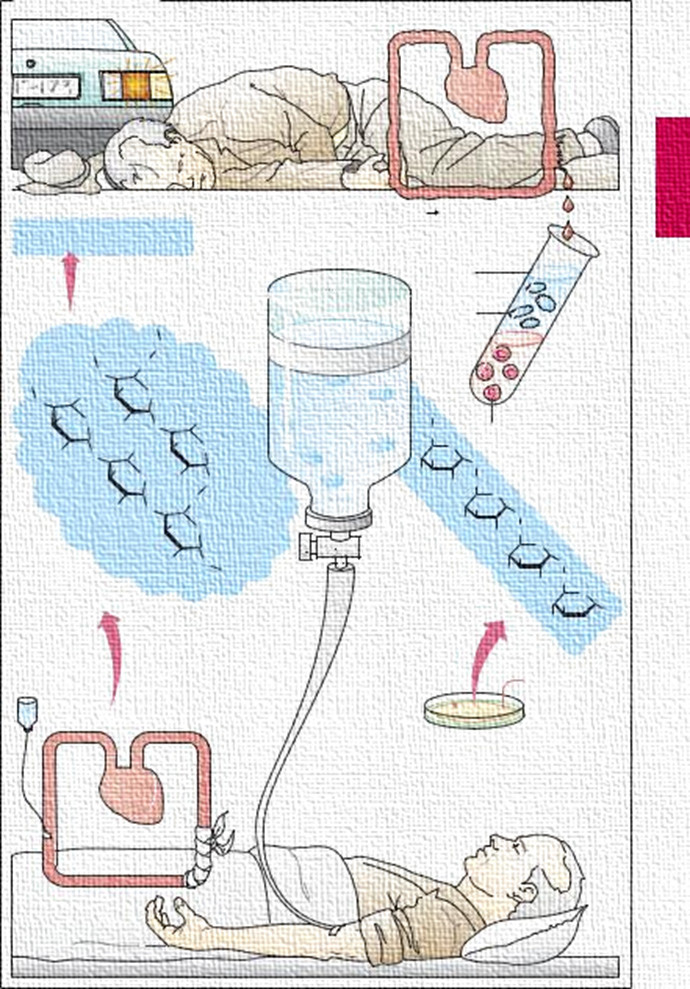
These agents serve as critical supportive therapies in emergency medicine, intensive care units (ICUs), and perioperative settings.
Classification of Plasma Volume Expanders
Plasma volume expanders can be broadly classified into two main categories:
1. Crystalloids:
These are aqueous solutions of mineral salts or other water-soluble molecules. They readily cross capillary membranes.
Examples:
- Normal saline (0.9% NaCl)
- Ringer’s lactate
- Dextrose in water (5% Dextrose, D5W)
- Hypertonic saline (e.g., 3% or 7.5%)
Features:
- Cost-effective
- Rapid distribution across extracellular compartments
- Short-lived plasma volume expansion
2. Colloids:
These are solutions containing large molecular weight substances that exert oncotic pressure, thereby retaining fluid within the intravascular space for longer durations.
A. Natural Colloids:
Human Albumin Solutions:
These are available in 5% or 25% concentrations and are derived from pooled human plasma. Although expensive, they are physiologically compatible and often used in clinical settings where volume expansion and protein replacement are needed.
B. Synthetic Colloids:
Dextrans: Dextran 40 (low molecular weight) and Dextran 70 (higher molecular weight) are polysaccharides obtained from the fermentation of sucrose. They are used as plasma volume expanders and have synthetic origins, making them distinct from natural colloids.
Hydroxyethyl starch (HES): This group includes Hetastarch, Pentastarch, and Tetrastarch, which are derived from maize or potato starch. They are synthetic colloids commonly used for plasma volume expansion in clinical settings.
Gelatins: Polygeline and Succinylated gelatin are types of synthetic colloids derived from hydrolyzed collagen. They are used as plasma expanders and are known for their moderate duration of action and good biocompatibility.
Mechanism of Action of Plasma Volume Expanders
Plasma volume expanders primarily work through the osmotic or oncotic gradient principle. Their mechanisms vary by type:
Crystalloids: Crystalloids distribute freely across both the intravascular and interstitial spaces. Only about 25% of the administered volume remains in the plasma, while the rest diffuses into the extracellular fluid. They are commonly used for the rapid correction of dehydration and electrolyte imbalances.
Colloids: Due to their high molecular weight, colloids remain in the intravascular space and exert oncotic pressure. This property enables them to draw water from the interstitial and intracellular spaces into the circulation. As a result, colloids can expand plasma volume more effectively and for longer durations compared to crystalloids.
Uses / Clinical Indications of Plasma Volume Expanders
Plasma volume expanders are indispensable in managing:
- Hypovolemic Shock: From hemorrhage, trauma, or fluid loss in burns.
- Severe Dehydration: Especially when oral rehydration is not feasible.
- Surgical Blood Loss Compensation: Especially in major surgeries to maintain blood pressure.
- Cardiopulmonary Bypass: To prime the pump circuit and maintain perfusion.
- Sepsis and Septic Shock: As a component of fluid resuscitation protocols.
- Plasmapheresis and Exchange Transfusion: To replace plasma volume during therapeutic procedures.
Advantages and Disadvantages:
| Type | Advantages | Disadvantages |
| Crystalloids | Inexpensive, readily available | Short plasma expansion duration, edema risk |
| Colloids | Prolonged volume effect, less total volume needed | Costly, potential for coagulopathy and hypersensitivity |
Adverse Drug Reactions (ADRs):
While lifesaving, plasma volume expanders may pose significant risks:
Crystalloids:
- Dilutional hyponatremia or hypernatremia
- Pulmonary edema (if over-infused)
- Hyperchloremic acidosis (with excessive normal saline)
- Tissue edema due to capillary leak
Colloids:
1. Dextrans:
- Anaphylactoid reactions
- Platelet dysfunction, prolonged bleeding time
- Renal impairment (especially in preexisting renal disease)
- Interference with blood crossmatching
2. Hydroxyethyl starch (HES):
- Coagulopathy
- Renal injury (reported in critically ill patients)
- Pruritus with long-term use
- Tissue storage in skin and organs (with repeated use)
3. Gelatins:
- Hypersensitivity reactions (less common than dextrans)
- Volume overload
- Transient anticoagulant effects
4. Albumin:
- Allergic reactions
- Risk of transmitting infections (very low due to modern screening)
- Costly compared to synthetic alternatives
Special Considerations:
- Choice of fluid depends on clinical context: crystalloids for initial resuscitation, colloids for sustained plasma expansion.
- Use cautiously in heart failure, renal impairment, or conditions prone to fluid overload.
- Albumin is preferred in liver cirrhosis with spontaneous bacterial peritonitis or hepatorenal syndrome.
Recent Advances and Debates:
- Recent trials (e.g., the CRISTAL and CHEST trials) have questioned the superiority of colloids over crystalloids in ICU settings.
- There is increasing emphasis on balanced crystalloids (like Plasma-Lyte, Ringer’s lactate) over normal saline, due to lower risk of acidosis and kidney injury.
- The use of synthetic colloids like HES is declining due to FDA warnings and renal risks.
Conclusion:
Plasma volume expanders are fundamental tools in emergency and critical care pharmacology. While they offer temporary stabilization of intravascular volume and hemodynamic status, their use must be judicious and tailored to the patient’s clinical needs. Understanding their pharmacological properties, benefits, and risks ensures rational and safe therapy, minimizing complications and improving patient outcomes.